
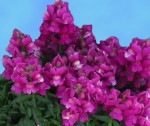
Snapdragons are tender perennials usually grown as annual and are native to Europe, North Africa and the US. They are members of the plantago family, Plantaginaceae, that also includes foxgloves, turtleheads, and Veronicas. The leaves are lance-shaped and green or bronze purple. The flowers are tubular, two-lipped, and are carried on upright spikes. They are fragrant and may be white, pink, mauve, yellow or bicolored. A well grown snapdragon is a beautiful plant and a bouquet of snapdragons in a vase is sure to evoke feelings of old fashioned charm and nostalgia. Snapdragons are cool weather plants and grow well in northern areas where summers are cool but will not grow in the heat of Southern summers. They are best grown in fall and spring in such hot areas where they will be a welcome sight along with other cool weather plants like pansies and ornamental cabbages and kale. The trailing varieties are a bit more heat tolerant than the upright forms and look good in containers or the front of the border. Dwarf, medium, and tall varieties are available too.
The botanical name comes from two Greek words, anti meaning opposite, and rhis meaning snout, and probably refers to the resemblance of the flower to a dragon’s head. If you want to entertain your kids or grandkids take a flower from the stalk and hold it so that the “lip” is at the bottom; then gently squeeze the sides between your fingers and watch the dragon snap.
Type: Cool weather perennial usually grown as annual.
Bloom: White, pink, mauve, yellow, and bicolor flowers are borne upright stems during cool weather.
Size: Tall: 3-5’; Medium: 18-30”; Short: 6-18”.
Light: Full sun to part shade.
Soil: Fertile, moist, well drained.
Care: Remove florets as they fade to encourage flowering; stake tall varieties.
Pests and Diseases: Rust can be a major problem in cool damp weather; also susceptible to leaf blight, mildew, botrytis, wilts, aphids, and spider mites.
Propagation: Seed, but buying bedding plants is more practical.
Companion plants: Pansies, ornamental cabbage and kale.
Outstanding Selections:

