
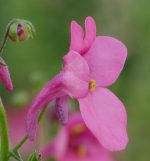
This mat forming tender perennial is native South Africa. It is a member of the figwort family, Scrophylariaceae, that also includes butterfly bush, mullein, and nemesia. Plants grow 12″ tall and have glossy green, ovate-lanceolate leaves that are up to 1″ long and have toothed margins. The flowers appear from spring to summer in loose terminal racemes well above the foliage and are 3/4″ across, rose pink with a yellow throat, and have two 1/4″ long downward-angled spurs. Plants are usually grown as annuals but do not do well in high heat and humidity and may stop blooming as conditions become unfavorable for them. The least cold hardy of diascias, D. barberae is a good choice for West Coast gardeners or fall planting with pansies and snapdragons in other areas; good in borders, rock gardens, containers and hanging baskets. The genus name, Diascia, comes from the Greek di meaning two and askos meaning pouch, referring to the two sacs of the type species. The specific epithet, barberae, probably honors some plant enthusite with the surname of Barber, perhaps Mary Elizabeth Barber (1818–1899), and English naturalist.
Type: Tender perennial grown as an annual
Bloom: Rose pink with yellow throat and spurs from spring to frost under ideal conditions
Size: 10-12″ h x 12″ W
Light: Full sun
Soil: Average, medium moist, well-drained
Hardiness: Zones 8-10
Care: Pinch to encourage business; deadhead to encourage rebloom; cut back hard if blooming ceases in mid summer to encourage regrowth and rebloom in the fall
Pests and Diseases: None of significance
Propagation: Seed, division
Companion Plants: Pansy, snapdragons, pinks
Outstanding Selections: ‘Pink Queen’ (9-12″ tall, rose-pink with yellow throat)
Photo Credit: Wikipedia
 Karen Meyers