
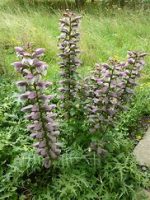
This clump-forming evergreen herbaceous perennial is native to woodlands and scrub of southern Europe from Italy to western Turkey. It is a member of the Acanthaceae family that also includes mostly tropical plants such as polka-dot plant and Thunbergia. Plants grow 3-4′ tall and have a creeping root system and dark green basal leaves that are arching and 1-2′ long. The leaves are very deeply lobed, bear stiff spines and stay attractive throughout the growing season. From early to late summer racemes appear carrying vertical rows of white flowers subtended by a purplish calyx. Plants are more tolerant of heat and humidity than most other species and are a good choice for borders in the South but plants can become invasive. The genus name Acanthus, comes from the Greek word akanthos meaning thorn or prickle and refers to the spines on the leaves of some species. The specific epithets, spinosus, is the Latin word meaning thorny and prickly, and refers to the spines on the leaves.
Type: Herbaceous perennial
Bloom: Three foot long racemes with vertical rows of white and purplish flowers from early to late summer
Size: Full sun to partial shade
Soil: Fertile, moderately moist, well-drained
Hardiness: Zones 7-10
Care: Remove old foliage in late winter; .watch for invasive tendencies
Pests and Diseases: Powdery mildew
Propagation: Division, root cuttings, seed
Companion Plants: Astrantia major, Eupatorium maculatum ‘Gateway’, Ceratostigma willmottianum
Photo Credit: Wikipedia