
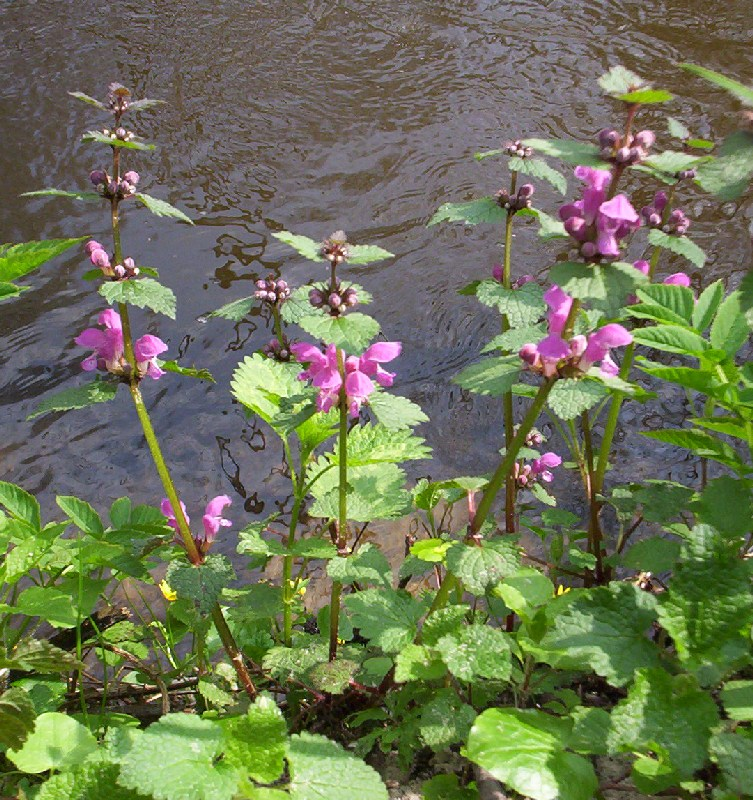
Native to Europe, north Africa and temperate Asia, this semi-evergreen herbaceous perennial forms attractive mats of silvery green leaves with large silver blotches on the upper surface. The 1″ long leaves are crinkled, have rounded toothed margins and are unpleasantly scented when crushed. The small, snapdragon-like flowers appear in late spring to early summer and are white, pink or red. The plants do not tolerate full sun, compacted or wet soil, heat or humidity and may develop bare patches in mid summer when temperatures are high. New growth can be stimulated by shearing or cutting back the plants. Although generally healthy, deadnettle is susceptible to damage by aphids, slugs, leaf blight, leaf spots, and crown rot (in poorly drained soil). Also called spotted deadnettle and Lamium, deadnettle is a member of the mint family, Lamiaceae, that also includes basil, rosemary and lavender. The genus name, Lamium, comes from the ancient Greek word λαιμός (laimós) meaning throat and refers to the shape of the corolla. The specific epithet, maculata, is the Latin word meaning spotted , and refers to appearance of the leaves.
Type: Semi-evergreen herbaceous perennial
Height: 4-8″
Light: Full to part shade
Soil: Average, medium moist, well-drained
Spread Speed: Rapid
Propagation: Cutting, division, stem layering, seed
Hardiness: Zones 3-8
Outstanding Selections:
”Album’ (white)
‘Beacon Silver’ (silver leaves)
‘Orchid Frost’
‘Shell Pink’
‘Variegatum’
‘White Nancy’ (white flowers, outstanding silvery foliage)
Photo Credit: Meteor2017, Wikimedia Commons
 Karen
Karen