
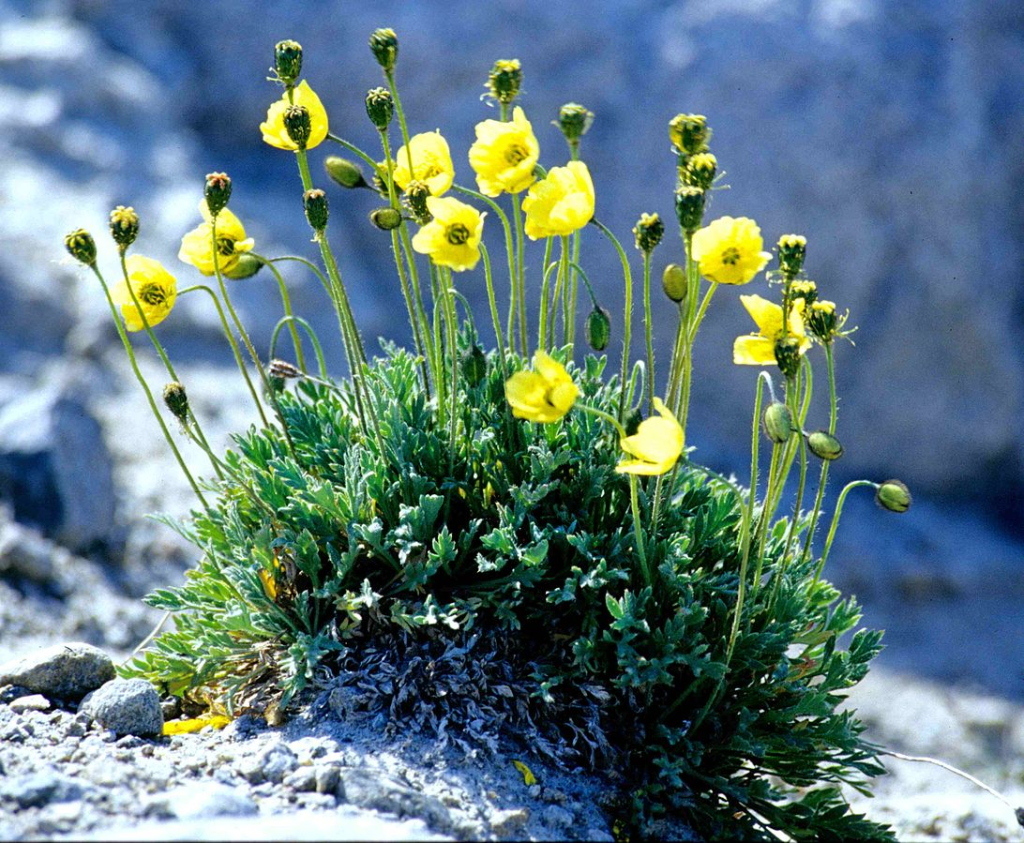
All of the poppies listed below are are native to the Rocky Mountain area and in the subfamily Papaveroideae of the family Papaveraceae; not included are plants that are not botanically related to true poppies even if their flowers resemble poppy flowers or their common name is poppy. The list includes plants in the genera Arctomecon, Argemone, Canbya, Eschscholzia, and Papaver. Photo Credit: Ansgar Walk, Wikimedia Commons
The environmental conditions in the Rocky Mountain area have resulted in at least ten native species of poppy there but they may be native to other places too. All the poppies described below are native to at least one of the states in the Rocky Mountain area. Some are common, others are rare and endangered. They are annuals or herbaceous perennials. The flowers are usually showy and have 4 white or yellow petals surrounding yellow stamens. Plants tend to bloom in the spring, grow in full sun, usually in lean, dry, well-drained soil.
Golden Bearpoppy (Arctomecon californica)
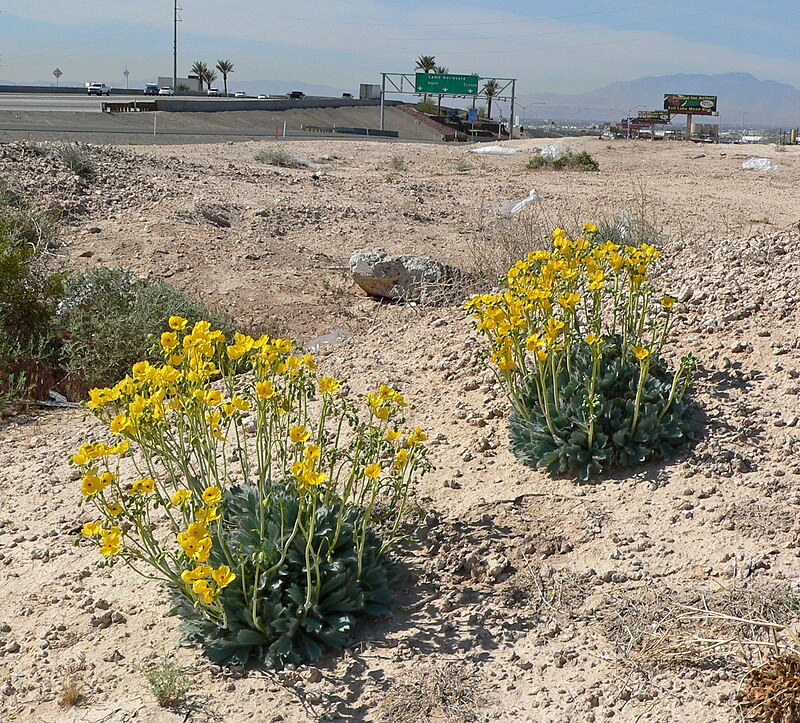
Also called California bearpoppy, Las Vegas bearpoppy, and yellow-flowered desert poppy, this herbaceous perennial is native to the eastern Mojave Desert, Nevada as well as Arizona where it grows in creosote bush (Larrea tridentata) habitats, and in barren shales with gypsum substrates. It grows up to 2′ tall, and has fuzzy bear-paw shaped leaves and dropping buds to open to yellow flowers in spring.
Type: Herbaceous perennial
Height: Up to 2′
Bloom Time: Spring
Bloom Color: Yellow
Light: Full sun
Soil: Lean, rocky, gritty, dry, well-drained
USDA Hardiness Zones: 6-10
Photo Credit: Stan Shebs, Wikimedia Commons
Dwarf Bearpoppy (Arctomecon humilis)
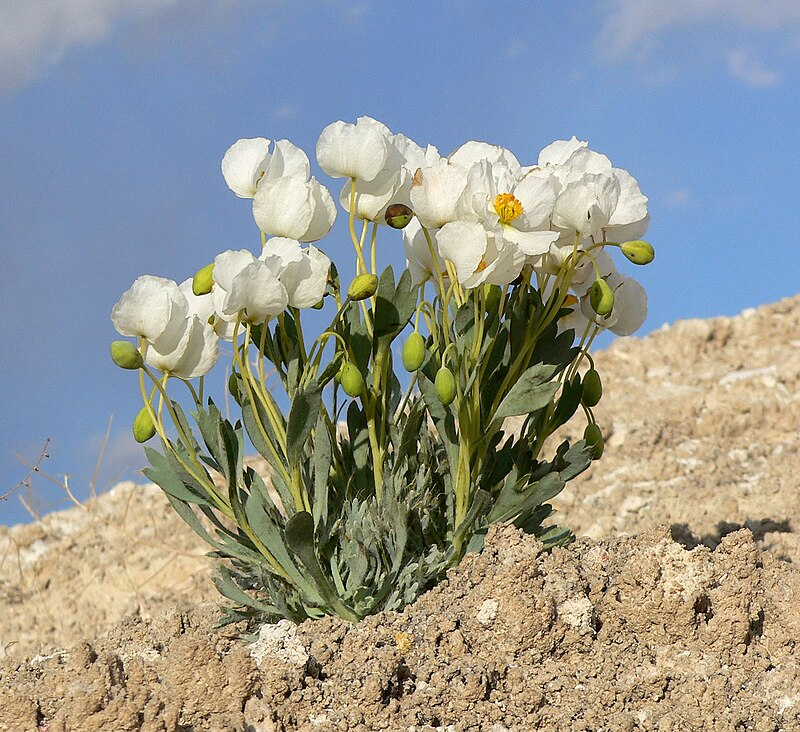
Native to southwestern Utah where it grows in soil rich in gypsum with a biological soil crust, this endangered perennial grows up to 10″ tall and has light yellow green stems and sage green leaves covered with soft hairs. In spring, drooping buds open to a mass of flowers above the foliage with 4 round white petals surrounding a center of yellow stamens.
Type: Herbaceous perennial
Height: Up to 10 “
Bloom Time: Spring
Bloom Color: Whit with yellow center
Light: Full sun
Soil: Mineral, dry, well-drained
USDA Hardiness Zones: 5-8
Photo Credit: Stan Shebs, Wikimedia Commons
Desertbear Poppy (Arctomecon merriamii)
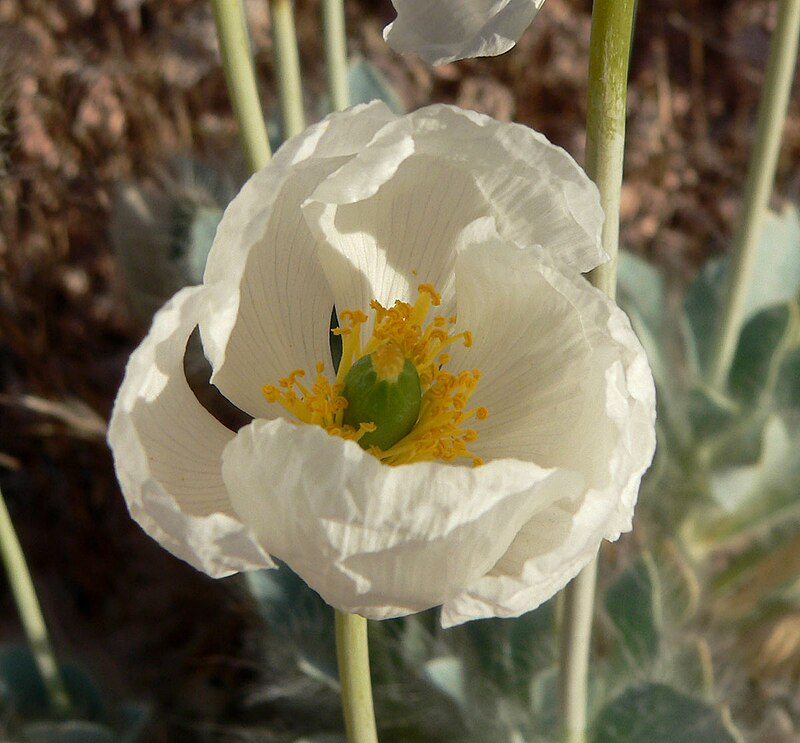
Also called white bear poppy and great bearclaw poppy, this herbaceous perennial is native to the Mojave Desert of Nevada as well as of California. It grows 12-18″ from a taproot and forms a clump of hairy pale green leaves with rounded teeth. Waxy stems produce a single flower up to 1.6″ across and with 6 white petals surroundings a yellow center.
Type: Herbaceous perennial
Height: 12-18″
Bloom Time: Spring
Bloom Color: White
Light: Full sun
Soil: Rocky, sand, dry, well-drained
USDA Hardiness Zones: 9-11
Photo Credit: Stan Shebs, Wikimedia Commons
Mojave Prickly Poppy (Argemone corymbosa)
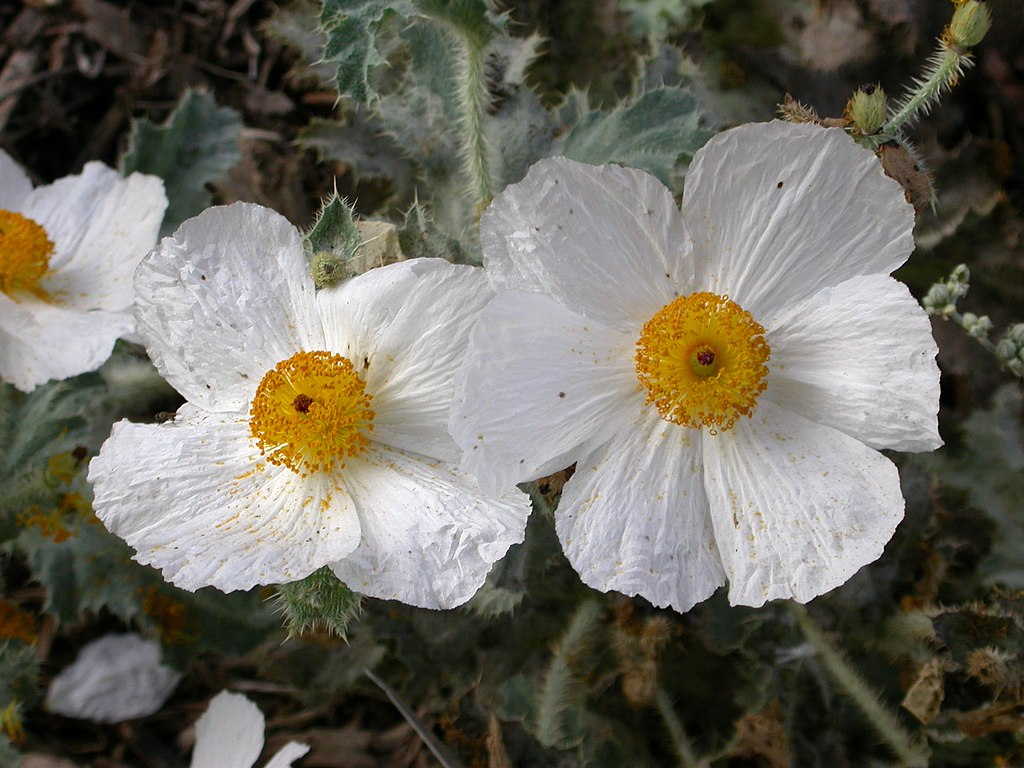
Found growing in dry slopes, and flats of Utah and Nevada, as well as in Arizona and southeastern California, this herbaceous perennial has flowers that are about 1 1/2″ to 3 1/2″ across and have 4 white petals surrounding a yellow center of 100-120 stamens. The thick, leathery leaves are up to 6″ long and have prickles on the margins and undersides.
Type: Herbaceous perennial
Height: 2-3′
Bloom Time: Spring
Bloom Color: White with yellow center
Light: Full sun
Soil: Well drained; drought tolerant
USDA Hardiness Zones: 8-10 (?)
Photo Credit: Curtis Clark, Wikimedia Commons
Flatbud Prickly Poppy (Argemone munita)
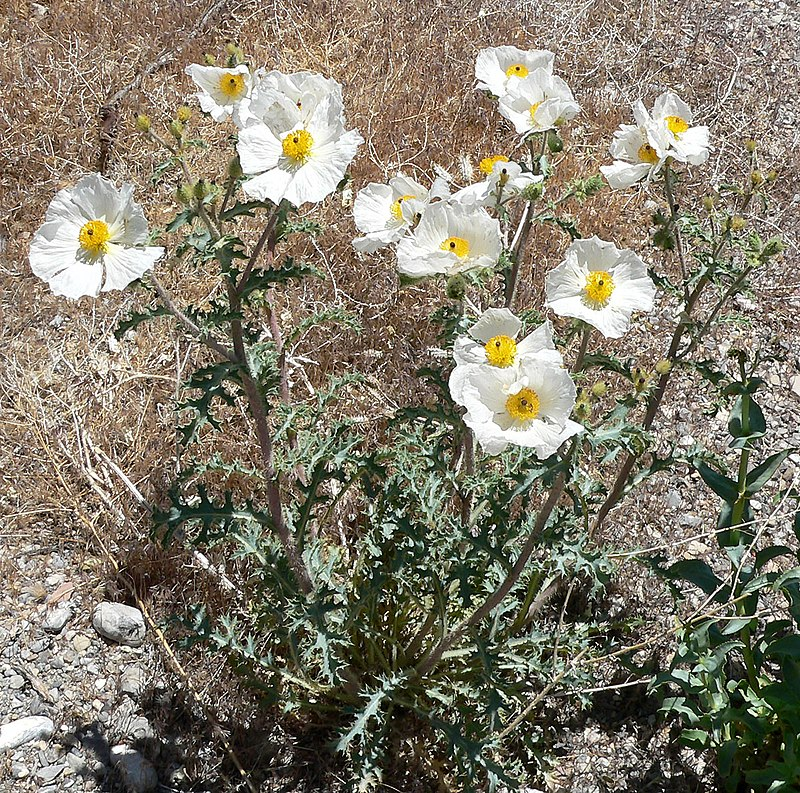
Also known as chicalote, this member of the poppy family is native to open spaces in Idaho, Nevada and Utah as well as in places on the Pacific Coast and in the Southwest. Spiny erect stems bear 3″ wide flowers with 6 white petals surrounding 250 yellow stamens. The mint-green to blue-green leaves are up to 6″ long, lobed and prickly.
Type: Annual or short lived perennial
Height: 3.3-5′
Bloom Time: Spring
Bloom Color: White with yellow centers
Light: Full sun
Soil: Sandy, fast draining
USDA Hardiness Zones: No available
Photo Credit: Stan Shebs, Wikimedia Commons
Crested Prickly Poppy (Argemone polyanthemos)
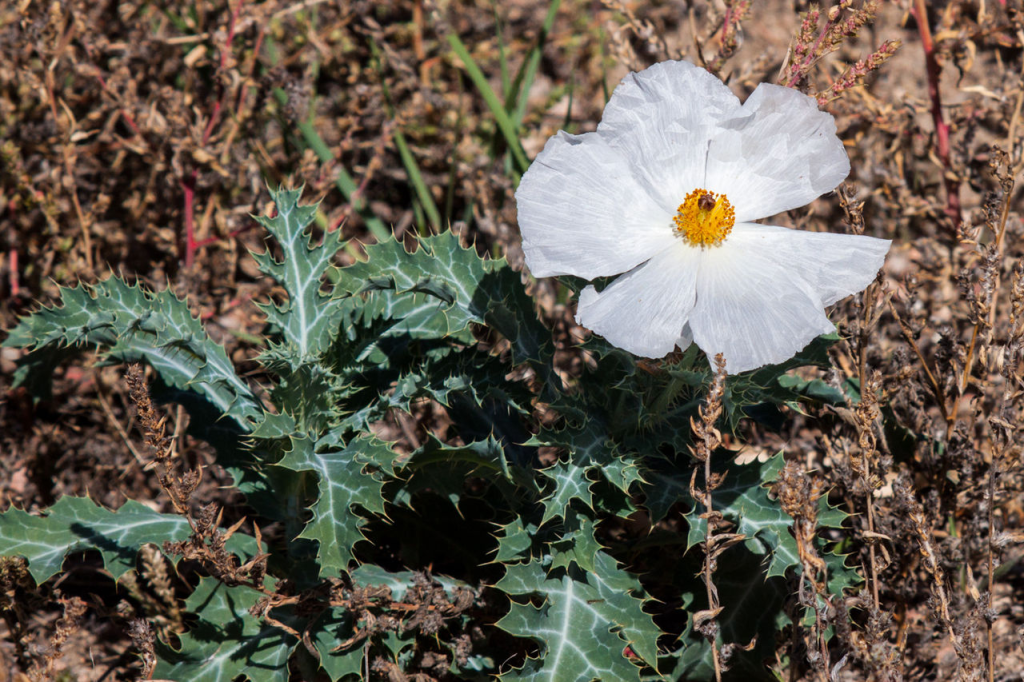
Also known as bluestem prickly poppy, white prickly poppy, annual prickly poppy and thistle poppy, this wildflower is native to grassland, foothills, and desert margins in Utah, Colorado, and Wyoming as well as areas in the Southwest and Midwest crested prickly poppy grows up to 4′ tall and has grayish green leaves that are up to 8″ long, deeply lobed and are prickly on the margins and lower surfaces. From spring into summer, flowers appear that are 3-4″ across and have 4-6 crinkled white petals surrounding a center of yellow stamens. All parts of the plants are poisonous.
Type: Annual or perennial
Height: 2-4′
Bloom time: Spring into summer
Bloom Color: White with yellow center
Light: Full sun
Soil: Average, dry to medium, well-drained; tolerates lean gravelly or sandy soil, and drought
USAD Hardiness Zones: 2-11
Photo Credit: WideClyde, Wikimedia Common
Pygmy Poppy (Canbya aurea)
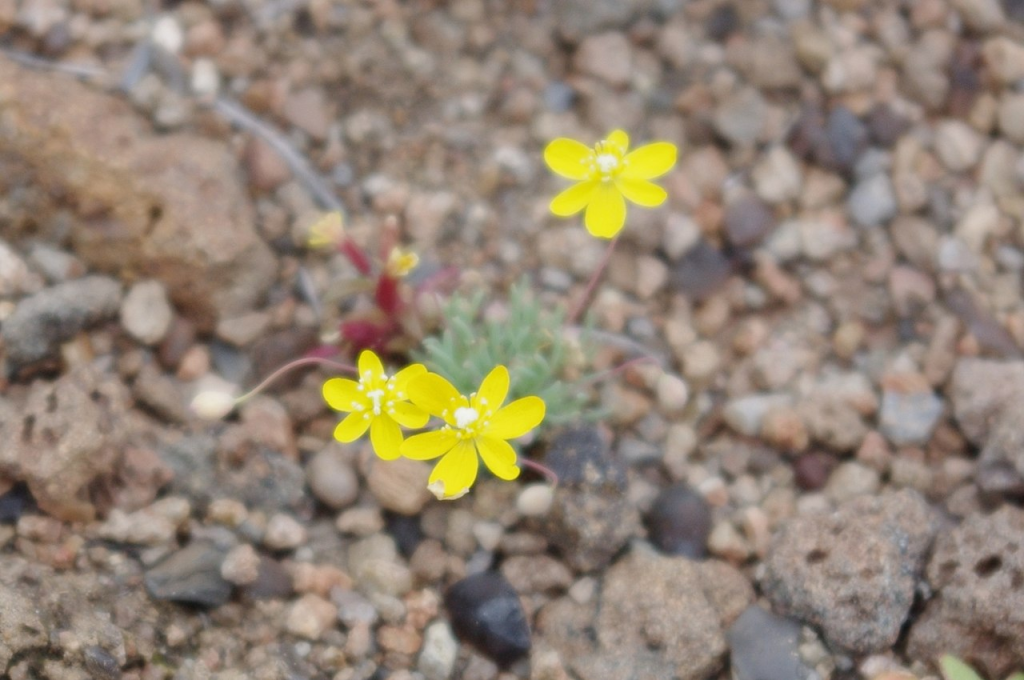
This diminutive annual is native northern deserts of northwestern Nevada as well as southeastern Oregon where it can be found growing on dry, sandy soil, usually with sage brush, at elevations of 3,000-5,600 feet. It grows up to .79″ tall and branches at about ground level. The linear to oblong leaves are fleshy, basal, up to 3.9″ long, and are untoothed and unlobed. Bright yellow flowers appear from spring to summer, are 1/4″ across, and have 6 petals.
Type: Annual
Height: .79″
Bloom Time: Spring to summer
Bloom Color: Yellow
Light: Full sun
Soil: Sandy, dry, well-drained
USDA Hardiness Zones: Not relevant
Photo Credit: Janel Johnson, Wikimedia Commons
Desert Golden Poppy (Eschscholzia glyptosperma)
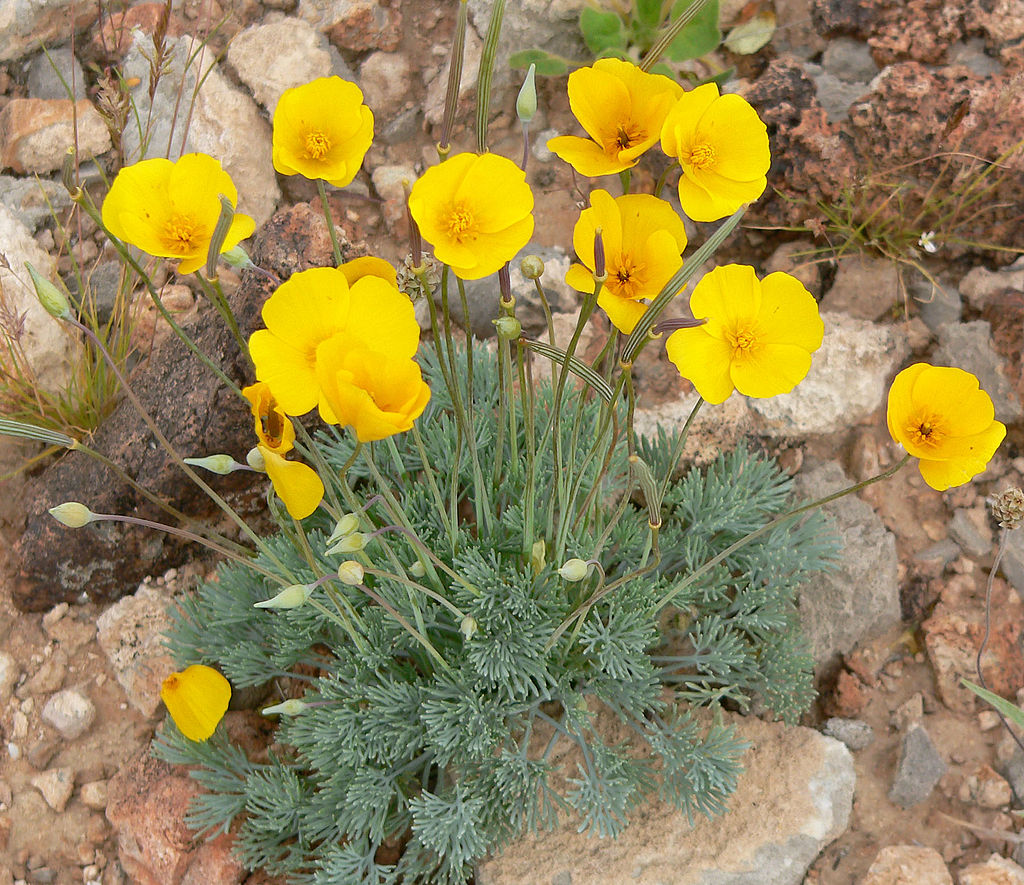
Native to the Mojave Desert and Sonoran Deserts in southern Nevada, southwestern Utah, California, and western Arizona, this annual poppy is found in desert washes, flats, and slopes. It forms clumps of basal blue-green leaves that are divided into pointed segments. From early to late spring flowers are carried singly on erect stems about 10″ tall. Each flower is about 3/4″ across and has has 4 yellow petals surrounding a center of yellow stamens.
Type: Annual
Height: 1.9 – 9.8″
Bloom Time: early to late spring
Bloom Color: Bright yellow
Light: Full sun
Soil: Lean, sandy, dry, well-drained
USDA Hardiness Zones: Not relevant
Photo Credit: Stan Shebs, Wikipedia Commons
Alpine Glacier Poppy (Papaver pygmaeum)
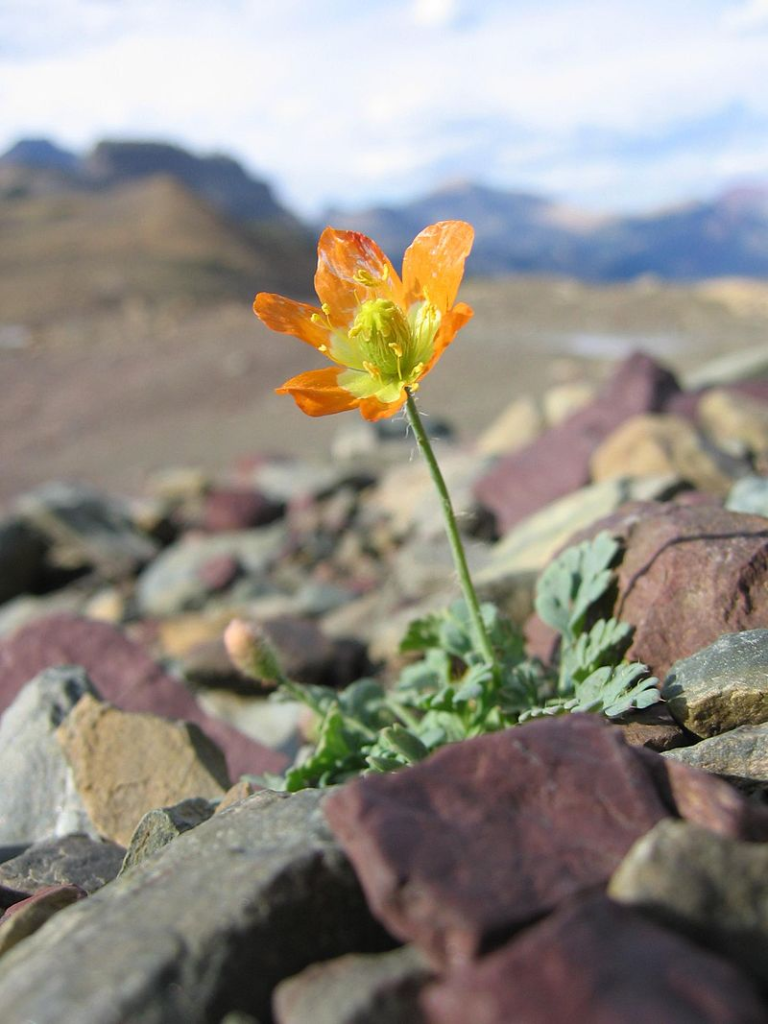
Native to northwestern Montana as well as Canada, this herbaceous perennial can be found on exposed slopes and ridge tops in the alpine zone of the Rocky Mountains. Plants grow about 5″ tall from a tap root and have blue-green leaves that are .5-2″ long and have deep rounded lobes. In summer, nodding buds on 2-4″ stems open to flowers with 4 salmon to orange petals with an yellow spot.
Type: Herbaceous perennial
Height: 5″
Bloom Time: Summer
Bloom Color: Salmon to orange
Light: Full sun
Soil: Stony, dry, well-drained
USDA Hardiness Zones: 4-7 (?)
Photo Credit: Glacier NPS, Wikimedia Commons
Arctic Poppy (Papaver radicatum)
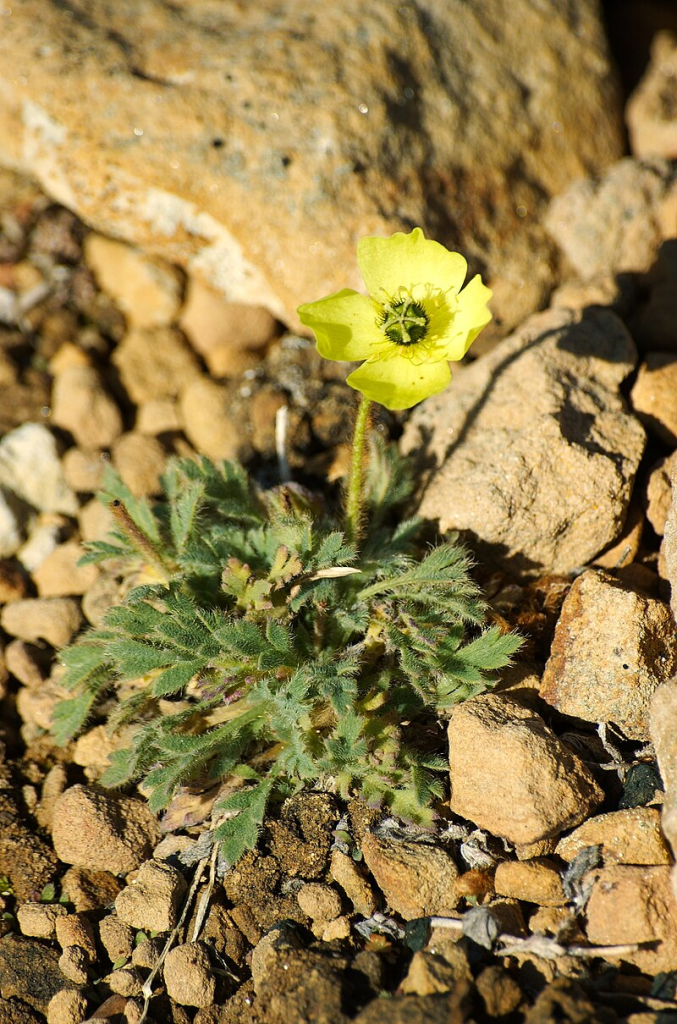
Also called rooted poppy, and yellow poppy this herbaceous perennial is native to Montana, Idaho, Wyoming, Colorado, and northeastern Utah as well as northern New Mexico and Arctic North America. It grows in rocky terrains and meadow and reaches 5-12″ in height. Plants have lanceolate basal leaves 4″ long and 1-5 stems covered with black hair like structures that serve as insulation. Each stem bears a single 4-petaled flower that is usually yellow and 2-2.5″ across.
Type: Perennial
Height: 5-12″
Bloom Time: Summer
Bloom Color: Yellow, sometimes white
Light: Full sun
Soil: Gravelly, dry
USDA Hardiness Zones: 1 and warmer
Photo Credit: Berland, Wikimedia Commons
Six states are included in the Rocky Mountains area: Montana, Wyoming, Idaho, Colorado, Utah, and Nevada. The geography is diverse and includes mountains, plains, and deserts, and the climatic conditions are variable and vary with the geography. Low annual rainfall and high temperatures are typical of some parts of the area, while snowfall and low temperatures are found in other parts and the mountains of all of these states.