
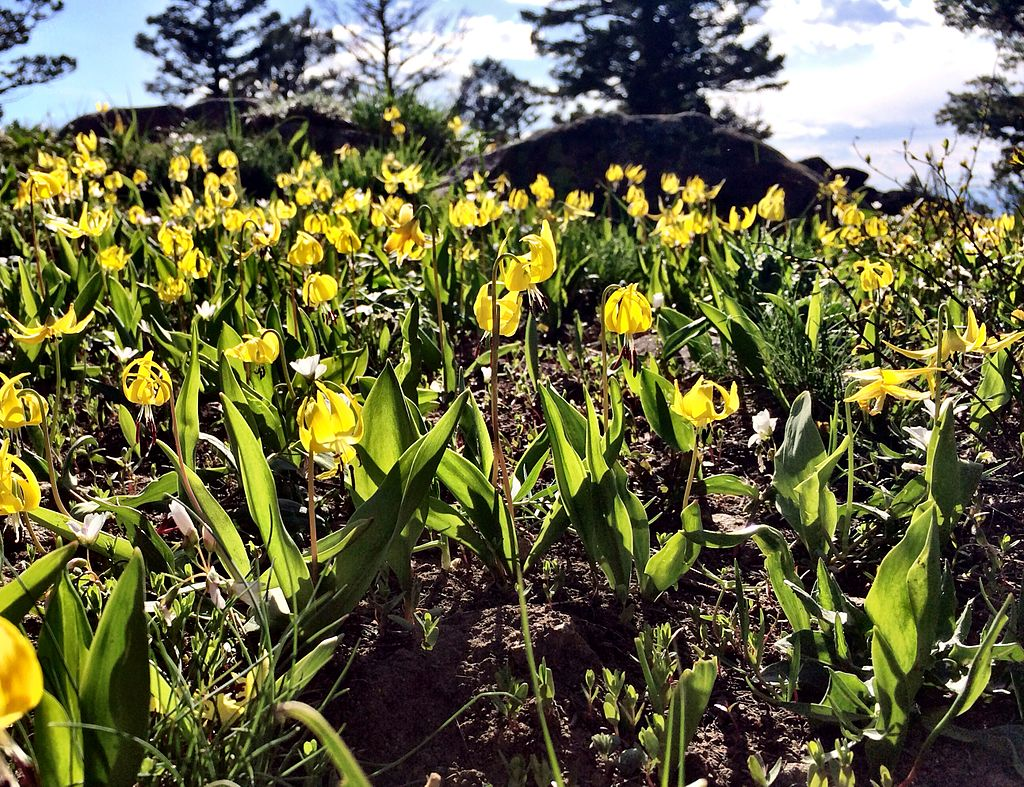
Also known as dog’s-tooth violet or adder’s tongue, the genus Erythronium includes 20-30 species and is in the lily family, Liliaceae, that also includes tulip, fritillary, and toad lily. They are perennials and all but six of the established species are native to North America where they grow in forests and meadows. Flowering plants have a pair of green leaves while vegetative plants have only one leaf. The leaves may or may not be mottled with brown, purple or white depending on the species. The bell-shaped flowers are usually nodding, may be single or in clusters of 2-5, and open only during the day. There are usually 6 tepals that may be ascending, spreading or recurved and white or yellow in color with tints or markings of pink to blue or purple . Anthers are conspicuous and may be white, yellow, pinkish, reddish, or brown. Some species are difficult to distinguish and the same common name may be used for more than one species. Plants usually like some shade and humus-rich, well-drained soil.
The genus name Erythronium comes from the ancient Greek ἐρυθρός (eruthrós) meaning red, and refers to the flower color of the type species, E. dens-canis.
Photo Credit: US Forest Service, Wikimedia Commons
The environmental conditions of the Pacific coast have resulted in at least 17 species of native trout lilies there but they may be native to other places too. The trout lilies described here are native to at least one state in the Pacific Coast.
California Fawn Lily (Erythronium californicum)
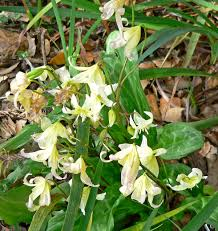
Paired basal leaves are green sometimes spotted with brown. Leafless reddish green stalks carry one to three nodding, slightly scented flowers with yellowish-white recurved tepals, sometimes with red or brown banding towards the base. Conspicuous stamens are whitish with white anthers.
Alternate Name/s: None
Native Range: Coastal mountains of northern California.
Habitat: Moist montane woodlands
Type: Perennial
Height: 12″
Bloom Time: Spring
Bloom Color: Yellowish
Light: Deep to partial shade
Soil: Humusy, consistently moist, well-drained, slightly acidic
USDA Hardiness Zones: 3-9
Photo Credit: Wikipedia
Citrus Fawn Lily (Erythronium citrinum aka Erythronium howellii)
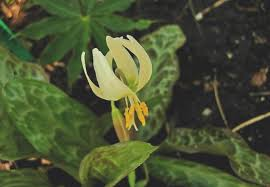
Paired basal green leaves are each up to 6″ long and are mottled with streaks of brown or white. The flowers have creamy white recurved tepals that are pale yellow at the base and have pinkish tips in maturity. Conspicuous anthers are white, cream, pink, reddish, or brownish red.
Alternate Name/s: Cream fawn lily, lemon colored fawn lily
Native Range: Klamath Mountains, Oregon, NW California
Habitat: Open woods and shrubby slopes on serpentine soils.
Type: Perennial
Height: 6-8″
Bloom Time: Early spring
Bloom Color: Creamy white sometimes tinged with pink, with yellow center
Light: Semi shade
Soil: Humusy, consistently moist, well-drained, acidic
USDA Hardiness Zones: 6-?
Photo Credit: Wikipedia
Coast Range Fawnlily (Erythronium elegans)
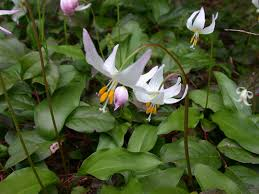
Leaves are up to 8″ long and may be brownish or whitish mottled. One to 4 flowers are carried on slender scapes up to 12″ tall and have six reflexed tepals. The inner three are white, the outer three are white tinged with pink and both have yellow bands at the base.
Alternate Name/s: Elegant fawnlily
Native Range: Endemic to Oregon and found in the Coastal Range of northern Oregon
Habitat: Meadows, rocky cliffs, brushland, open and closed coniferous forest, and the edges of sphagnum bogs at elevations above 2600 feet.
Type: Perennial
Height: 12″
Bloom Time: Late spring
Bloom Color: White with pink tinge, yellow banded at base
Light: Full sun to part shade
Soil: Humusy, consistently moist, well-drained; tolerates dry soil
USDA Hardiness Zones: 4-8
Photo Credit: USDA Forest Service
Yellow Avalanche Lily (Erythronium grandiflorum)
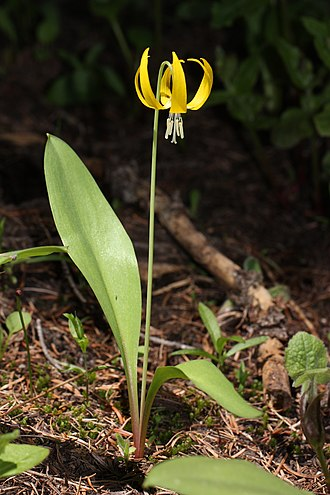
Paired basal leaves are solid green, fleshy, broadly lance-shaped, and up to 14″ long. Leafless stalks bear one to three nodding flowers with recurved, bright lemon-colored tepals surrounding white stamens tipped with white, red, or yellow anthers. A variety with white tepals is also possible. Flowers are pollinated by hummingbirds and bees including bumble bees.
Alternate Name/s: Glacier lily, snow lily, fawn lily, dogtooth fawn lily, large-flowered adder’s tongue
Native Range: Washington, Oregon, California as well as in places in the Rocky Mountain area and Southwest
Habitat: Subalpine mountain meadows, slopes, and clearings
Type: Perennial
Height: 8-12″
Bloom Time: Late spring-early summer
Bloom Color: Yellow
Light: Part sun
Soil: Humusy, consistently moist, well-drained
USDA Hardiness Zones: 3-9
Photo Credit: Wikipedia
Pacific Fawn Lily (Erythronium helenae)
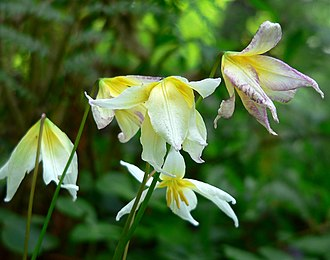
The paired basal leaves are up to 8″ long and mottled with brown or white. Leafless stalks carry one to three widely open flowers that have white tepals with yellowish bases and pink or purple streaks or mottling as they age. The stamens are yellow and have large yellow anthers. On warm days the flowers emit an orange blossom scent.
Alternate Name/s: St. Helena fawn lily
Native Range: Coastal mountains north of the San Francisco Bay Area in oak and pine woodland and chaparral
Habitat: Slopes of the mountain at elevations of 500–1200 m, often on serpentine soils
Type: Perennial
Height: 12″
Bloom Time: Early to late spring
Bloom Color:
Light: Semi shade
Soil: Humusy, consistently moist, well-drained, slightly acidic
USDA Hardiness Zones: 4-8
Photo Credit: Wikipedia
Henderson’s fawn Lily (Erythronium hendersonii)
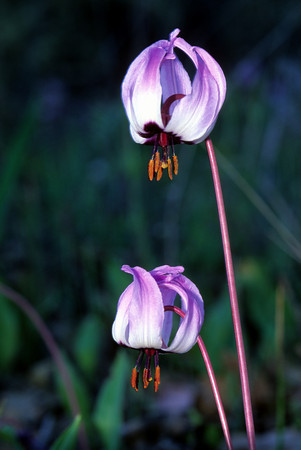
The paired basal leaves are 4-10″ long, oblong to lance-shaped and mottled with brown or white. Leafless stalks usually carry 1-4 (up to 11) nodding flowers, that are up to 1.4″ across. Each flower has purple to pink recurved tepals with dark purple bases, and brown to purple anthers.
Alternate Name/s: Pink Siskiyou fawn lily
Native Range: Southwestern Oregon, and northern California.
Habitat: Dry, open woodlands of Ponderosa pine, Garry oak, and madrone.
Type: Perennial
Height: 10″
Bloom Time: Early to mid spring
Bloom Color: Purple to pink
Light: Part shade
Soil: Average, medium moist to dry, well-drained
USDA Hardiness Zones: 6-9
Photo Credit: Wikipedia
Klamath Fawn Lily (Erythronium klamathense)
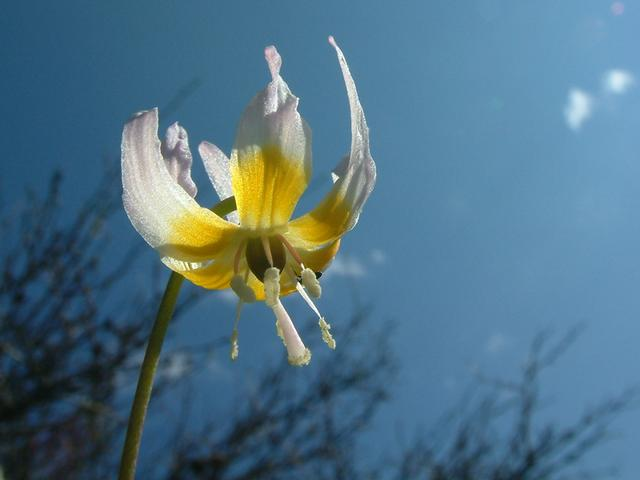
This rare species has a basal pair of narrow, lance-shaped green leaves that are 2-7″ long. A leafless stalk carries one to three nodding flower that have white recurved tepals with yellow bases, turning pinkish with age. The protruding stamens have large pale yellow anthers.
Alternate Name/s: None
Native Range: Klamath Mountains and the southernmost peaks of the Cascade Ranges of southern Oregon and northern California
Habitat: Meadows and forest openings at elevations of 3600–5400 ft.
Type: Perennial
Height: 8″
Bloom Time: Mid spring
Bloom Color: Pink, yellow, white
Light: Full sun to partial shade
Soil: Unavailable
USDA Hardiness Zones: 6-?
Photo Credit: Wikimedia Commons
Avalanche Lily (Erythronium montanum)
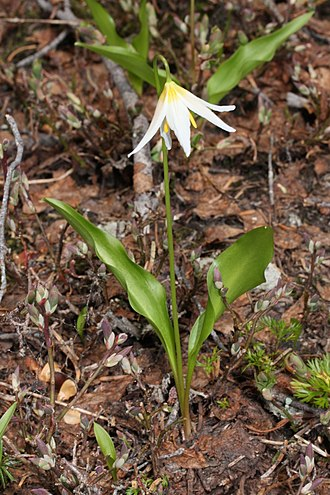
Paired basal leaves are plain green, broadly lance-shaped, and 4-8″ long. The leafless flowering stalks carry one to four nodding flowers with slightly recurved tepals that are white with yellow to orange-yellow at the base, and sometimes turn pink with maturity.
Alternate Name/s: White avalanche lily
Native Range: Olympic and Cascade Ranges of Oregon and Washington
Habitat: Alpine or subalpine meadows and forests
Type: Perennial
Height: 6-14″
Bloom Time: Mid- to late spring
Bloom Color: White with yellow to yellow orange
Light: Semi shade (full sun in cool climates)
Soil: Humusy, consistently moist, well-drained, slightly acidic
USDA Hardiness Zones: 4-8
Photo Credit:
Sierra Fawn Lily (Erythronium multiscapideum)
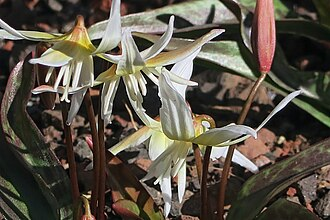
Paired basal leaves are oval, 1.4-6″ long, and dark green lightly mottled with brown or white. The flowering stems are branched low down between the leaves or underground, so the plant may appear multi-stemmed. Each stem carries 1-4 nodding flowers with white tepals that are yellow at the base. Anthers are white or cream.
Alternate Name/s: None
Native Range: Southern Cascade Range and the Sierra Nevada in California
Habitat: Slopes in yellow pine forest and woodlands in the foothills from sea level to elevations of 1800 feet
Type: Perennial
Height: 4-8″
Bloom Time: Spring
Bloom Color: White with bright yellow
Light: Semi shade
Soil: Humusy, consistently moist, well-drained, slightly acidic
USDA Hardiness Zones: 4-9
Photo Credit: Wikipedia
Giant White Fawnlily (Erythronium oregonum)
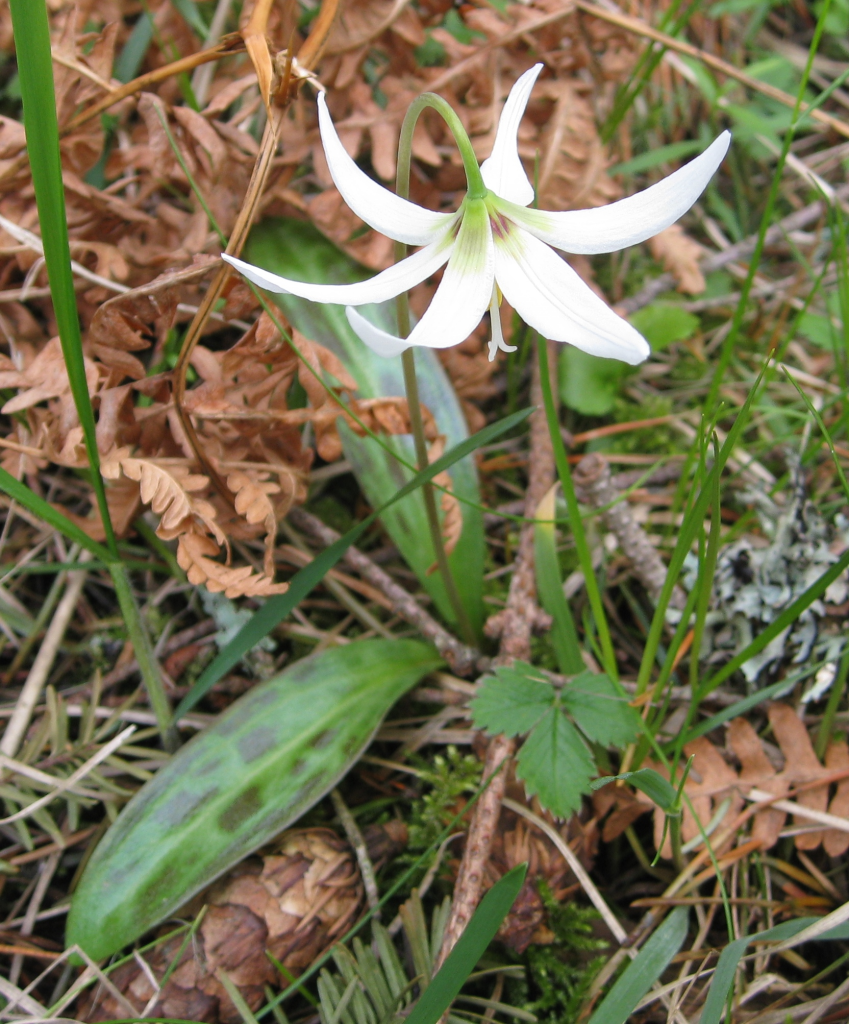
Paired basal leaves are oblong, up to 8-10″ long, and are often mottled with brown and white. Leafless stalk carry 1-3 nodding, flowers up to 3″ across with recurved tepals that are white tinged with pink and purplish near the outer base with yellow bands near the inside base. Anthers are white to yellow.
Alternate Name/s: Oregon fawn-lily
Native Range: Washington, Oregon, California
Habitat: Meadows, rocky outcrops, and coniferous forests of coast range mountains
Type: Perennial
Height: 12-16″
Bloom Time: Spring
Bloom Color: White, lavender, yellow, red
Light: Partial shade
Soil: Humusy, consistently moist, well-drained, slightly acidic
USDA Hardiness Zones: 3-9
Photo Credit: J Brew, Wikimedia Commons
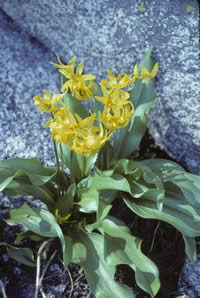
Many-flowered Fawnlily (Erythronium pluriflorum)
Two oval leaves are up to 8″ long. Slender, leafless stalks carry one to ten flowers with bright yellow reflexed tepals.
Native Range: Endemic to California, in the central Sierra Nevada
Habitat: Along the San Joaquin River and its tributaries
Type: Perennial
Height: 3-12″
Bloom Time: Late spring to mid summer
Bloom Color: Yellow
Light: Full sun to dappled shade
Soil: Fertile, consistently moist, well-drained
USDA Hardiness Zones: 7-?
Photo Credit: Jim Shevock, US Forest Service
Purple Fawn Lily (Erythronium purpurascens)
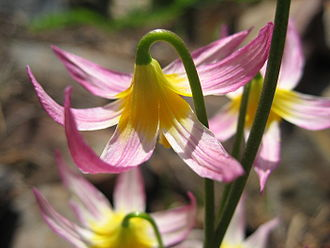
Paired basal leaves are lance-shaped, 4 to 6″ long, have wavy margins, and are green with lighter green mottling. Leafless stalks carry one to six nodding flowers with recurved tepals that are white with yellow bases, turning purple with age. The conspicuous anthers are yellow
.Alternate Name/s: Sierra Nevada fawn lily
Native Range: High mountains of the southern Cascade Range, Coast Ranges, and northern Sierra Nevada in California
Habitat: Yellow pine and red fir forests at elevations of 1200 – 2400 ft. Open coniferous forests, meadows and rocky places, 1500 – 2700 feet
Type: Perennial
Height: 8″
Bloom Time: Spring (when snow melts)
Bloom Color: white to purple
Light: Semi shade
Soil: Humusy, consistently moist, well-drained, slightly acidic
USDA Hardiness Zones: 3-9
Photo Credit: Wikipedia
Kaweah Lakes fawn lily (Erythronium pusaterii )
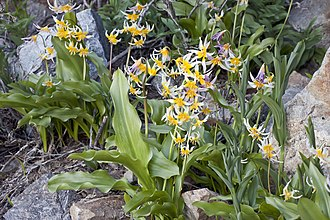
The two leaves are 4 to 14″ long and lance-shaped with wavy margins. Slender, leafless stalks carry one to eight flowers. Each flower has six tepals that are white with yellow bases, aging to pink.
Alternate Name/s: Hocket Lakes fawn lily
Native Range: Endemic to central Tulare County, California.
Habitat: : Meadows, open forests, rocky ledges at elevations of 6900-8200 feet
Type: Perennial
Height: 16″
Bloom Time: Mid spring to mid summer
Bloom Color: yellow, sometimes tinged or dotted with light to dark purple-red
Light: Full sun to partial shade
Soil: Humusy, consistently moist, well-drained
USDA Hardiness Zones: 7 (?) -?
Photo Credit: Wikipedia
Olympic fawn-lily (Erythronium quinaultense)
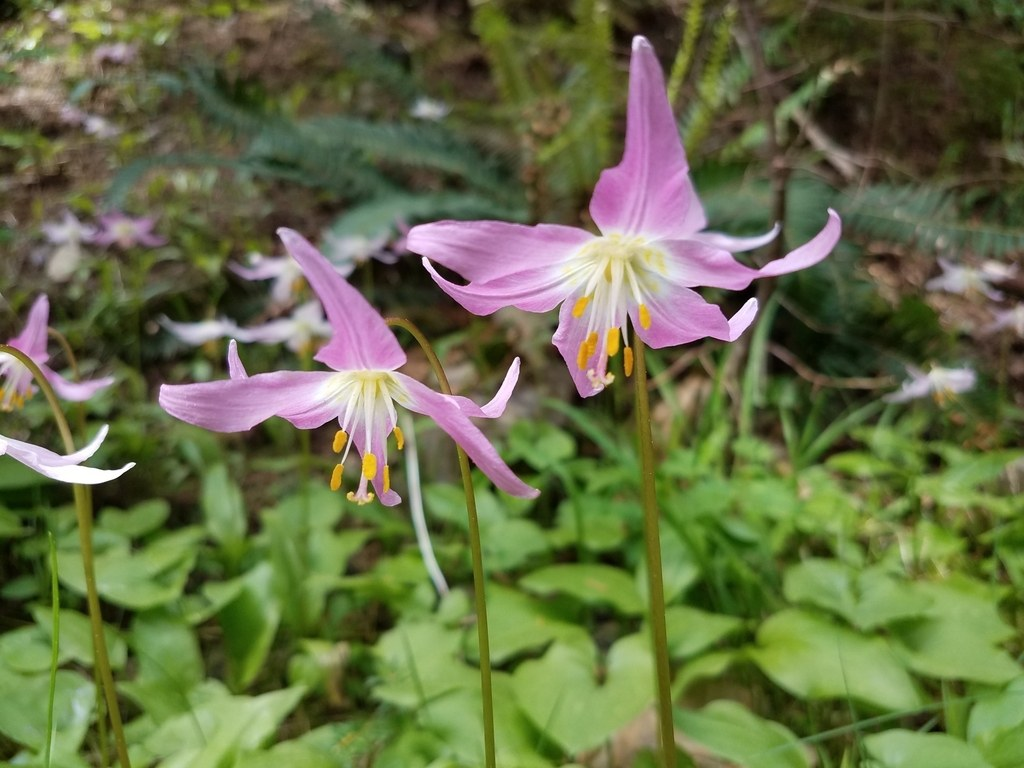
Paired, basal leaves are up to 8″ long, lanceolate to ovate with wavy margins, and green or faintly mottled with white or brown. Slender, leafless stalks carry 1-3 flowers with 6 tepals that are white at the base, shading to pink with a yellow band at the base.
Alternate Name/s: Quinault trout-lily
Native Range: Endemic to southwestern Olympic Peninsula in Washington
Habitat: Openings, edges, understory, stream-sides and rocky ledges in coniferous forests at elevations of 960-2900 feet
Type: Perennial
Height: 10″
Bloom Time: Late spring to early summer
Bloom Color: White, pink, yellow
Light: Full sun to partial shade
Soil: Consistently moist, well-drained
USDA Hardiness Zones: 7(?) to ?
Photo Credit: gina_smith, iNaturalist
Mahogany Fawn Lily (Erythronium revolutum)
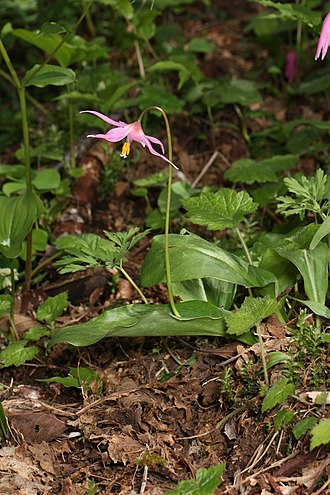
Paired basal leaves are 5-7″ long, lanceolate, and mottled with white or purple-brown. Naked stalks carry one or two nodding flowers that have straight or recurved tepals of pink or light purple marked with yellow or white spotting toward the center of the flowers. The conspicuous anthers are bright yellow.
Alternate Name/s: Coast fawn lily, pink fawn lily
Native Range: Washington, Oregon, California
Habitat: Moist places such as streambanks, bogs, and wet redwood and mixed evergreen forest understory
Type: Perennial
Height: 6-12″
Bloom Time: Mid to late spring
Bloom Color: Pink with yellow and orange-red markings
Light: Part shade
Soil: Humusy, consistently moist, well-drained
USDA Hardiness Zones: 4-9
Pilot Ridge Fawn Lily (Erythronium taylori )
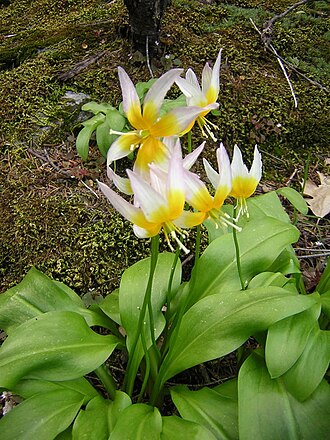
This rare fawn lily is clump forming and has plain green basal leaves that are up to 14″ long, are rarely mottled, and have way wavy margins. Slender stalks carry 1-8 strongly and pleasantly scented flowers that have strongly reflexed white tepals with bright yellow bases, and fade to pink with age.
Alternate Name/s: Taylor’s fawnlily, Yosemite fawn lily
Native Range: Endemic to Tuolumne County, California, where it is known only from Pilot Ridge just outside of Yosemite National Park.
Habitat: Shaded north-facing cliffs
Type: Perennial
Height: up to 16″
Bloom Time: Late spring to early summer
Bloom Color: White, yellow, pink
Light: Some shade
Soil: Humusy, consistently moist, well-drained
USDA Hardiness Zones: 7 (?) to ?
Photo Credit: Wikipedia
Tuolumne Fawn Lily (Erythronium toulumnense)
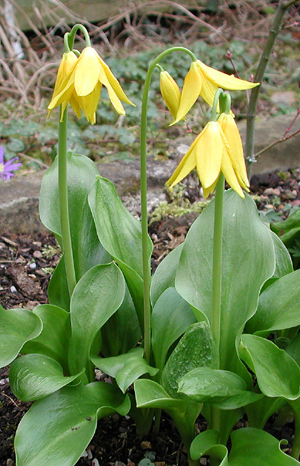
Two glossy green leaves are basal, lance-shaped and up to 14″ long. A leafless reddish stalk bears one to five bright yellow flowers with recurved tepals. It usually grows in clumps. Several hybrids/cultivars are commercially available.
Alternate Name/s: Tuolumne dog’s tooth violet
Native Range: Endemic to the Sierra Nevada of Tuolumne County, California
Habitat: Open woodlands, chaparral, at an elevation of 1640-3609 feet
Type: Perennial
Height: 10-14″
Bloom Time: Mid to late spring
Bloom Color: Yellow
Light: Part sun to full shade
Soil: Fertile, humusy, consistently moist, well-drained
USDA Hardiness Zones: 3-9
Photo Credit: 2004 Mike Ireland, Calphotos