
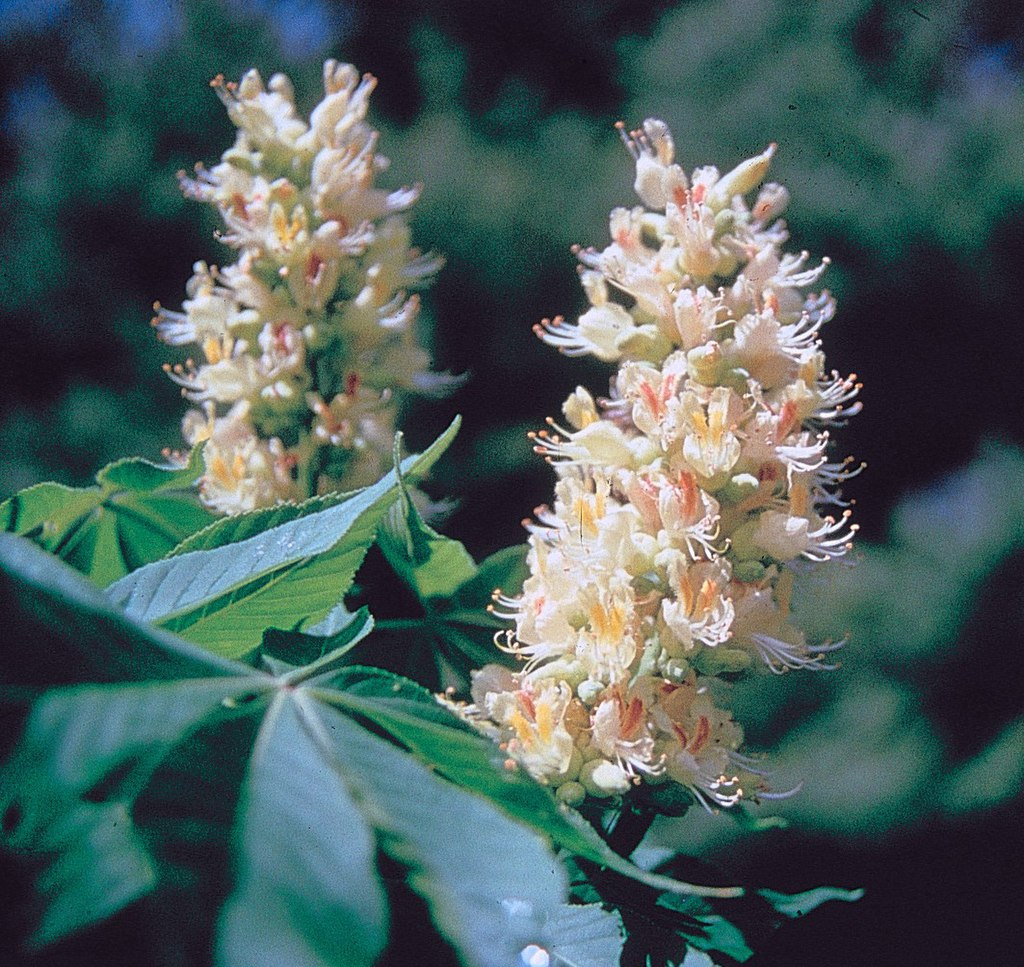
Native species of buckeye are usually deciduous large shrubs or small trees native to North America and Eurasia. They are in the soapberry family, Sapindaceae, that also includes maple and lychee. Native species grow up to 79′ tall and have opposite, palmately compound leaves with 5-7 leaflets, occasionally 9. The leaflets have toothed margins and turn yellow to orange or bronze in the fall. Panicles of white, pink, red, or yellow, flowers appear from spring into early summer. The fruit that follows is a capsule containing 1-3 seeds. All parts of the plant are moderately toxic.
Buckeyes like full sun to partial shade and average, medium moist, well-drained soil in USDA Hardiness zones 6-9 but hardiness varies greatly among the species. Plants are generally healthy but may be damaged by leaf blotch, leaf scorch, powdery mildew and more. Propagation is by seed and cuttings.
The genus name, Aesculus, is the classical Latin name for a kind of oak tree.
Photo Credit: Wikimedia
The environmental conditions of New England have resulted in at least one species of buckeye native to the Mid-Atlantic but it is native to other areas of the US too.
Ohio Buckeye (Aesculus glabra)
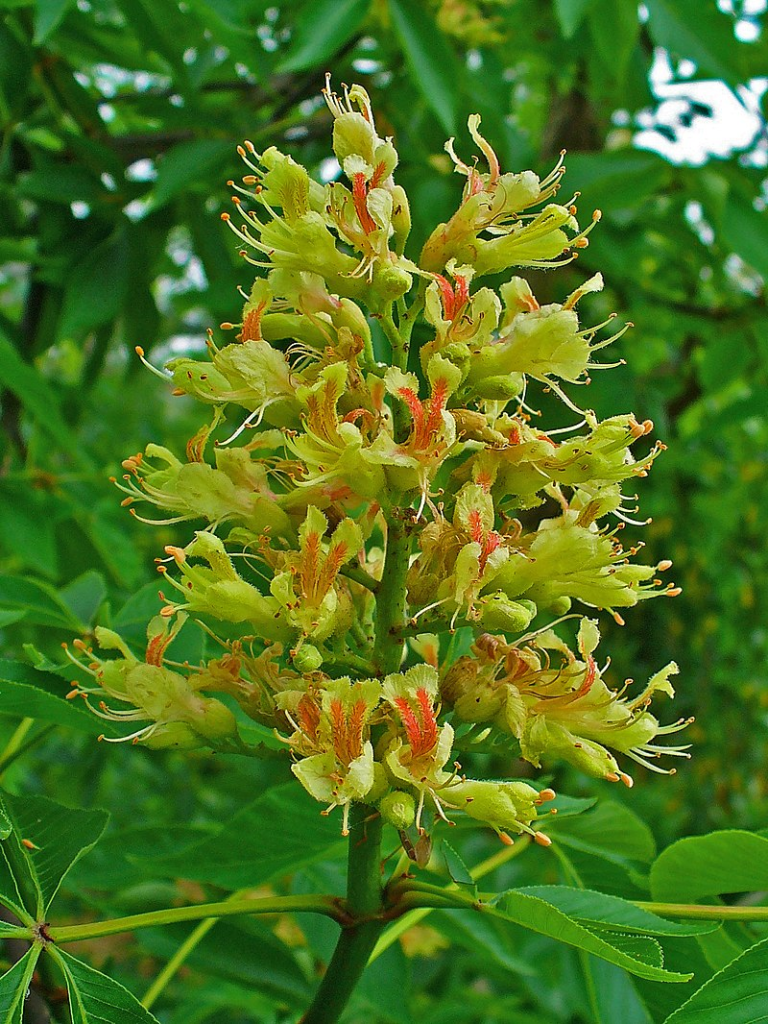
This small to medium sized deciduous tree is low-branched and has a broad oval-rounded crown. The palmately compound leaves have 5 elliptic to obovate leaflets, that are 3-6″ long. Fall foliage is usually yellow, but may become orange-red or reddish-brown. Terminal panicles of greenish yellow flowers appear in mid to late spring. The panicles are 4-7″ long, and the flowers are 1″ long, and 4-petaled with the stamens longer than the corolla. The fruit that follows is a small spherical capsule with a prickly or warty covering and contains one to three seeds. The flowers, bark, and stems, have an unpleasant odor when crushed.
Alternate Name/s: Horse chestnut, fetid buckeye, stinking buckeye
Native Range: Maine and New Hampshire as well as places in the Southwest, Midwest, Southeast and Mid-Atlantic
Habitat: Moist stream banks, bottomlands, woodlands, thickets
Type: Deciduous tree
Height: 20-40′ (to 75′ in the wild)
Bloom Time: Mid to late spring
Bloom Color: Greenish yellow
Light: Full sun to partial shade
Soil: Average, medium moist, well-drained, slightly acidic
USDA Hardiness Zones: 3-7
Photo Credit: Wikimedia Commons
The New England area includes Maine, New Hampshire, Vermont, Massachusetts, Rhode Island and Connecticut. The area has four distinct seasons and offers diverse geography with rivers, lakes, forests, mountains, and coast lines on both the Atlantic Ocean and Long Island Sound. The winters are long, cold, and heavy snow is common from December to February. Summer is short with temperatures between 80 and 85 F. Precipitation averages about 45″ as rain and 60-90″ as snow.