
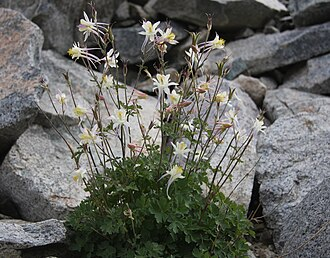
Aquilegia, also known as granny’s bonnet, is a genus of perennials native to the meadows and woodlands of the Northern Hemisphere. It is a member of the buttercup family, Ranunculaceae, that also includes anemone, hellebores, and bugbane. Growing 4″ to 5′ tall, plants form erect clumps of basal foliage and have slender, branching leafy stem. The ferny leaves are carried on long petioles, and are pinnately compound 1-3 times usually with 3-lobed leaflets. Flowers may be white, yellow, red, blue or combinations. They are erect or nodding, and usually have 5 petal-like sepals alternating with 5 true petals surrounding a center of numerous stamens. The petals have a broad tube in front and a projecting spur behind with spur length varying with the species. Columbines tend to thrive in part shade and in fertile, moist, well-drained soil, but tolerate less. They are generally short-lived and prone to disfigurement by leaf miners. Many attract pollinators.
The genus name, Aquilegia, comes from the Latin word aquila meaning eagle in reference to the resemblance of the spurs to the talons of an eagle.
Photo Credit: Dcrjsr , Wikimedia Commons
The environmental conditions in the Pacific Coast have resulted in at least four native species of columbine there but they may be native to other places too. All of the columbines described here are native to at least one of the states on the Pacific Coast.
Van Houtte’s Columbine (Aquilegia exima)
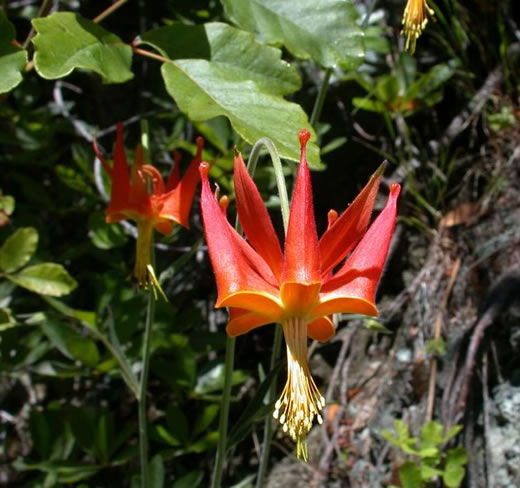
The lower compound leaves are oval, grey-green and densely glandular, with leaflets 1.5-2″ long while the upper leaves are lobed but not segmented. The nodding flowers are up to 2″ long and produced in clusters. Each flower has red to orange sepals, petals, and straight spurs. The sepals and petals are reflexed.
Alternate Name/s: Serpentine columbine
Native Range: California
Habitat: Seeps on serpentine soils along the coast ranges from Mendocino to Ventura
Type: Perennial
Height: .7-5′
Bloom Time: Spring to fall
Bloom Color: Red and orange
Light: Shade to partial shade
Soil: Often found in serpentine soils but does well in clay loam, medium moist, well-drained soil
USDA Hardiness Zones: 4-10
Photo Credit: Brad Kelly, USFS
Yellow Columbine (Aquilegia flavescens)
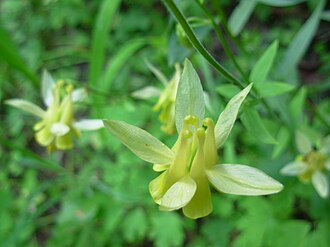
The compound leaves are 3-12″ long, 2-3 times lobed, and have hairy undersides. The nodding flowers have wide spread, yellow or pink tinged sepals, and cream colored petals that have yellow spurs with incurved tips. The flowers attract humming birds and other pollinators including bumble bees.
Alternate Name/s: Yellow mountain columbine, golden columbine
Native Range: Washington and Oregon as well as parts of the Rocky Mountain area
Habitat: Elevations between 4300 and 11500 ft; moist mountain meadows, open woods, alpine slopes and rock slides
Type: Perennial
Height: 8-28″
Bloom Time: Late spring to early summer
Bloom Color: Cream to yellow sometimes tinged with pink
Light: Part shade
Soil: Average, medium moist, well-drained
USDA Hardiness Zones: 4-8
Photo Credit: Misterbiologist, Wikipedia
Western Columbine (Aquilegia formosa)
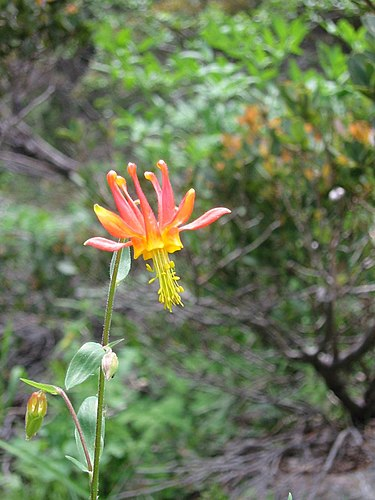
This bushy plant has delicate, blue-green, lobed foliage and nodding flowers with wide-spread red sepals straight red spurs, and a center of yellow petals. Flowers are up to 2″ across and attract humming birds while seeds attract birds. Short-lived but self seeds.
Alternate Name/s: Crimson columbine, scarlet columbine, red columbine
Native Range: California, Oregon, and Washington as well as places in the Rocky Mountain area and Alaska.
Habitat: Moist area such as along streambanks in chaparral, oak woodland, mixed-evergreen or coniferous forest, alpine and subalpine meadows at elevations of under 4000-9000 ft.
Height: 6-40″
Bloom Time: Spring to summer
Bloom Color: Yellow and red
Light: Partial shade, full sun
Soil: Humusy, medium moist, well-drained
USDA Hardiness Zones: 3-9
Photo Credit: NorCalHistory, Wikipedia
Sierra Columbine (Aquilegia pubescens)
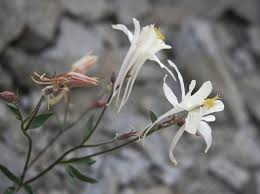
Highly divided pale green leaves form a basal tuft. The erect 2″ wide flowers appear in summer and have yellow, sometimes cream or pink, petals, spurs and spreading sepals. The spurs may be up to 2″ long. Hybridizes with A. formosa (see above) where the two species overlap which produces intermediate forms.
Alternate Name/s: Alpine columbine, Coville’s columbine
Native Range: California
Habitat: Open, rocky slopes, and talus in alpine and subalpine climates of the High Sierras at elevations between 8,000 and 12,000 ft.
Type: Perennial
Height: 6-20″
Bloom Time: Summer
Bloom Color: Pink, yellow, white
Light: Part shade, shade
Soil: Average, medium moist, well-drained
USDA Hardiness Zones: 4-8
Photo Credit: Dcrjsr , Wikimedia Commons
The three states of the Pacific coast, Washington, Oregon and California, have a great variety of geography and climate. The key factors uniting these states are the coastline along the Pacific Ocean and the presence of numerous mountain ranges. The area of the Pacific coast includes rainforests as well as semi-arid plateau and deserts. The climate varies with the geography with average annual rainfall ranging from over 130″ to less than 2″. Precipitation can be in the form of rain or snow. Likewise, summer temperatures can be over 110 F in Death Valley and down to -70 F in the mountains.