
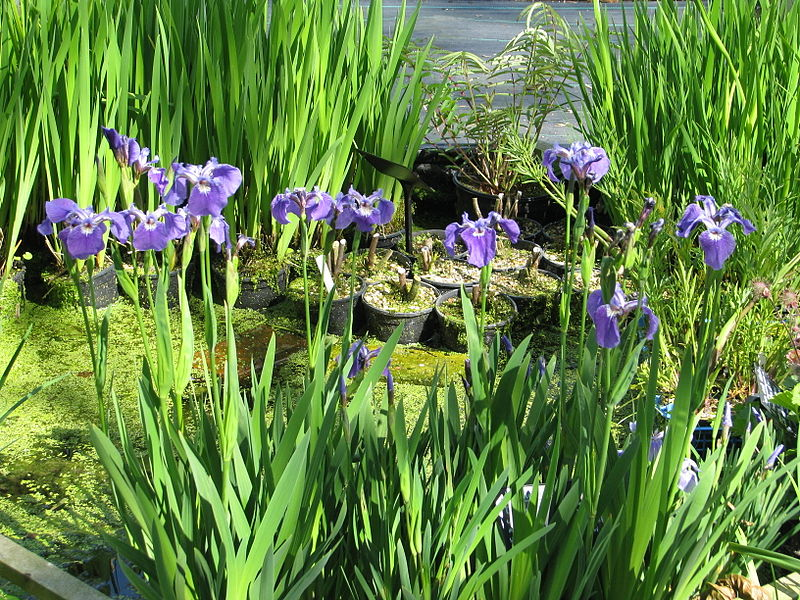
Iris is a genus of 310 species and is in the plant family Iridaceae that also included gladiolus, crocus and freesia. The plants are all perennial and grow from rhizomes or bulbs. The iris with rhizomes have 2-10 sword shaped leaves that grow in dense clumps while the iris with bulbs have 2-10 narrow leaves. The flowers appear on a long erect stems that may be branched. The flowers consist of three outer sepals called falls that usually are spreading or droop downward, and three inner petals called standards, that are upright. The standards may be delicate or large and showy and the falls may have various attractive and distinctive markings including a patch of yellow or white, known as a signal, or a row of hairs known as a beard. Petals and sepals may be lavender, blue, purple, white, pink, red, yellow, brown and combinations of these that resemble a rainbow.
Iris can grow in a variety of soil types from dry to wet and some grow in shallow water. Bulbus iris prefer drier soil than rhizomatous iris and both grow well in full sun to partial shade. The bloom time various greatly and with careful planning it is possible to have some species of iris blooming from mid spring to mid summer.
The genus name, Iris, honors the Greek goddess Iris whose name, ἶρις (îris) means rainbow and may refer to the wide variety of flower colors.
Photo Credit: Peganum, Wikimedia Commons
The environmental conditions of New England have resulted in at least four species of native iris there but they may be native to other regions also. The iris described here are native to at least one state in New England.
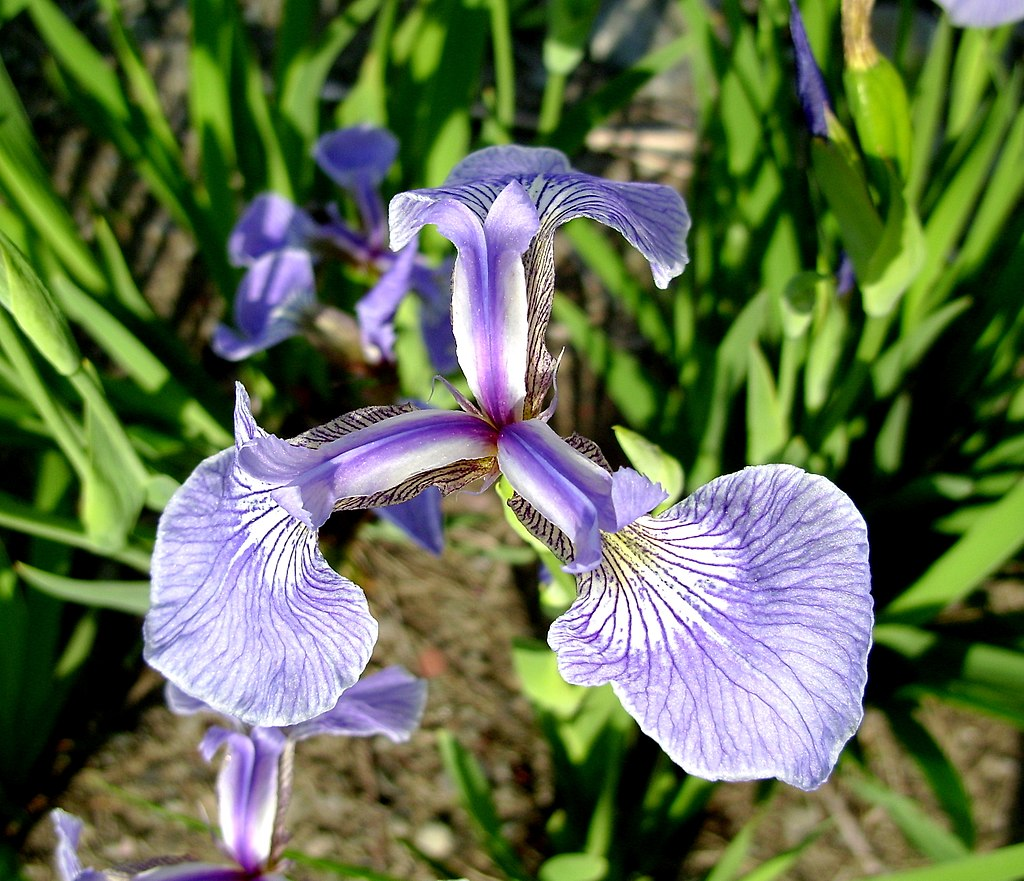
Beachhead Iris (Iris hookeri)
Endemic to wetlands associated with sea coasts and beaches in Maine.
Height: 8-12″
Bloom Time: July
Bloom Color: Blue to purple
Light: Full sun to partial shade
Soil: Average, medium moist, well drained
USDA Hardiness Zones: 4-8
Photo Credit: André-Philippe D. Picard , Wikimedia Commons
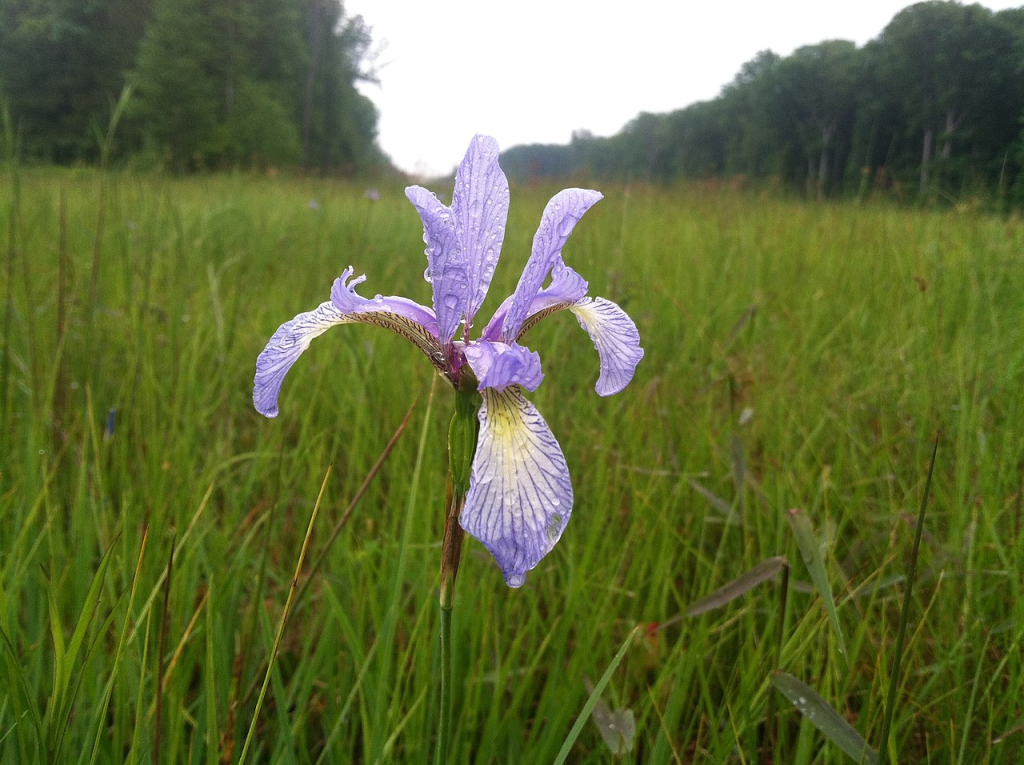
Slender Blue Flag (Iris prismatica)
Native to Maine, New Hampshire, Massachusetts, and Connecticut, slender blue flag grows in bogs and marshes and along streams. It tolerates salty conditions, summer drought, occasional flooding and deer, but attracts birds including hummingbirds. Also known as cubeseed iris, it is a good choice for use along streams and ponds as well as in seaside, bog, bird, and wildlife gardens.
Height: 1-3′
Bloom Time: Late spring to mid summer
Bloom Color: Pale blue to blue violet with white blotch
Light: Full sun to part shade
Soil: Average, moist to wet, neutral to slightly acidic
USDA Hardiness Zones: 3-9
Photo Credit: Masebrock, Wikimedia Commons
Arctic Iris (Iris setosa)
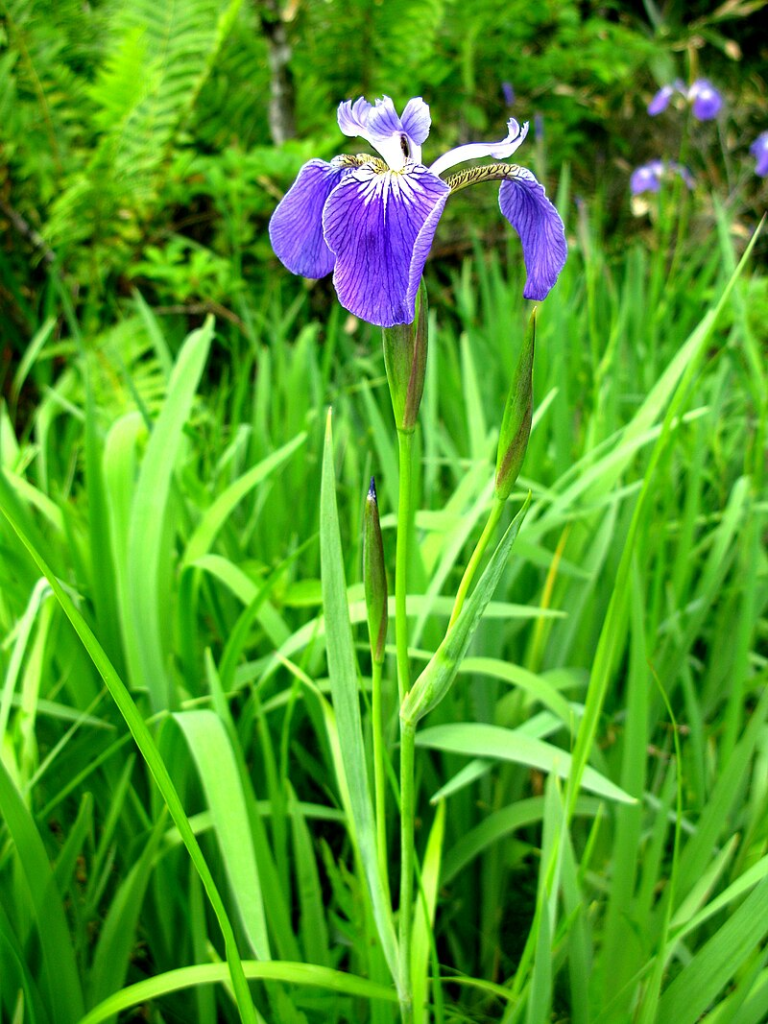
Also called bristle pointed iris, this hardy iris is native to Main as well as Alaska, and parts of Canada, mostly along the coasts. It grows in a variety of wet habits such as in bogs, along rivers, and on beaches and dunes and is usually found at elevations between 4,900 and 8,200′. Although it is considered a wetland plant, it does well in dry conditions and it attracts hummingbirds.
Height: 8-12″
Bloom Time: Late spring
Bloom Color: Blue, purple, violet, white
Light: Full sun, partial sun
Soil: Wet to mesic
USDA Hardiness Zones: 3-8
Photo Credit: Quert1234
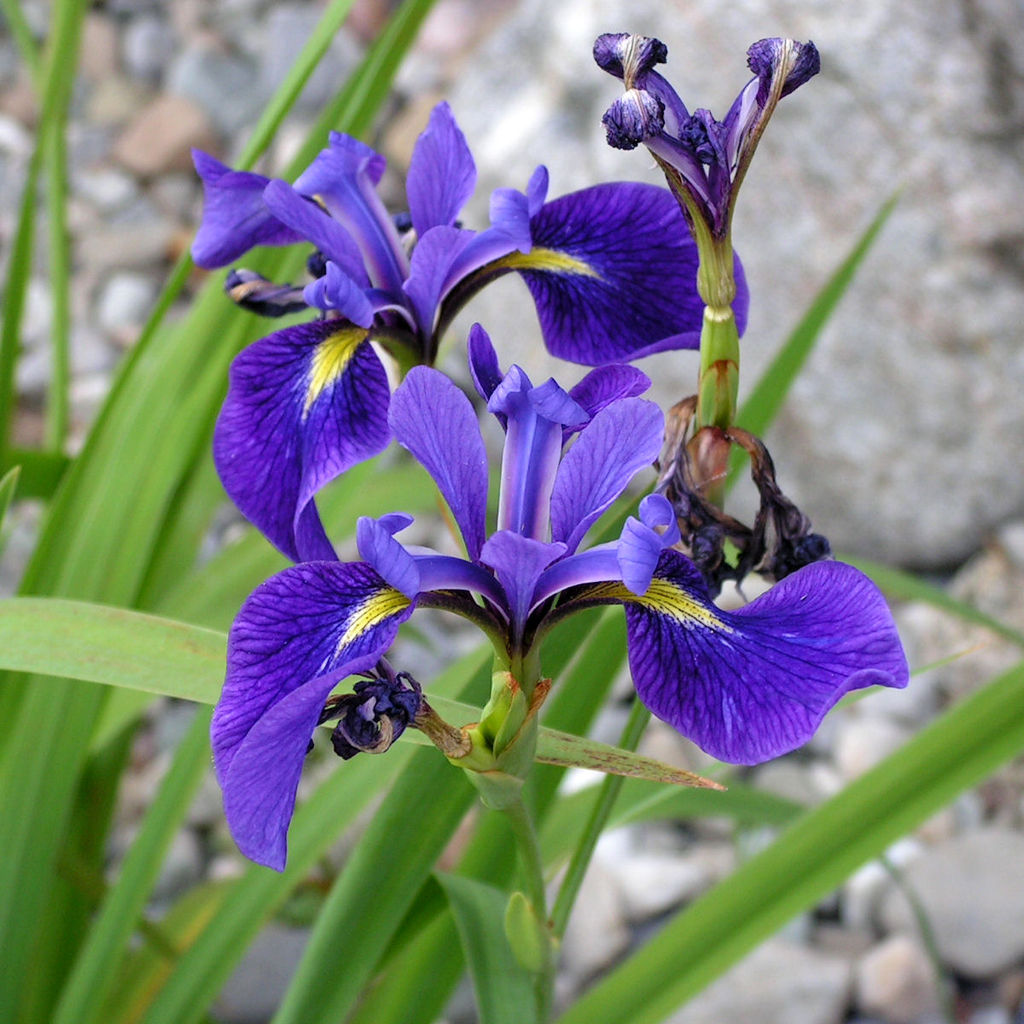
Blue flag Iris (Iris versicolor )
Native to Vermont as well as to parts of the Midwest and Mid Atlantic, blue flag iris grows in sedge meadows, marshes, and along stream banks and shores. Also known as harlequin blue flag, larger blue flag, northern blue flag, and poison flag, it tolerates occasional flooding and can be grown in 4″ of water.
Height: 2-3′
Bloom Time: May to June
Bloom Color: Light to deep blue and purple
Light: Full sun; tolerates partial shade
Soil: Average, moist to wet,
USDA Hardiness Zones: 3-6
Photo Credit: D. Gordon E. Robertson, Wikimedia Commons
New England is made up of six states: Maine, Vermont, New Hampshire, Massachusetts, Rhode Island, and Connecticut. The area offers four distinct seasons and diverse geography with rivers, lakes, forests, mountains, and coast lines on both the Atlantic Ocean and Long Island Sound. It has four distinct seasons that provide opportunity for a variety of plants. The winters are long, cold, and heavy snow is common from December to February. Summer is short with temperatures between 80 and 85 F. Precipitation averages about 45″ as rain and 60-90″ as snow.