
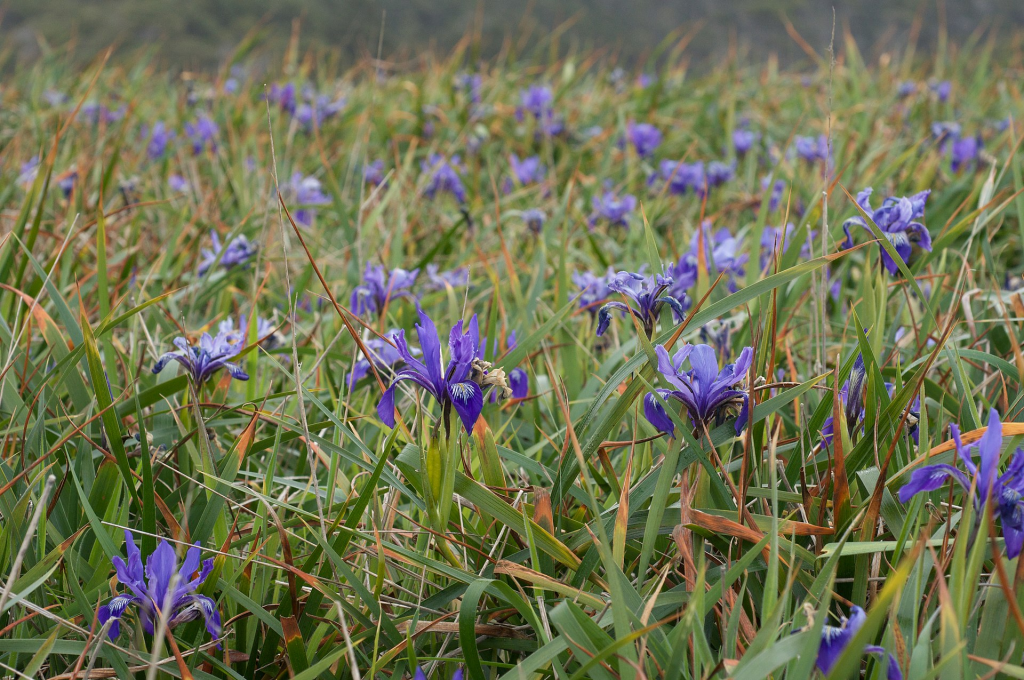
Iris is a genus of 310 species and is in the plant family Iridaceae that also included gladiolus, crocus and freesia. The plants are all perennial and grow from rhizomes or bulbs. The iris with rhizomes have 2-10 sword shaped leaves that grow in dense clumps while the iris with bulbs have 2-10 narrow leaves. The flowers appear on a long erect stems that may be branched. The flowers consist of three outer sepals called falls that usually are spreading or droop downward, and three inner petals called standards, that are upright. The standards may be delicate or large and showy and the falls may have various attractive and distinctive markings including a patch of yellow or white, known as a signal, or a row of hairs known as a beard. Petals and sepals may be lavender, blue, purple, white, pink, red, yellow, brown and combinations of these that resemble a rainbow.
Iris can grow in a variety of soil types from dry to wet and some grow in shallow water. Bulbus iris prefer drier soil than rhizomatous iris and both grow well in full sun to partial shade. The bloom time various greatly and with careful planning it is possible to have some species of iris blooming over a six month period.
The genus name, Iris, honors the Greek goddess Iris whose name, ἶρις (îris) means rainbow and may refer to the wide variety of flower colors.
The environmental conditions of the Pacific Coast have given rise to at least 14 species of native iris there but one speices is native to other regions too. The iris described here are native to at least one state in the Pacific Coast.
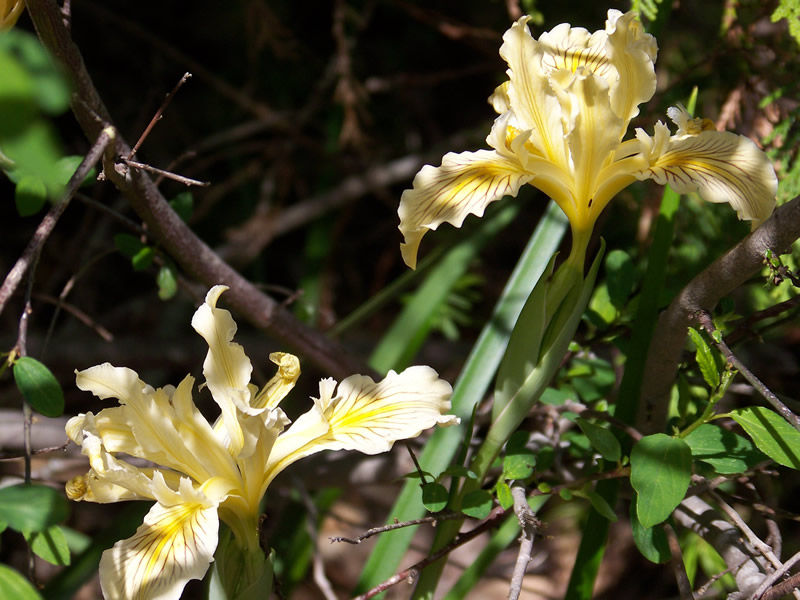
Siskiyou Iris (Iris bracteata)
This evergreen iris is endemic to the Klamath Mountains, in Del Norte County, California, and to Curry County, Josephine County, and Jackson County, in Oregon. It grows in sunny to shady areas in dry pine forests or in sunny meadow openings.
Height: 1-2′
Bloom Time: Spring
Bloom Color: Golden yellow to creamy white flowers with purplish to yellow-brown veins
Light: Part shade
Soil: Average, moist to semi-dry, well-drained
USDA Hardiness Zones: 6-9
Photo Credit: John McRea, Wikimedia Commons
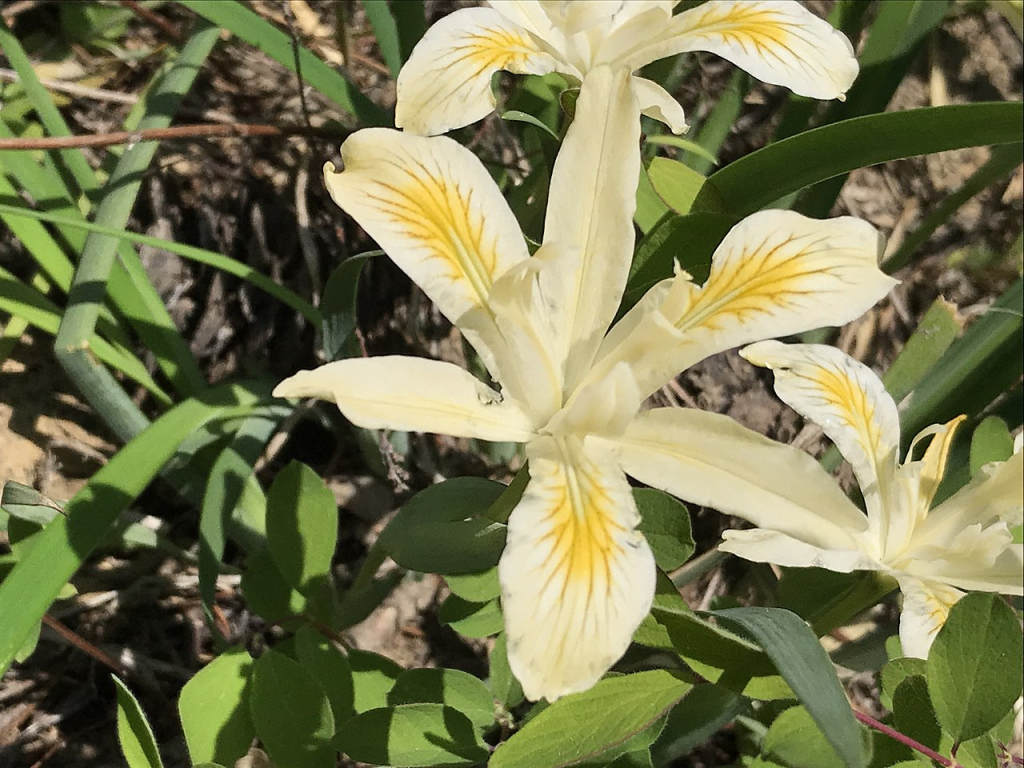
Yellowleaf Iris (Iris chrysophylla)
This diminutive iris is native to open, coniferous forests below 5,500′ elevation from midwestern and southern Oregon west of the Cascades and south to the crest of the Siskiyou Mountains in northern California.
Height: 1-8″
Bloom Time: April to June
Bloom Color: Cream to pale yellow, with dark golden to reddish-brown or lavender veins
Light: Part shade
Soil: Average,moist, well-drained
USDA Hardiness Zones: 4b-9 (?)
Photo Credit: Aaron Listen, Wikimedia Commons
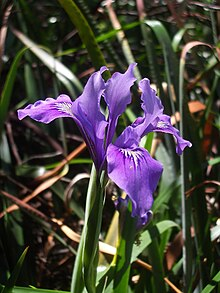
Douglas Iris (Iris douglasian)
Also known as mountain iris and western iris, this iris is native to coastal regions of Northern and Central California and southern Oregon. It grows mainly at lower elevations in coastal scrub, grasslands, and open woodlands.
Height: 6-30″
Bloom Time: April-June
Bloom Color: Purplish-blue, sometimes white or yellow
Light: Part or full shade, tolerates full sun
Soil: Clay to sandy, medium to low moisture, well, drained
USDA Hardiness Zones: 7-9
Photo Credit: Cliff Hutson, Wikimedia Commons
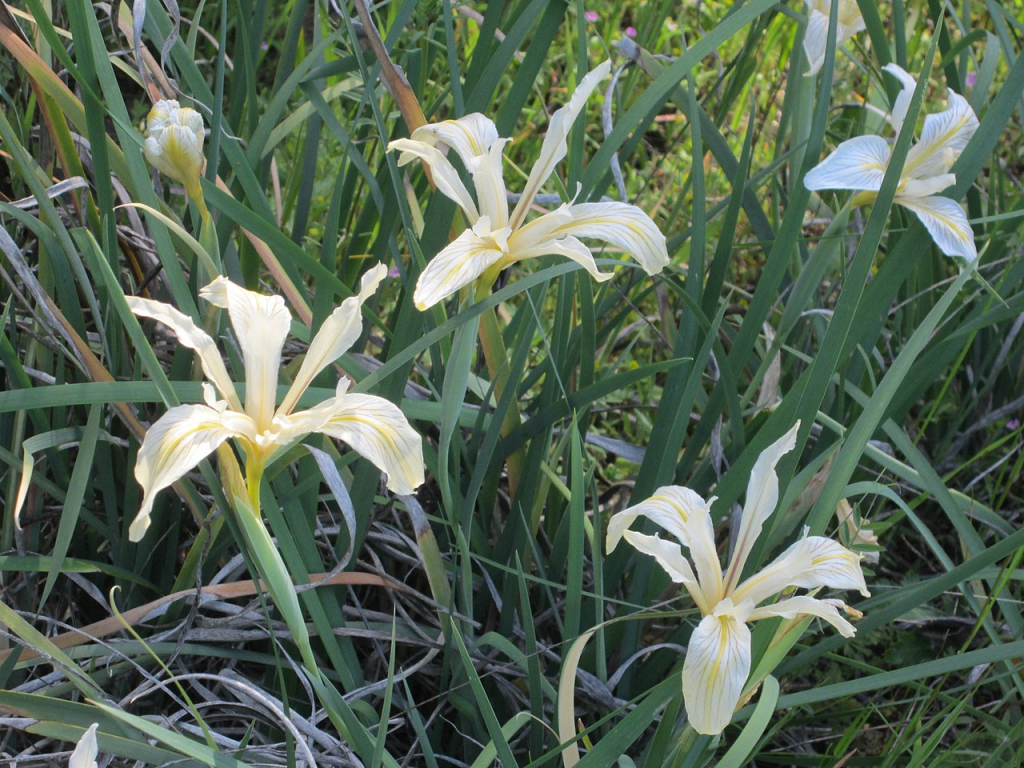
Fernald’s iris (Iris fennaldii)
Endemic to California, Fernald’s iris is found in dry, sunny woods of the Coast Ranges surrounding the San Francisco Bay Area. Note worthy is its gray-green leaves with pink, red, or purple coloring along their edges and bases.
Height: 8-16″
Bloom Time: April
Bloom Color: Creamy white to yellow (rarely purple) with gray veins
Light: Part shade
Soil: Loose, dry to mesic, neutral to slightly acidic; somewhat drought tolerant but likes occasional watering in summer
USDA Hardiness Zones: 8-11
Photo Credit: Kathy Kimpel, Wikimedia Commons
Hartweg’s Iris (Iris hartwegii)
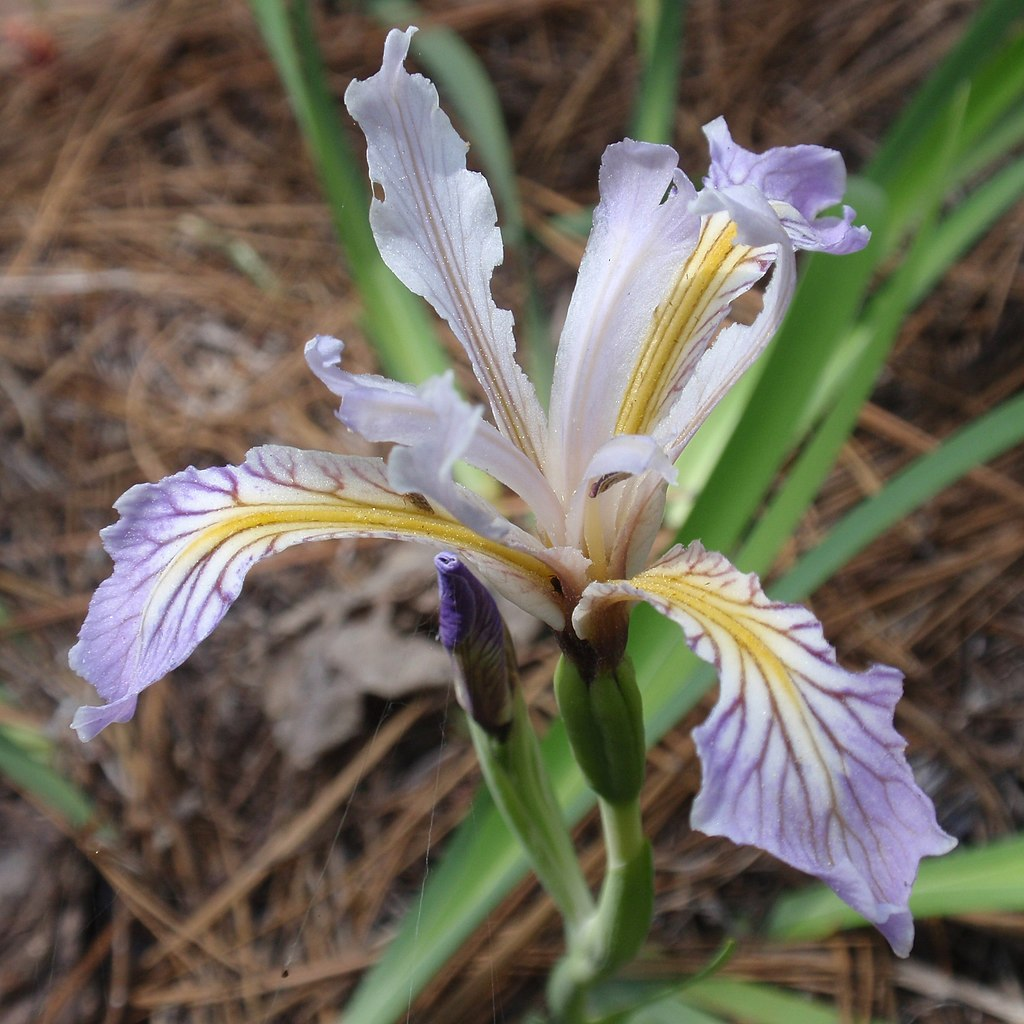
Also called foothill iris, rainbow iris, and Sierra iris, this diminutive iris is endemic to California and can be found in the central counties in lightly shaded mixed and yellow pine woodlands and forests, on mountain slopes at elevations of 2000-6000 ft.
Height: 6-12″
Bloom Time:
Bloom Color: White, yellow, purple, violet
Light: Part shade
Soil: Humous rich, moist, well drained, acidic
USDA Hardiness Zones: 7-9
Photo Credit: Tom Hilton, Wikimedia Commons
Del Norte County Iris (Iris innominata)
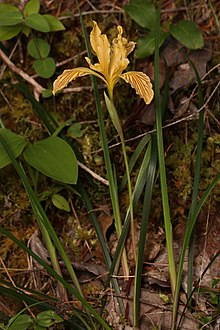
Native to southern Oregon and Del Norte County, California, this rare iris grows in coastal scrub and grasslands. It likes cool, wet winters and warm, dry summers. Plants sold under this name are often hybrids.
Height: 5-8″
Bloom Time: Spring
Bloom Color: Deep golden yellow with darker veins and deep purple with lighter veins.
Light: Sun to partial shade
Soil: Average, medium moist, well-drained, neutral or slightly acidic soil
USDA Hardiness Zones: 8-11
Photo Credit: Walter Siegmund, Wikipedia Commons
Central Coast Iris (Iris longipetala)
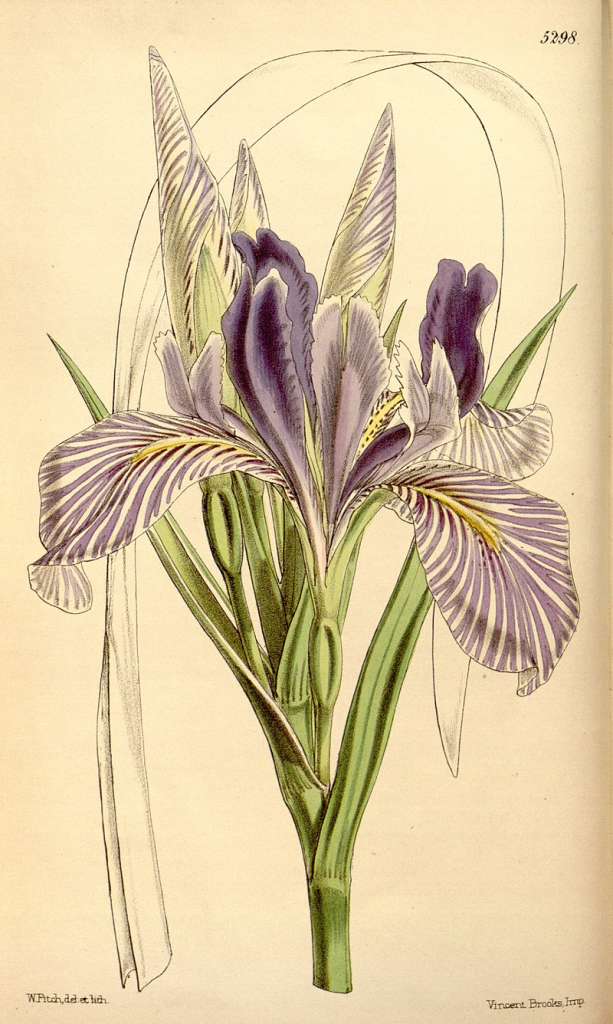
Also called long petaled iris, this rare California native, is found in moist open places in the counties surrounding the Bay Area. It has large flowers and a light pleasant fragrance, and is a good garden plant.
Height: 1-2′
Bloom Time: Spring
Bloom Color: Blue, lavender, purple, or white
Light: Shade to part sun
Soil: Heavy, wet
USDA Hardiness Zones: 10-?
Photo Credit: W. J. Hooker, Wikimedia Commons
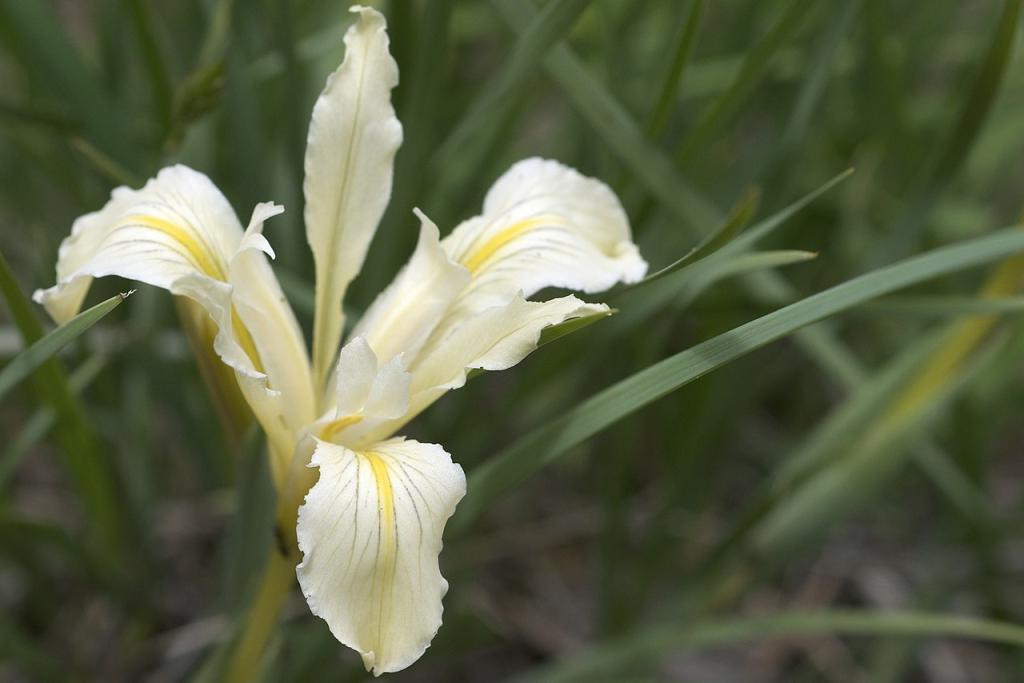
Bowltube Iris (Iris macrosiphon)
Endemic to the Cascade Range Foothills, north and central Sierra Nevada Foothills, Inner North Coast Ranges, and San Francisco area, this iris grows in sunny grasslands, meadows, and open woodlands. It is also known as long tubed iris, ground iris.
Height: 12-24″
Bloom Time: Mid to late spring
Bloom Color: Golden yellow to cream or pale lavender to deep blue-purple, generally with darker veins
Light: Full sun to partial shade
Soil: Average, medium moist to dry, well-drained; prefers dry summer dormancy, with good drainage
USDA Hardiness Zones: 8-10
Photo Credit: Eric in SF, Wikimedia Commons
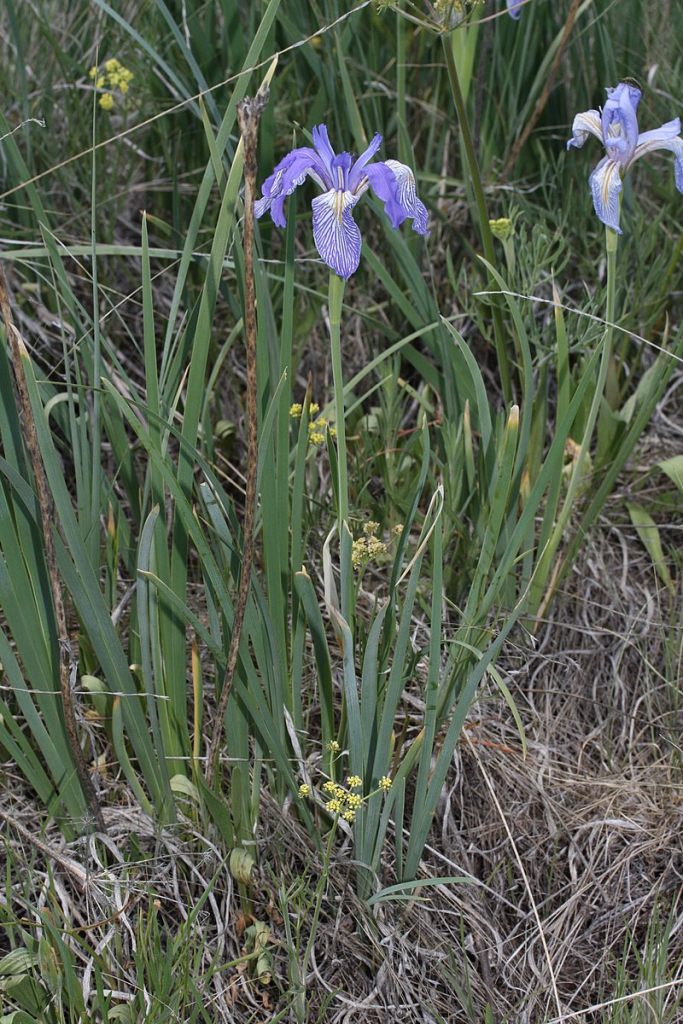
Rocky Mountain Iris (Iris missouriensis)
Also known as Missouri flag and western blue flag, Rocky mountain iris, this iris is native to Oregon, Washington, and California as well as places in the Southwest, Rocky Mountain area and Midwest. It is found at high elevations in alpine meadows, pastures with ground water near the surface, open woodland, and on coastal hills at sea level. The key factor in its distribution appears to be having extremely wet conditions in spring before flowering. and very dry condition for the rest of the growing season.
Height: 8-16′
Bloom Time: May-July
Bloom Color: White, yellow, blue, purple
Light: Sun
Soil: Moist to wet (needs moisture especially at flowering time)
USDA Hardiness Zones: 3-8
Photo Credit: Walter Siegmund, Wikimedia Commons
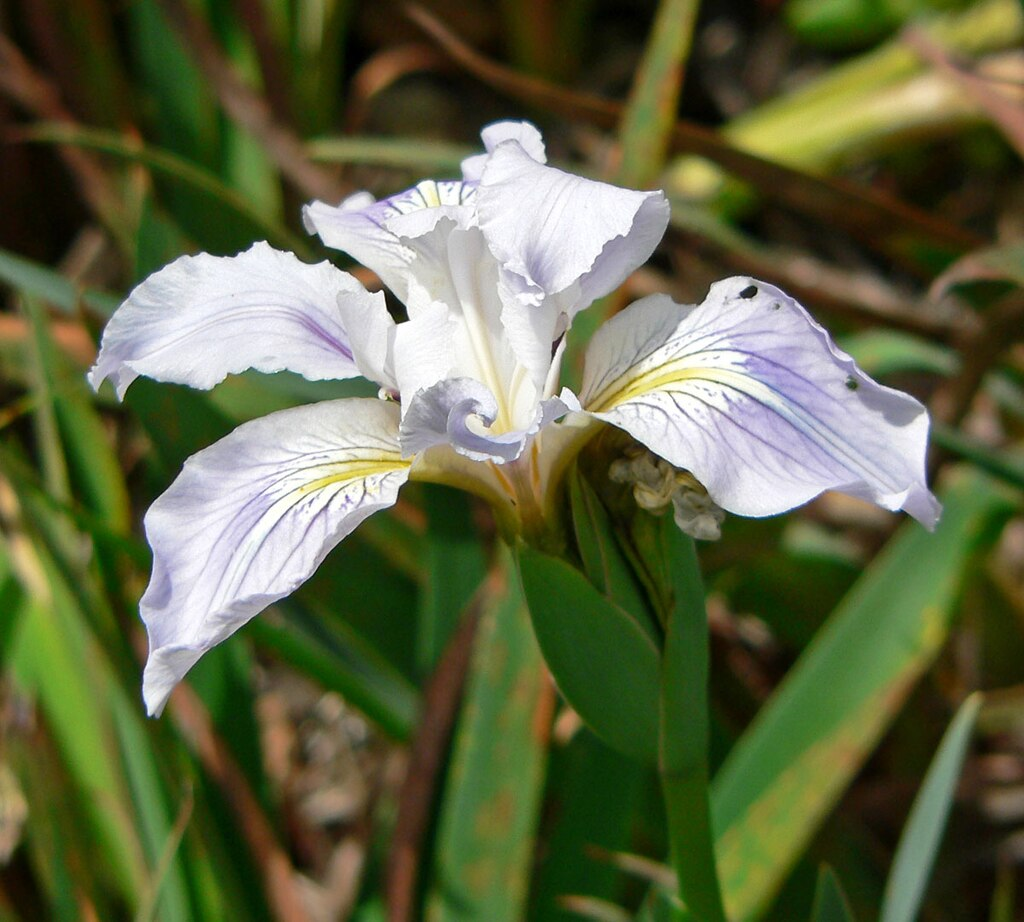
Kern County Iris (Iris munzii)
Known for its 10″ wide flowers, this rare and endangered iris is endemic to the Sierra Nevada foothills of Tulare County, California where it grows on partially shaded, dry to moist partially wooded slopes. Other common names include Tulare lavender iris and Munz’s iris
Bloom Time: Spring
Bloom Color: Light shades of purple and blue with darker veining.
Light: Part shade
Soil: Average, dry to medium moist, well drained; drought tolerant
USDA Hardiness Zones: 8-11
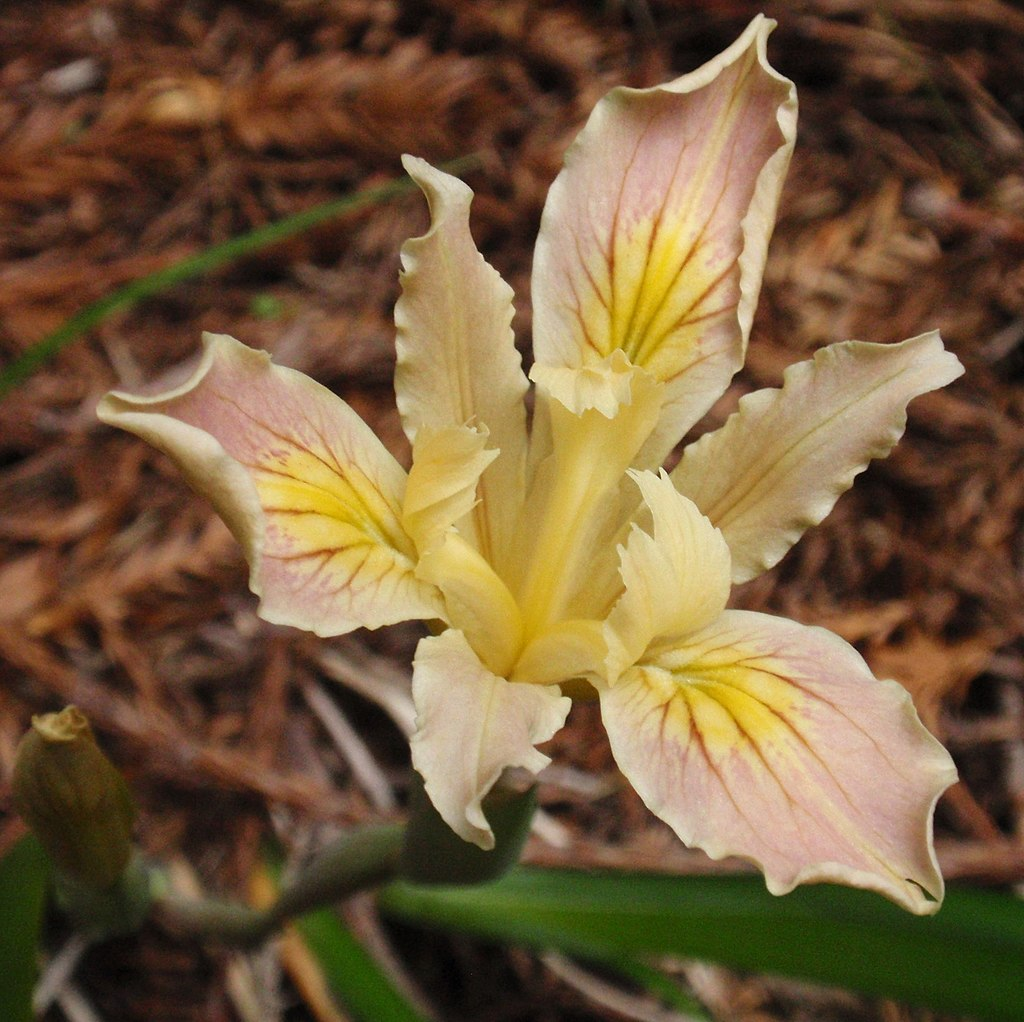
Purdy’s Iris (Iris purdyi)
Also called redwood iris, Purdy’s iris is found in the open places in redwood and mixed forests of Humboldt, Mendocino, Sonoma and Trinity counties in California, and in southern Oregon.
Height: 12-18″
Bloom Time: April to May
Bloom Color: Light yellow and lavender, often veined with darker coloring
Light: Shade, part shade
Soil: Sandy to loamy, dry to moist, well-drained, slightly acidic
USDA Hardiness Zones: 7-9
Photo Credit: Tom Hilton, Wikimedia Commons
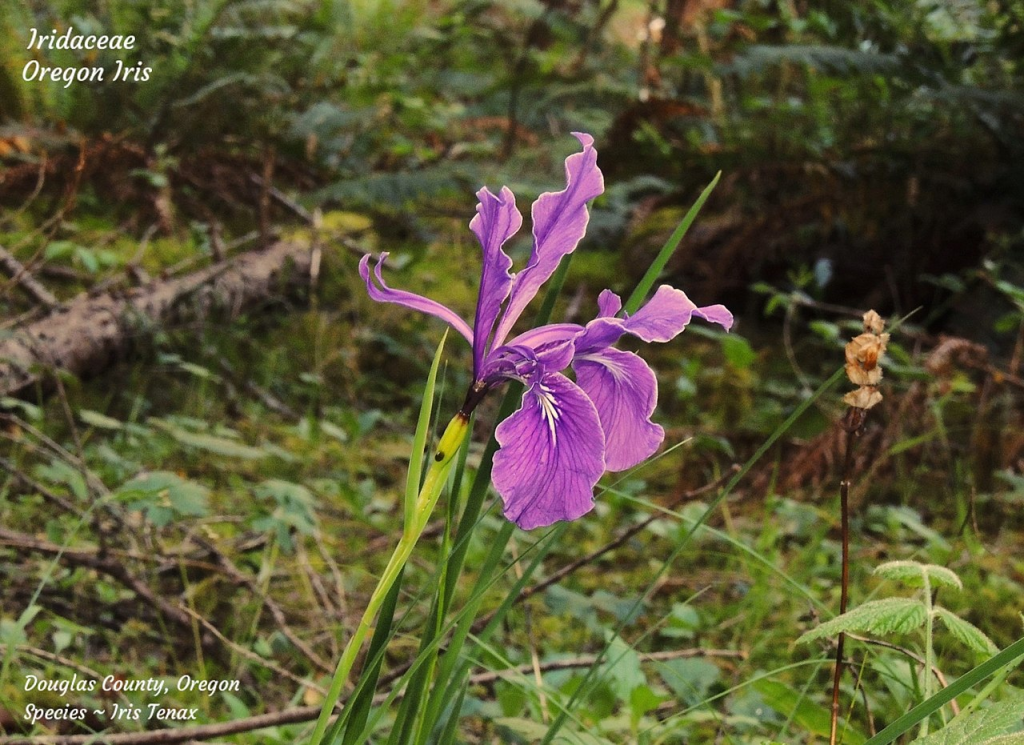
Tough-leaf Iris (Iris tenax)
Also called Oregon iris, this iris is native to northwestern California, western Oregon, and southwestern Washington, where it grows along roadsides and in grasslands and forest openings.
Height: 6-12″
Bloom Time: Mid to late spring
Bloom Color: Purple to lavender-blue; white, yellow, pink, and orchid also appear
Light: Full sun to light shade
Soil: Average, moist to dry, well-drained; drought tolerant once established; intolerant of wet feet
USDA Hardiness Zones: 5-9
Photo Credit: VIP6570, Wikimedia Commons
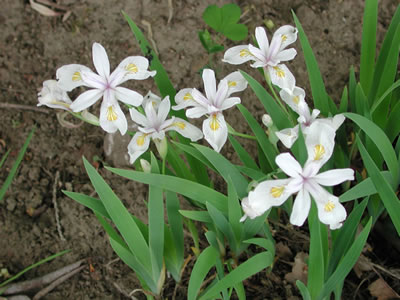
Clackamas iris (Iris tenuis)
Endemic to Clackamas County, Oregon, this colony-forming iris grows on open wooded slopes and along shaded stream banks underneath Douglas fir.
Height: 12-14″
Bloom Time: April-May
Bloom Color: White, pale blue, pale lavender
Light: Full sun to part shade
Soil: Humusy, moderately most, well-drained
USDA Hardiness Zones: 6-9
Photo Credit: US Forest Serviceat elevations from 300-6600 feet
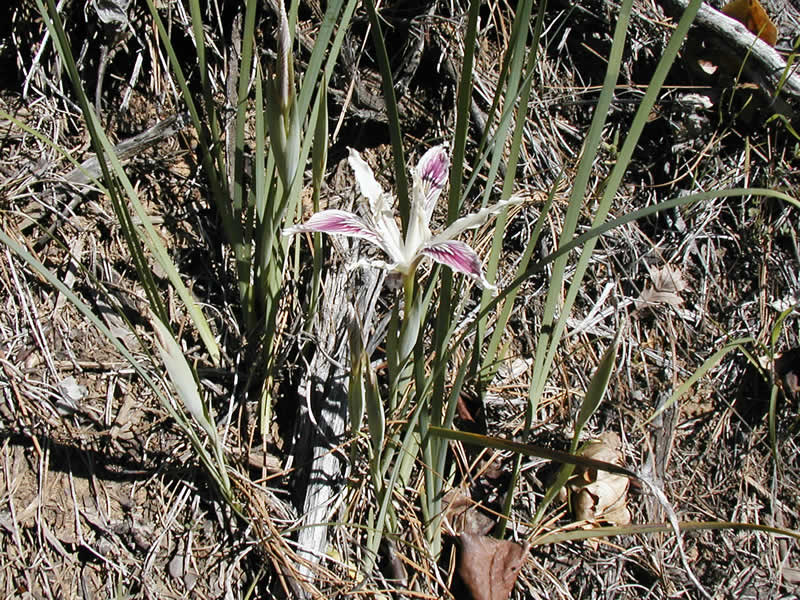
Long Tube Iris (Iris tenuissima)
Native to dry, sunny to lightly shaded oak/pine woodlands at elevations from 300-6600 feet in northern California.
Height: 1′
Bloom Time: April to July
Bloom Color: White, yellow, purple, brown
Light: Full sun to part shade
Soil: Dry
USDA Hardiness Zones: 7-9
Photo Credit: Susan Erwin
The Pacific Coast includes California, Oregon, and Washington, and sometimes Alaska and Hawaii. For the purposes of this article, however, Alaska and Hawaii are not included. The area features several mountain ranges, including Coast mountains and the Cascades Range. In addition to mountains, the region has rolling plains, forests, beaches, and deserts, but no coastal plain. The northern half of the west coast has significantly more rainfall than the coastal parts of California. Coastal temperatures tend to be more moderate than those in the inland. Great variation in rainfall and temperature within a small area is the rule and special attention to specific conditions should be considered when choosing plants.