
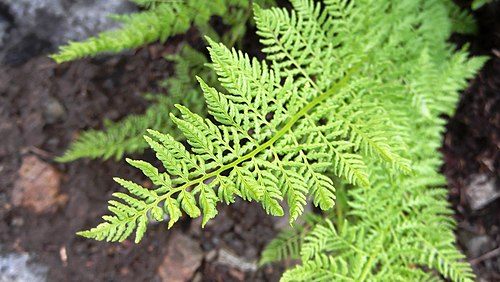
Athyrium is a genus of 180 species of terrestrial ferns, so strictly speaking is not a wildflower because it produces no blooms. It is native to moist woodland and forest in temperate and tropical regions around the world. Growing from a rhizome, the plants may be 6″ to 6′ tall and most have deciduous, feather, finely divided foliage. The fronds (=leaves) may be pinnate, three-pinnate, or pinnatifid and the stips (=stems) are often hairy or scaly at the base and may be grooved or smooth. Instead of producing seeds in fruit like flowering plants, ferns produce spores in sori (singular, sorus). The sori are located on the underside of the fronds, are usually linear or curved and are usually covered by a covering called an indusium, that is often curved or J-shaped.
Athyriums like shade or filtered light and moist, fertile, neutral to acidic soil. Propagation is by spores or division in spring.
The genus name, Athyrium, is from the Greek ἀ- (a-), meaning without, and the Greek word θύριον (thýrion) meaning little door, in references the plant’s indusium. The indusium of most ferns acts like a little door over the spore cases, but in Athyrium it is either absent or not shaped like a door, so the specific epithet is a misnomer.
Photo Credit: Wikipedia
The environmental conditions of the Rocky Mountain area have resulted in at least three species of lady fern native to the Rocky Mountain area but they are native to other regions of the US too. The lady ferns described here are native to at least one of the states in the Rocky Mountain area.
American Alpine Lady Fern (Athyrium americanum)
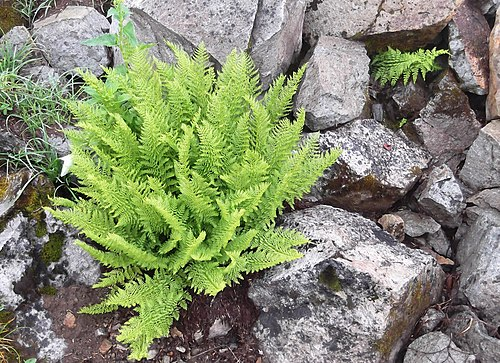
This clump-forming deciduous perennial fern grows from a short, thick rhizome and has thrice pinnately compound fronds that are 8-32″ long. The longest leaflets are up to 3″ long and are often folded or rolled so that the plant appears dried up. The sori are less than .04″ and lack an indusium.
Alternate/s Names: None
Native Range: Montana, Wyoming, Idaho, Colorado, Utah, and Nevada. as well as places in the Pacific Coast
Habitat: Rock crevices, rocky slopes, streamsides, alpine meadows
Type: Deciduous perennial
Height: 8-32″
Bloom Time: NA
Bloom Color: NA
Light: Shade of filtered light
Soil: Rich, moist, well-drained, neutral to slightly acidic
USDA Hardiness Zones: 3-8 (?)
Photo Credit:Wikipedia
Northern Lady Fern (Athyrium angustum)
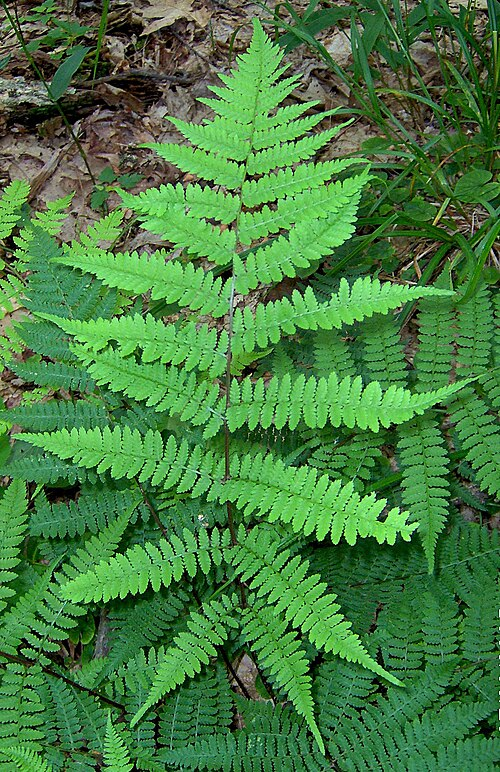
The delicate fronds are twice divided and the stipe (stem) may be reddish-brown to purplish with small brown scales but no hairs. The sori are long, narrow, curved or straight, and have an indusium covering yellow spores.
Alternate/s Names: None
Native Range: Colorado as well as places in the Midwest, Southeast, Mid-Atlantic, and New England
Habitat: Moist, shady woodlands, stream bands, ravines, swampy or wetland margins
Type: Deciduous perennial
Height: 8-30″
Bloom Time: NA
Bloom Color: NA
Light: Partial to full shade (sun if adequate moisture available)
Soil: Humusy, consistently moist, well-drained
USDA Hardiness Zones: 3-7
Photo Credit: Wikipedia
Western Lady Fern (Athyrium cyclosonum)
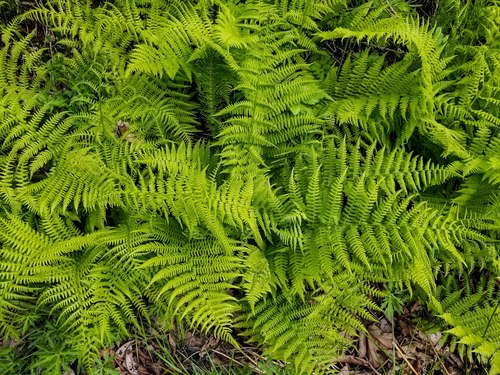
Considered by some experts to be a variety of east coast lady fern, western lady fern is typically larger and lighter in color. The fronds are 2-3 times pinnately compound and grow in loose vase-like tufts. The sori with their indusia are elongated and curved in a horse-shoe shape.
Alternate/s Names: None
Native Range: Montana, Wyoming, Idaho, Colorado, Utah, and Nevada. as well as places in the Pacific Coast, Southwest, and Midwest.
Habitat: Swamps, streambanks, thickets, and moist woodlands and meadows
Type: Deciduous perennial
Height: 1- 6′
Bloom Time: NA
Bloom Color: NA
Light: Shade
Soil: Average, consistently moist
USDA Hardiness Zones: 3-8 (?)
Photo Credit: inaturalist:
Six states are included in the Rocky Mountains area: Montana, Wyoming, Idaho, Colorado, Utah, and Nevada. The geography is diverse and includes mountains, plains, and deserts, and the climatic conditions are variable and vary with the geography. Low annual rainfall and high temperatures are typical of some parts of the area, while snowfall and low temperatures are found in other parts and the mountains of all of these states.