
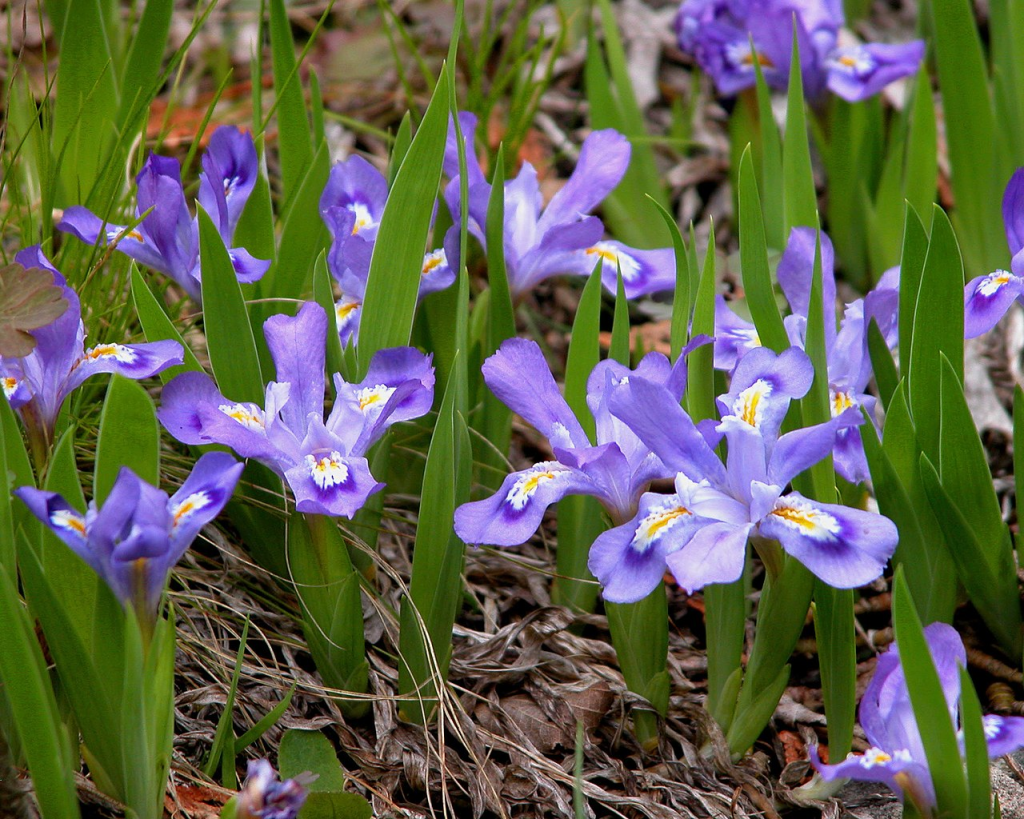
Iris is a genus of 310 species and is in the plant family Iridaceae that also included gladiolus, crocus and freesia. The plants are all perennial and grow from rhizomes or bulbs. The iris with rhizomes have 2-10 sword shaped leaves that grow in dense clumps while the iris with bulbs have 2-10 narrow leaves. The flowers appear on a long erect stems that may be branched. The flowers consist of three outer sepals called falls that usually are spreading or droop downward, and three inner petals called standards, that are upright. The standards may be delicate or large and showy and the falls may have various attractive and distinctive markings including a patch of yellow or white, known as a signal, or a row of hairs known as a beard. Petals and sepals may be lavender, blue, purple, white, pink, red, yellow, brown and combinations of these that resemble a rainbow.
Iris can grow in a variety of soil types from dry to wet and some grow in shallow water. Bulbus iris prefer drier soil than rhizomatous iris and both grow well in full sun to partial shade. The bloom time various greatly and with careful planning it is possible to have some species of iris blooming from mid spring to mid summer.
The genus name, Iris, honors the Greek goddess Iris whose name, ἶρις (îris) means rainbow and may refer to the wide variety of flower colors.
Photo Credit: Joel Trick, USFWS, Wikimedia Commons
The environmental conditions of the Midwest have resulted at least eight species of native iris there but they may be native to other regions also. The iris described here are native to at least three states in the Midwest.
Zigzag Iris (Iris brevicaulis)
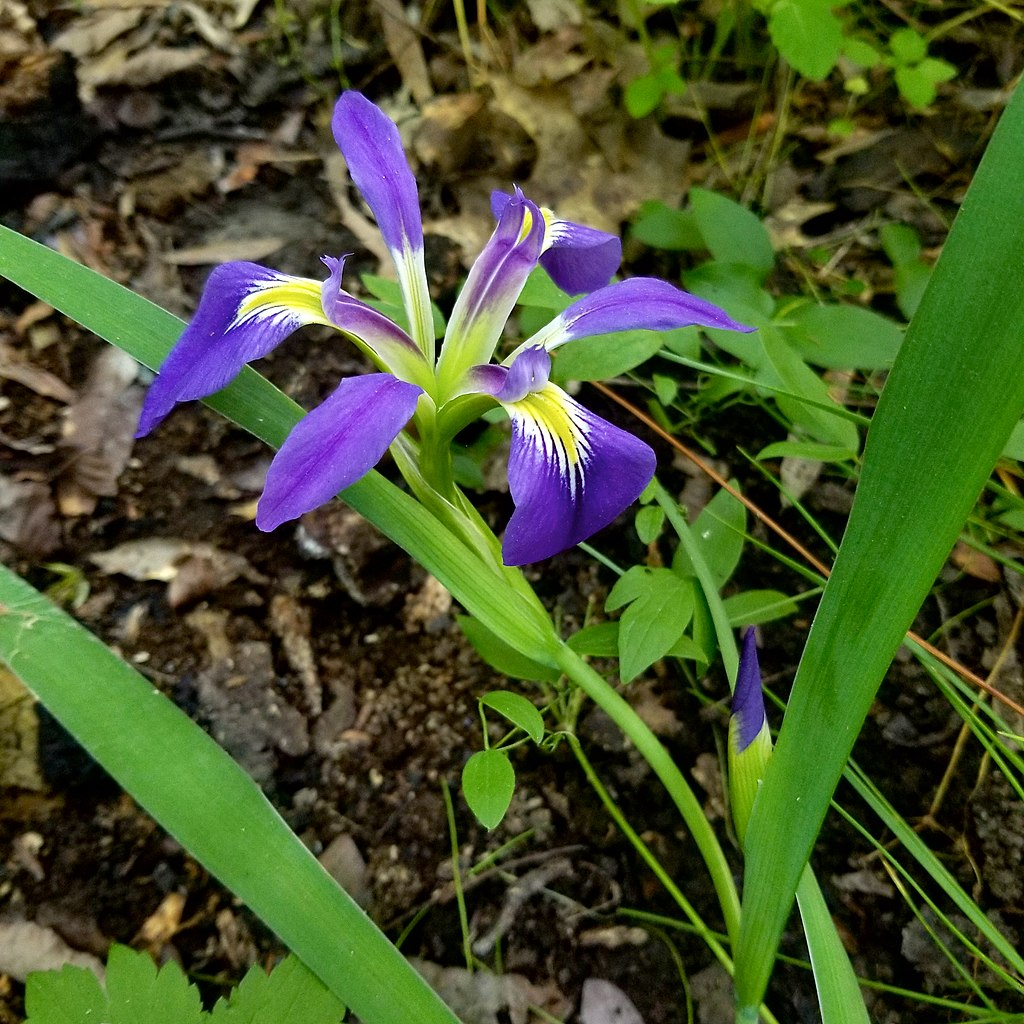
Native to Missouri, Illinois, Indiana, Ohio and Kansas as well as places in the Southeast and Southwest, zigzag iris is also known as short-stemmed iris, Lamance iris, or leafy blue flag. It grows in swamps, shaded damp woods, and bottom lands and is a good choice for use along waterways and for rock and woodland gardens.
Height: 10-12″
Bloom Time: Mid spring
Bloom Color: Blue-purple to pale blue-violet, lavender, white, with yellow signals
Light: Full sun to part shade
Soil: Average, medium moist to wet, well-drained, slightly acidic
USDA Hardiness Zones: 4-8
Photo Credit: Eric Hunt, Wikimedia Commons
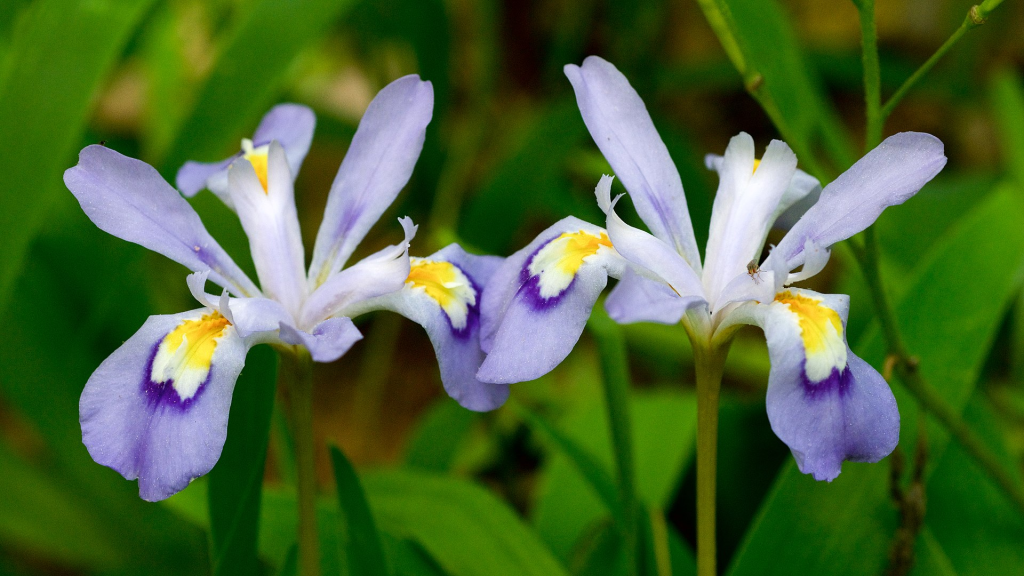
Crested iris (Iris cristata)
Also known as lady’s calamus, crested iris is native to Mississippi, Alabama, Georgia, South Carolina, North Carolina, Virginia, West Virginia, Tennessee, and Kentucky as well as places in the Southwest, Midwest, Mid Atlantic, and New England. It grows on rocky hillsides, in ravines, on mountain ledges, and along streams. Flowers are fragrant. Crested iris can be used as a groundcover and is useful in shade and rock garden as well as native plant, wildflower, and fragrance gardens.
Height: 4-9″
Bloom Time: April-May
Bloom Color: Blue, pale blue, lavender, purple, lilac, and rarely white or pink
Light: Part shade but tolerates full sun
Soil: Average to fertile, high to medium moist, well-drained
USDA Hardiness Zones: 3-9
Photo Credit: Eric Hunt, Wikimedia Common
Copper Iris (Iris fulva)
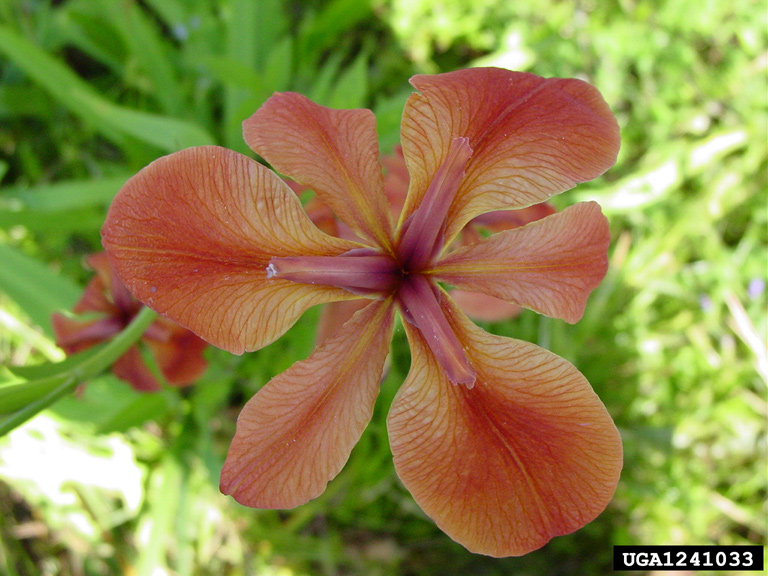
Known for its unusual color and drooping standards, copper iris is native to Kansas, Missouri, Illinois and Ohio as well as places in the Southwest and Southeast. It is found in flooded areas and wet places such as marshes, stream banks, swamps, and wet pastures, normally in water up to 6 inches. The flowers attract hummingbirds. A good choice for bird, pollinator, wildlife, bog, water and rain and water gardens.
Height: 18-31″
Bloom Time: April to June
Bloom Color: Copper-colored to deep red, occasionally yellow
Light: Full sun
Soil: Fertile, organically rich, moist to wet, acidic
USDA Hardiness Zones: 3-10
Photo Credit: James Henderson, Wikimedia Commons
Dwarf Lake iris (Iris lacustris)
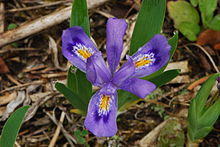
Native to the Great Lake shore lines of Michigan and Wisconsin, dwarf lake iris (aka lake iris) is found on beach ridges, behind dunes, along streams and in openings in coniferous forests.
Height: 2″
Bloom Time: Mid May to early June
Bloom Color: Lavender blue to violet-blue
Light: Partial shade; tolerates sun
Soil: Shallow sandy or rocky, calcareous, moist, slightly acidic
USDA Hardiness Zones: 4-7
Photo Credit: JM, Wikimedia Commons
Rocky Mountain Iris (Iris missouriensis)
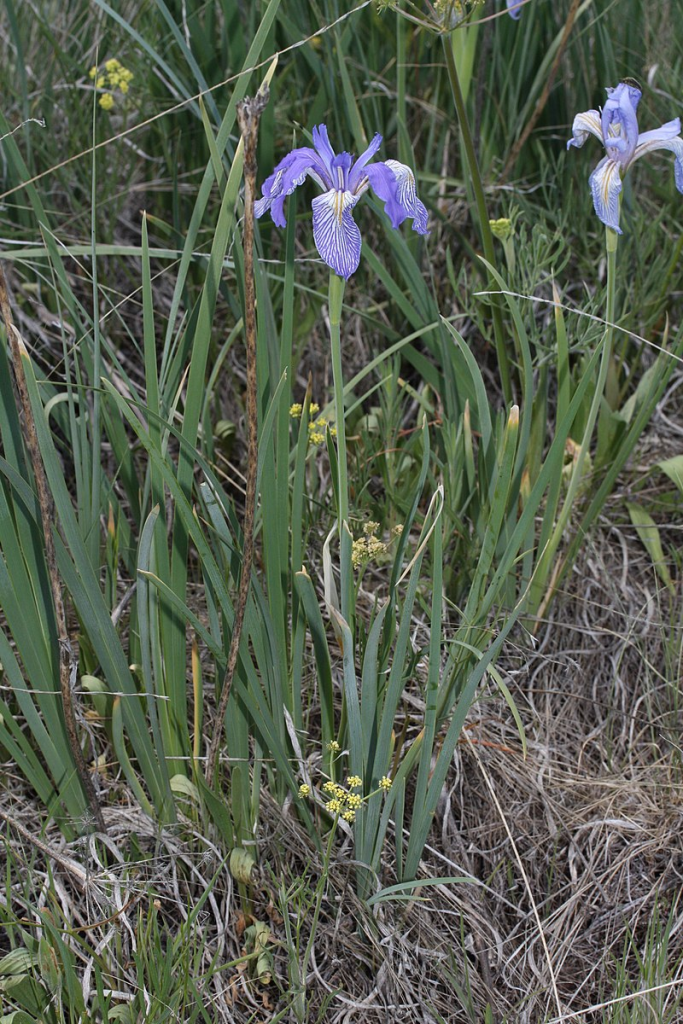
Also known as Missouri flag and western blue flag, Rocky mountain iris is native to South Dakota, North Dakota and Nebraska as well as places in the Rocky Mountain area and on the Pacific coast. It is found at high elevations in alpine meadows, pastures with ground water near the surface, open woodland, and on coastal hills at sea level. The key factor in its distribution appears to be having extremely wet conditions in spring before flowering, and very dry condition for the rest of the growing season.
Height: 8-16′
Bloom Time: May-July
Bloom Color: White, yellow, blue, purple
Light: Sun
Soil: Moist to wet (needs moisture especially at flowering time)
USDA Hardiness Zones: 3-8
Photo Credit: Walter Siegmund, Wikimedia Commons
Dwarf Violet Iris (Iris verna)
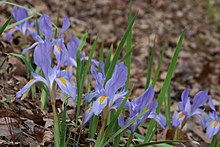
Native to Kansas, Missouri, and Ohio as well as area in the Southeast and Mid Atlantic, this dwarf iris grows in nutrient-poor acidic soils in open to semi-shaded woodlands. Its flowers are 1-2″ across, intensely fragrant, and appear before the foliage. Also known as dwarf iris and vernal iris, it is a good choice for rock, shade, woodland, fragrance, native plant and wildflower gardens.
Height: 2-3″
Bloom Time: Spring
Bloom Color: Light to deep blue or violet, rarely white; falls with yellow signals
Light: Partial sun but tolerates full sun
Soil: Average, dry to moist, well-drained, neutral to acid
USDA Hardiness Zones: 5-9
Photo Credit: Eric Hunt, Wikimedia Commons
Blue Flag (Iris versicolor )
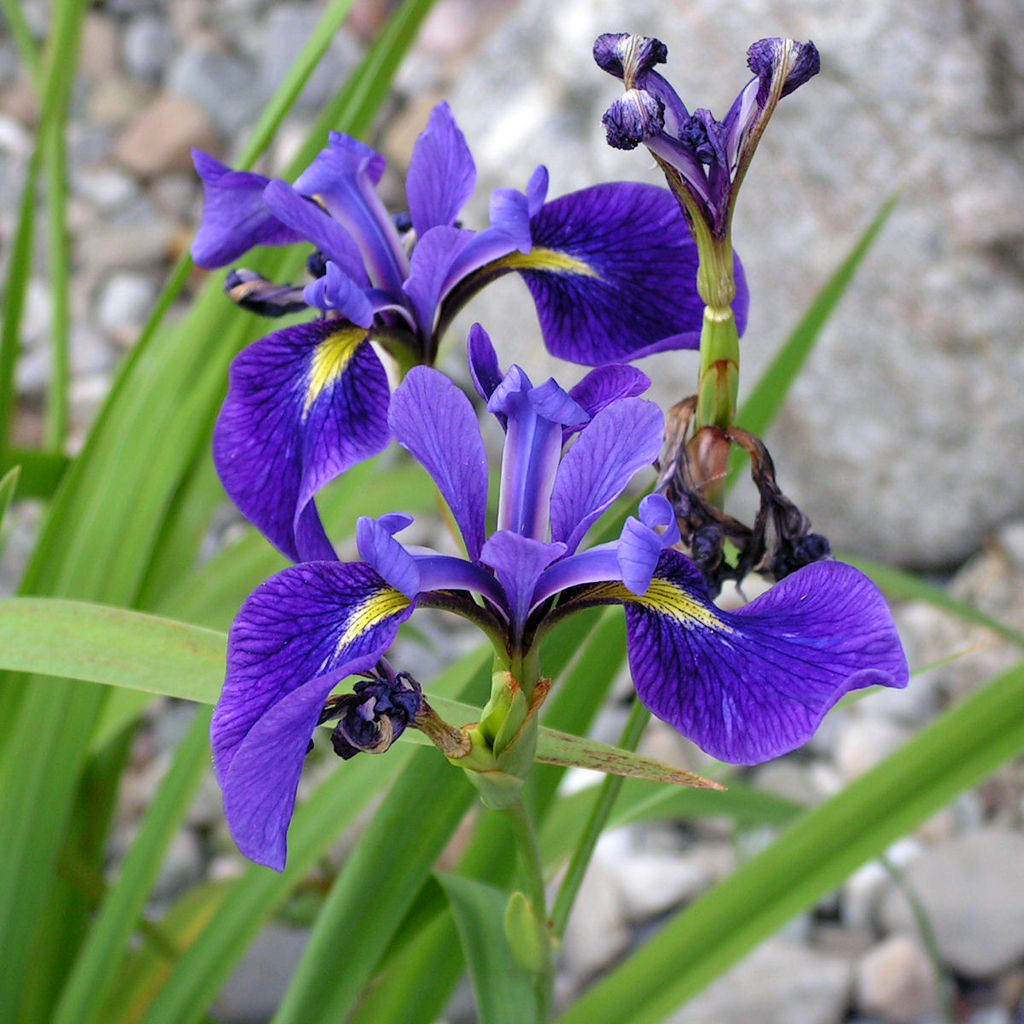
Also known as harlequin blueflag, larger blue flag, northern blue flag, and poison flag, this iris is native to Minnesota, Michigan, Wisconsin, Illinois, and Ohio as well as to places in the Rocky Mountain area, Southeast, Mid-Atlantic, and New England. It grows in sedge meadows, marshes, and along stream banks and shores, tolerates occasional flooding, and can be grown in 4″ of water.
Height: 2-3′
Bloom Time: May to June
Bloom Color: Light to deep blue and purple
Light: Full sun; tolerates partial shade
Soil: Average, moist to wet,
USDA Hardiness Zones: 3-6
Photo Credit: D. Gordon E. Robertson, Wikimedia Commons
Virginia Iris (Iris virginica )
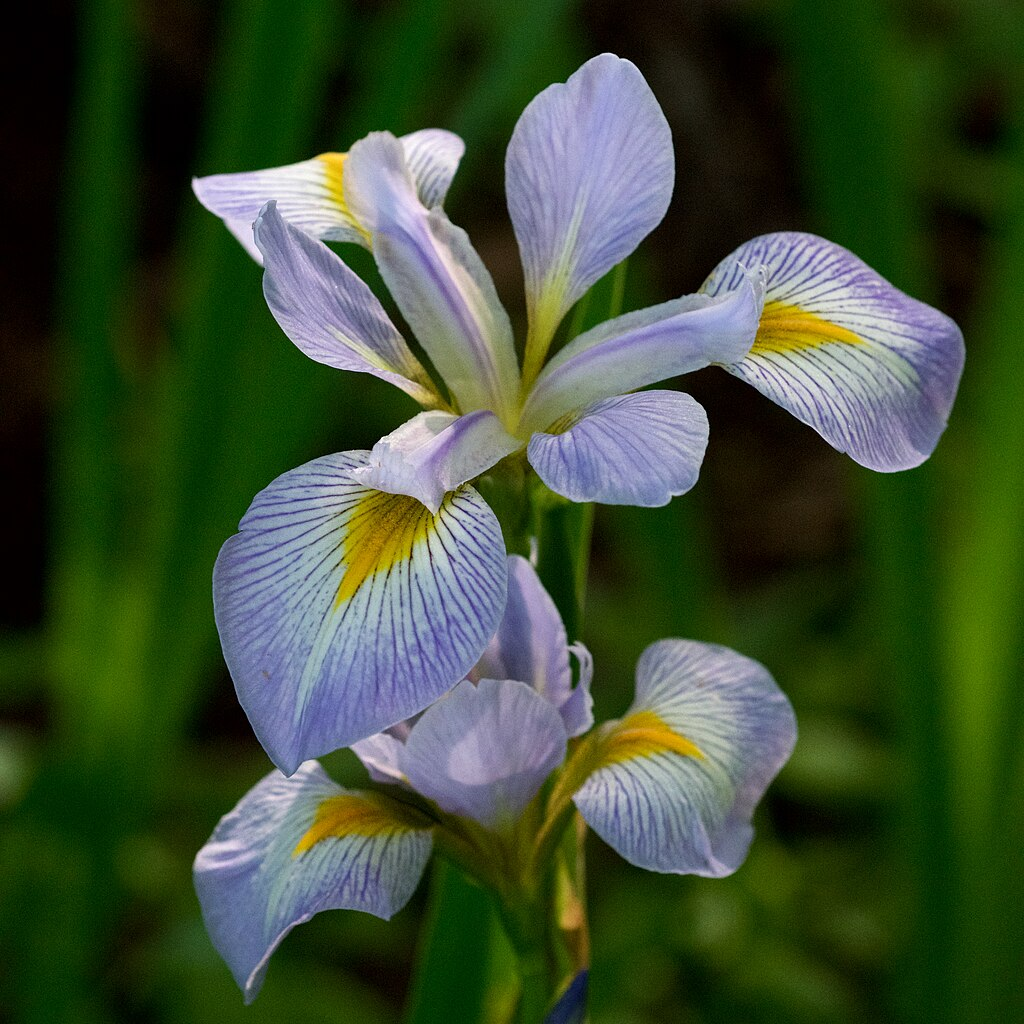
Virginia iris is native to Illinois, Indiana, Iowa, Kansas, Michigan, Minnesota, Missouri, Nebraska, Ohio, and Wisconsin as well as to places in the Southwest, Southeast, and Mid-Atlantic. Also known as southern blue flag, it grows in wet areas, such as marshes, wet meadows, swamps, and river bottoms, and is an excellent choice for a pond margin, water garden or rain garden.
Height: 2-3′
Bloom Time: May to July
Bloom Color: Light blue to deep violet, rarely white
Light: Full sun
Soil: Humusy to sandy, moist to very wet, acidic
USDA Hardiness Zones: 5-9
Photo Credit: Eric Hunt, Wikimedia Commons
The Midwest comprises Illinois, Indiana, Iowa, Kansas, Michigan, Minnesota, Missouri, Nebraska, North Dakota, Ohio, South Dakota, and Wisconsin. The area includes lakes, mountains, and vast fertile plains that are the “bread basket” of the nation. The climate of the Midwest has great variations in temperatures with hot humid temperature averaging 85-95 F in summer and winter temperatures often falling below 0 F. Precipitation comes in the form of both rain and snow and varies from 43.6″/year in Indiana to 18.8″/year in North Dakota. Kansas has 128 clear days while Michigan has only 71.