
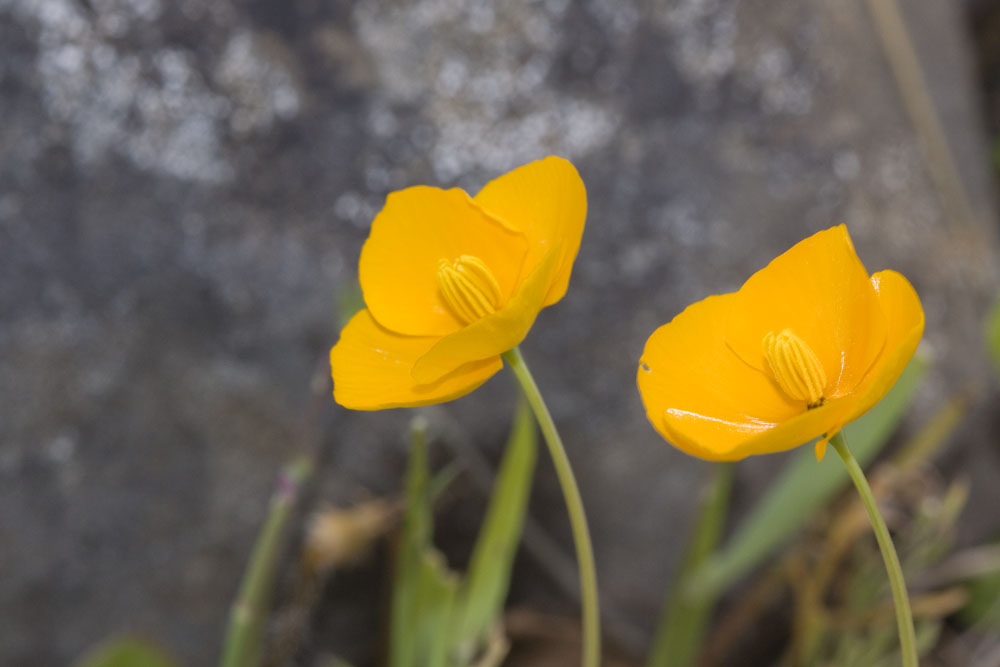
The common name, poppy, can refer to many different plants some of which are considered true poppies, while others resemble poppies but are not even in the same plant family. This article only treats plants that are in the subfamily Papaveroideae of the family Papaveraceae; it does not include plants that are not botanically related to true poppies even if their flowers resemble poppy flowers or their common names are poppy. The list includes plants in the genera Arctomecon, Argemone, Canbya, Dendromecon, Eschscholzia, Papaver and Romneya. Photo Credit: Marlin Harms, Wikimedia Commons
The environmental conditions in the Pacific Coast have resulted in at least nineteen native species of poppy there but they may be native to other places too. All the poppies described below are native to at least one the states of the Pacific coast. Some are very common, some are rare and endangered. They are annuals, herbaceous perennials, or an evergreen shrub or small tree. They tend to bloom in the spring and like full sun, dry soil, and warm temperatures. Some are attractive to bees and birds.
Desertbear Poppy (Arctomecon merriamii)
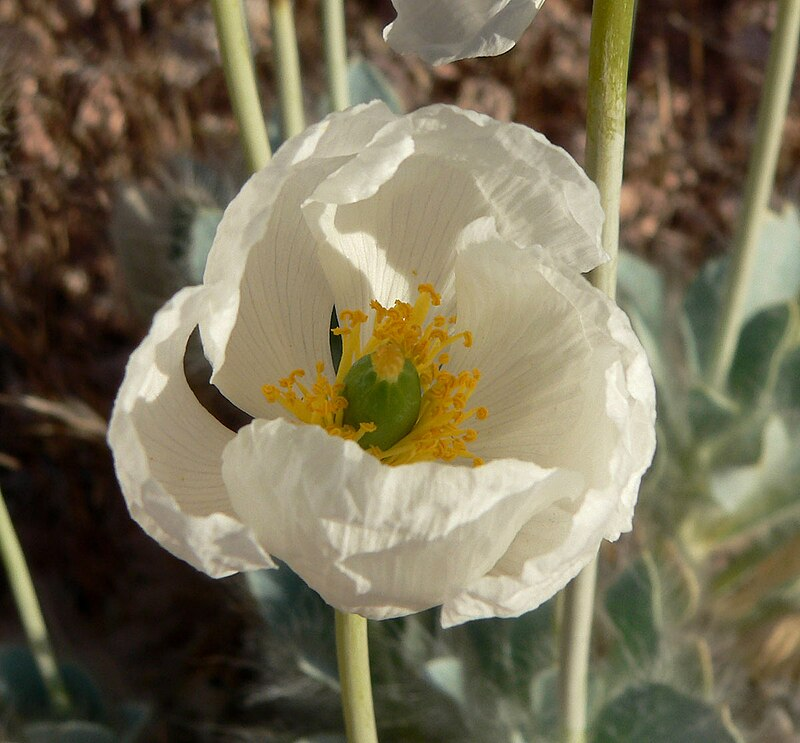
Also called white bear poppy and great bearclaw poppy, this herbaceous perennial is native to the Mojave Desert of California and Nevada. It grows 12-18″ from a taproot and forms a clump of hairy pale green leaves with rounded teeth. Waxy stems produce a single flower up to 1.6″ across with 6 white petals surroundings a yellow center.
Type: Herbaceous perennial
Height: 12-18″
Bloom Time: Spring
Bloom Color: White
Light: Full sun
Soil: Rocky, sand, dry, well-drained
USDA Hardiness Zones: 9-11
Photo Credit: Stan Shebs, Wikimedia Commons
Mojave Prickly Poppy (Argemone corymbosa)
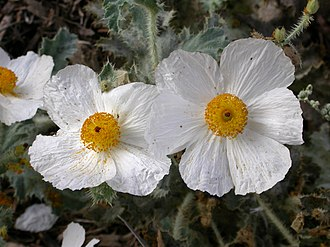
Native to sandy areas and dry slopes of the eastern Mojave Desert, this herbaceous perennial has flowers that are about 1 1/2″ to 3 1/2″ across and have 4 white petals surrounding a yellow center of 100-120 stamens. The thick, leathery leaves are up to 6″ long and have prickles on the margins and undersides.
Type: Herbaceous perennial
Height: 2-3′
Bloom Time: Spring
Bloom Color: White with yellow center
Light: Full sun
Soil: Well drained; drought tolerant
USDA Hardiness Zones: Not available
Photo Credit: Curtis Clark, Wikimedia Commons
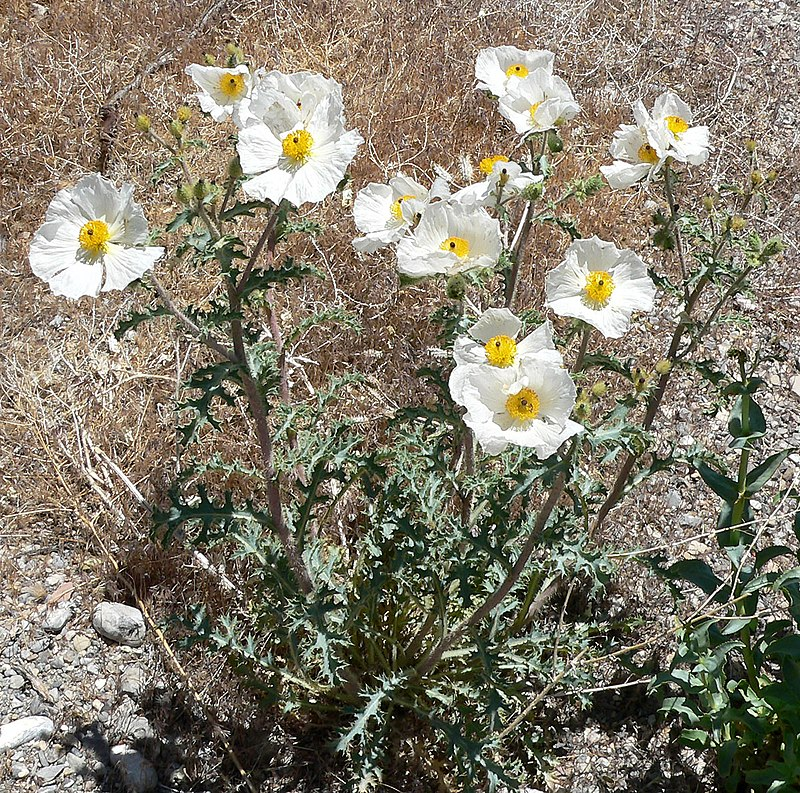
Flatbud prickly poppy (Argemone munita)
Also known as chicalote, this member of the poppy family is native to open spaces in the western part of California and its eastern deserts, and extends into Arizona, Nevada, Utah and Baja California. Spiny erect stems bear 3″ wide flowers with 6 white petals surrounding 250 yellow stamens. The mint-green to blue-green leaves are up to 6″ long, lobed and prickly.
Type: Annual or short lived perennial
Height: 3.3-5′
Bloom Time: Spring
Bloom Color: White with yellow centers
Light: Full sun
Soil: Sandy, fast draining
USDA Hardiness Zones: No available
Photo Credit: Stan Shebs, Wikimedia Commons
Golden Pygmy Poppy (Canbya aurea)
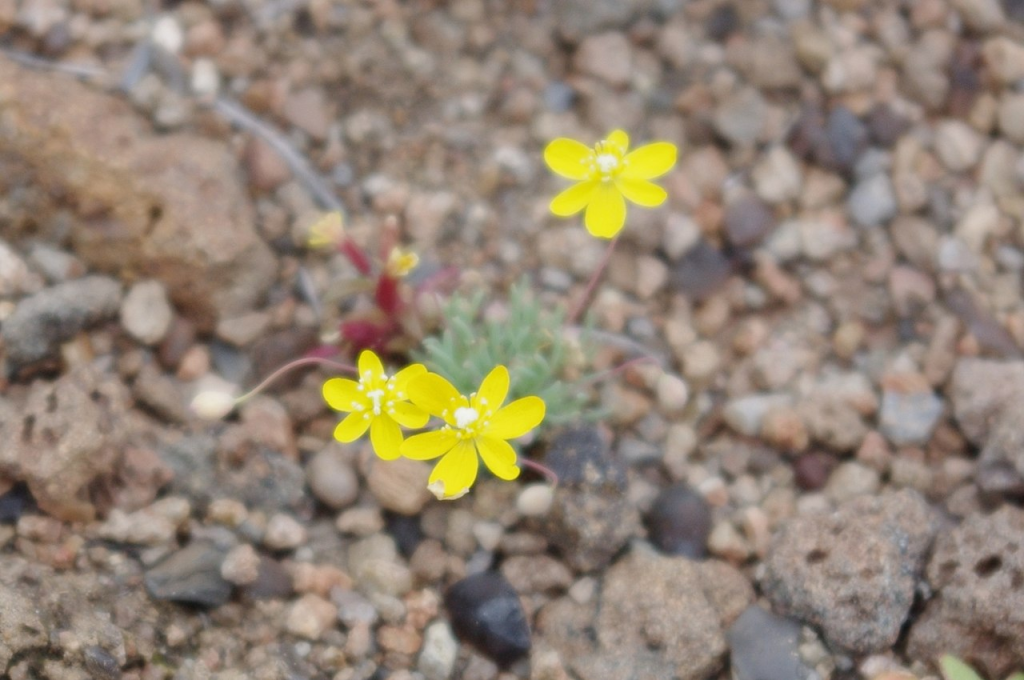
This diminutive annual is native to the relatively cool northern deserts of southeastern Oregon and northwestern Nevada where it can be found growing on dry, sandy soil, usually with sage brush, at elevations of 3,000-5,600 feet. It grows up to .79″ tall and branches at about ground level. The linear to oblong leaves are fleshy, basal, up to 3.9″ long, and are untoothed and unlobed. Bright yellow flowers appear from spring to summer, are 1/4″ across, and have 6 petals.
Type: Annual
Height: .79″
Bloom Time: Spring to summer
Bloom Color: Yellow
Light: Full sun
Soil: Sandy, dry, well-drained
USDA Hardiness Zones: Not relevant
Photo Credit: Janel Johnson, Wikimedia Commons
White Pigmy Poppy (Canbya candida)
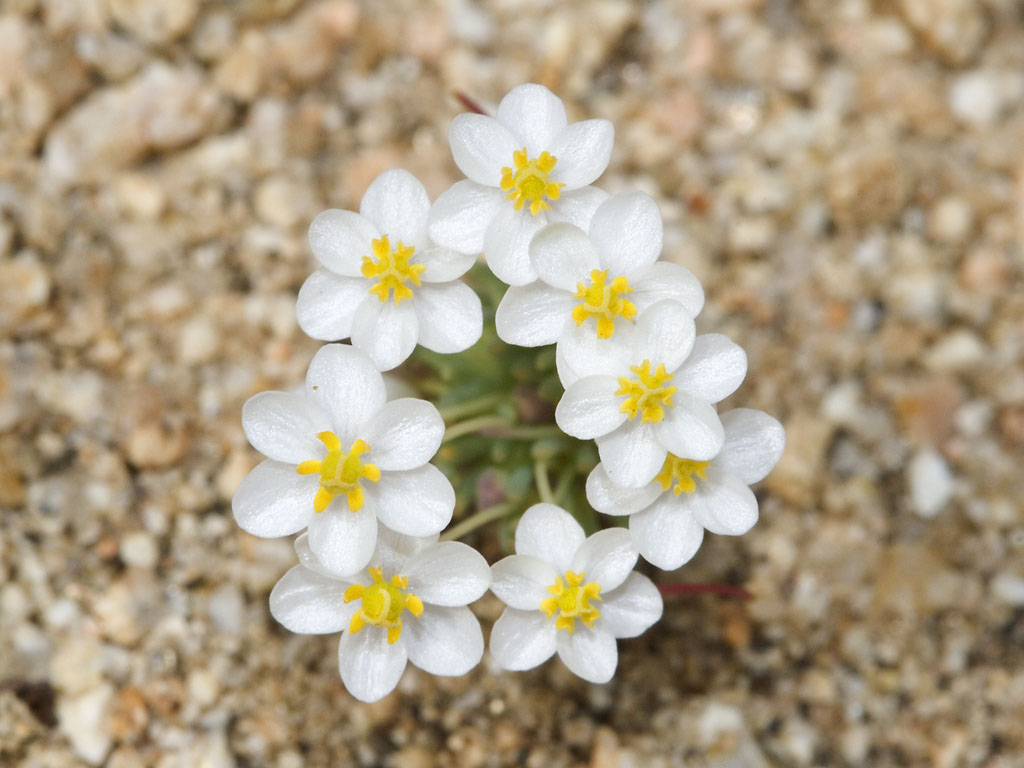
Native to the Mojave Desert in western southern California, this annual grows .36-1.2″ tall and forms tufts of fleshy leaves 3/16 to 11/32L long. In late spring to early summer tiny white flowers with 5-7 petals surrounding 6-9 yellow stamens appear in the leaf axils.
Type: Annual
Height: 0.36 – 1.2′
Bloom Time: Late spring into summer
Bloom Color: White
Light: Full sun
Soil: Sandy, dry, well-drained
USDA Hardiness Zones: Not relevant
Photo Credit: Bill Boulton
Bush Poppy (Dendromecon rigida)
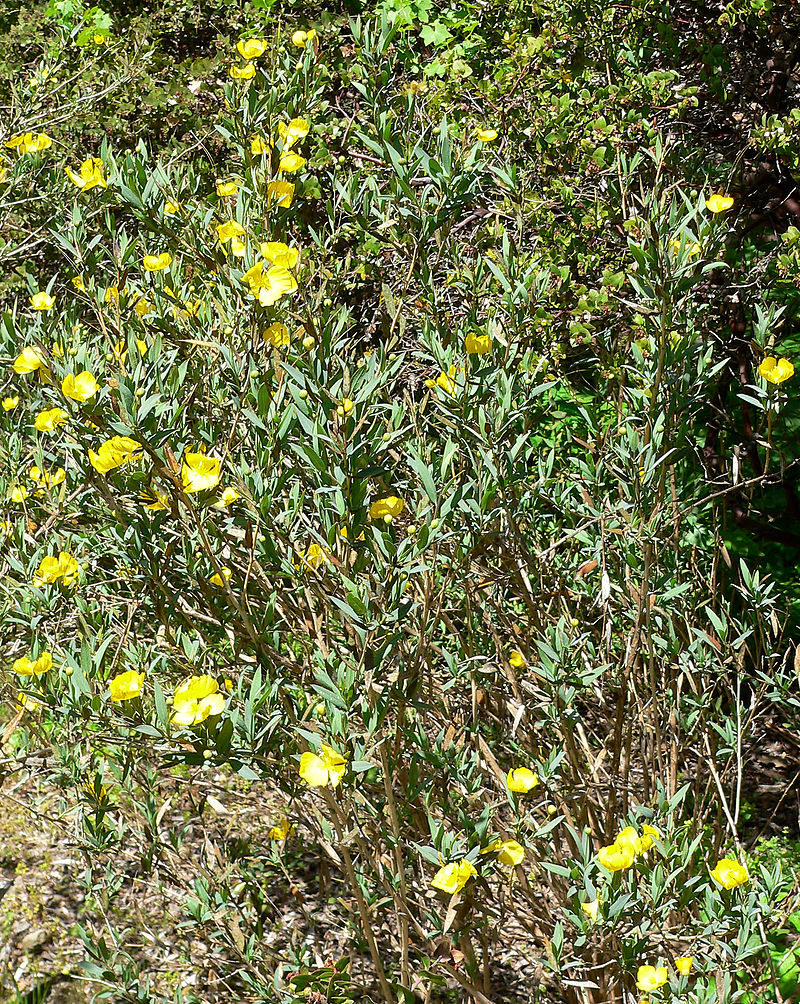
Also called tree poppy, this evergreen shrub or small tree is native to foothills, chaparral and woodlands from northern California to Baja California where it grows on dry rocky slopes. The plant grows up to 3-10′ tall and has narrow, leathery, greyish-green leaves 2-4″ long with finely toothed margins. From winter to spring cup-shaped flowers appear that are up to 3′ across and have 4 yellow petals.
Type: Evergreen shrub or small tree
Height: 3-10′
Bloom Time: Winter-spring
Bloom Color: Yellow
Light: Full sun
Soil: Rocky, dry, well-drained
USDA Hardiness Zones: 8-10
Photo Credit: Stan Shebs, Wikimedia Commons
Tufted Poppy (Eschscholzia caespitosa)
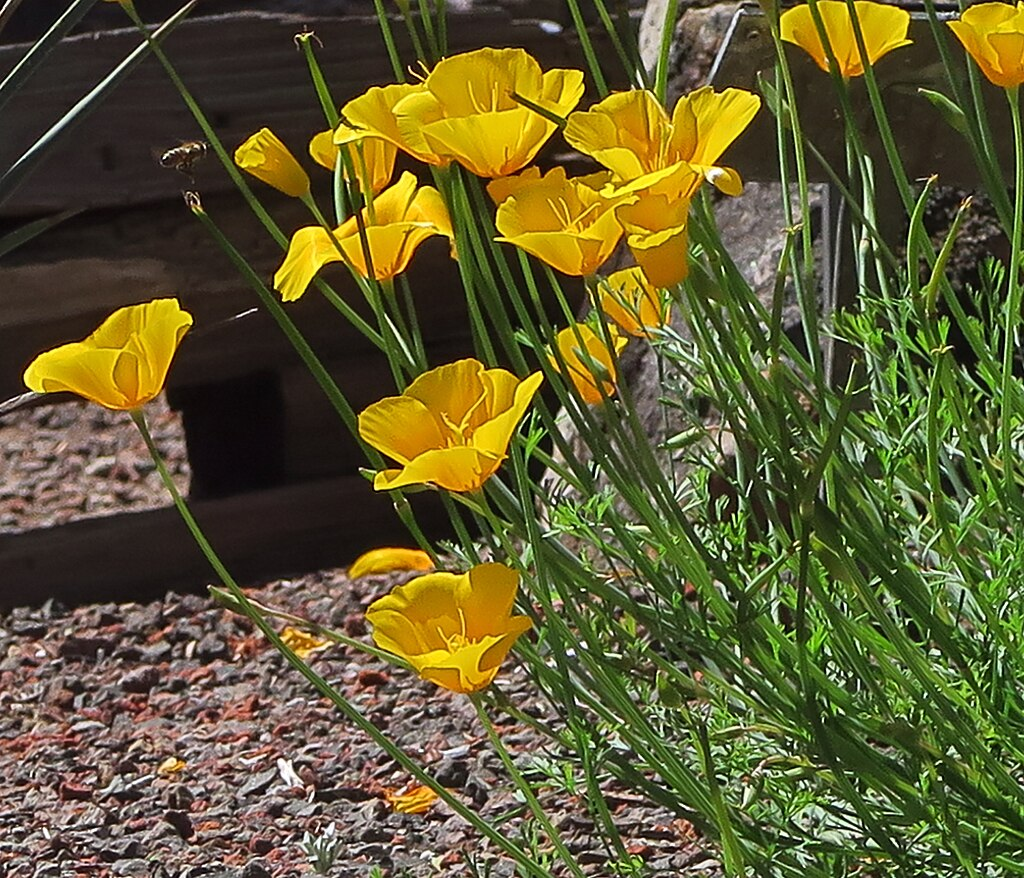
Also called foothill poppy and collarless California poppy, this annual is native to grasslands, dry flats and brushy slopes of Oregon, California and Baja California. It grows 6-12″ tall and forms a low mound of bluish-green, feathery leaves with several leaflets. From spring to early summer, 4-petaled orange to yellow, 2″ wide flowers appear singly on slender stalks. The flowers are fragrant and attract bees and birds. Tolerant of heat drought, and maritime exposure.
Type: Annual
Height: 6-12″
Bloom Time: Spring to early summer
Bloom Color: Yellow, orange
Light: Full sun
Soil: Average, dry to medium moist, well-drained
USDA Hardiness Zones: Not applicable
Photo Credit: John Rusk, Wikimedia Commons
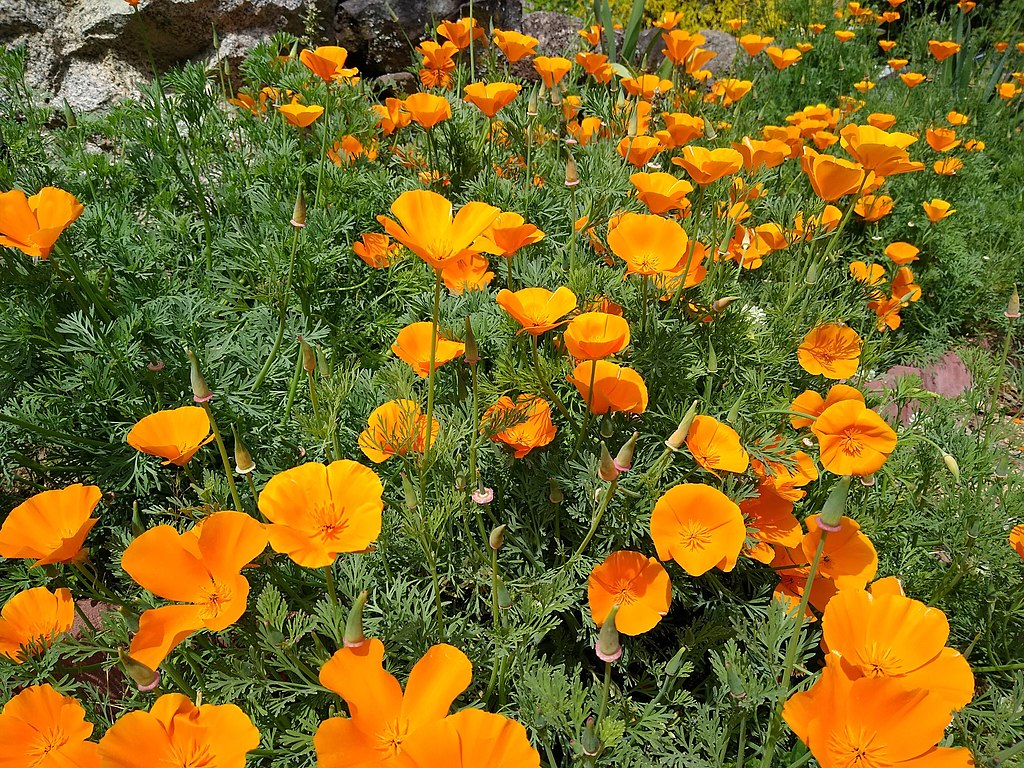
California Poppy (Eschscholzia californica)
Also called golden poppy, California sunlight or cup of gold, this tender perennial is native to southern Washington, Oregon, California, east to Nevada, Arizona, and New Mexico, and south to Sonora and northwest Baja California where it grows in lean dry soil in open grassy place. Plants grow 12-18″ tall and have fine, ferny, blue-green leaves and bright 4″ wide yellow to orange flowers with a satiny sheen. Tough and easy to grow, California poppy is a great choice for native plant, cottage, and meadow gardens as well as a wildflower garden.
Type: Tender perennial often grown as an annual
Height:12-18”
Bloom Time: Late winter into summer
Bloom Color: Yellow to orange flowers but new varieties may be rose, pink, cream or white, and be double or frilled.
Light: Full sun
Soil: Lean, very well-drained, sandy soil but tolerates less as long as its roots are not wet for prolonged periods.
Hardiness: Zones 9-10 as perennial
Photo Credit: Mx Granger, Wikimedia Commons
Desert Golden Poppy (Eschscholzia glyptosperma)
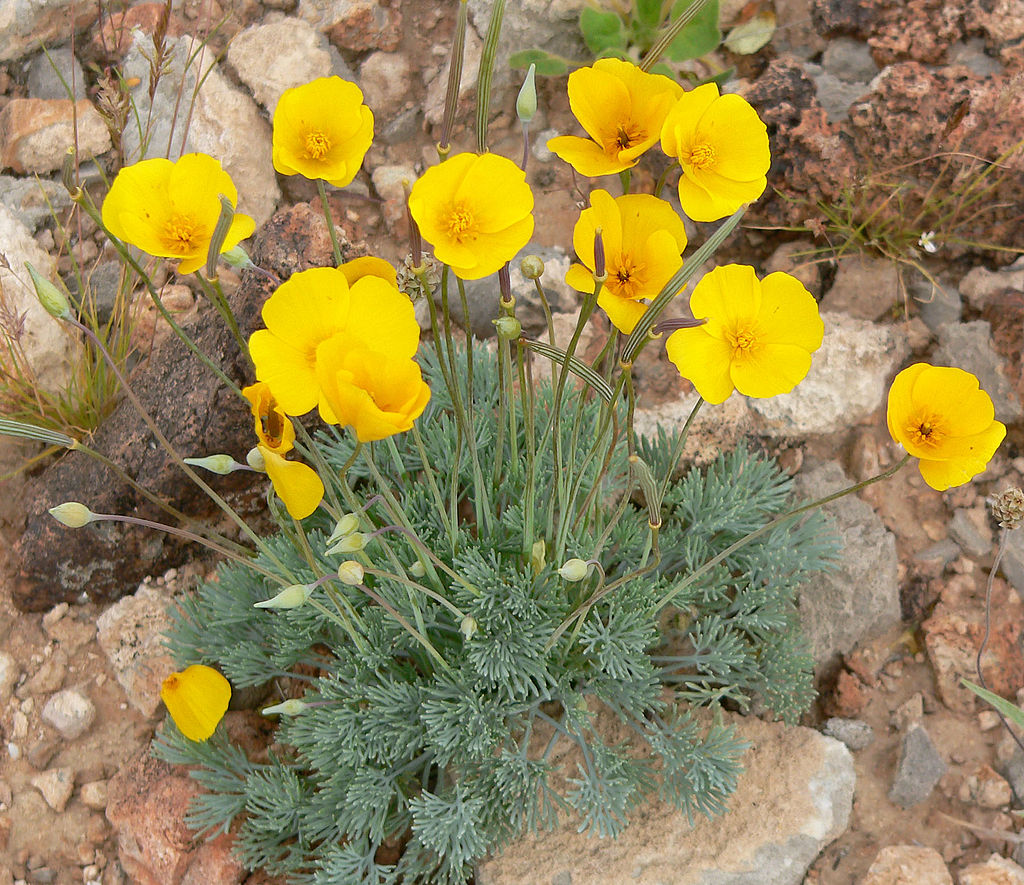
Native to the Mojave Desert and Sonoran Deserts in California, southern Nevada, western Arizona, and southwestern Utah this annual wildflower is found in desert washes, flats, and slopes. It forms clumps of basal blue-green leaves that are divided into pointed segments. From early to late spring flowers are carried singly on erect stems about 10″ tall. Each flower is about 3/4″ across and has has 4 yellow petals surrounding a center of yellow stamens.
Type: Annual
Height: 1.9 – 9.8″
Bloom Time: early to late spring
Bloom Color: Bright yellow
Light: Full sun
Soil: Lean, sandy, dry, well-drained
USDA Hardiness Zones: Not relevant
Photo Credit: Stan Shebs, Wikipedia Commons
San Benito Poppy (Eschscholzia hypercoides)
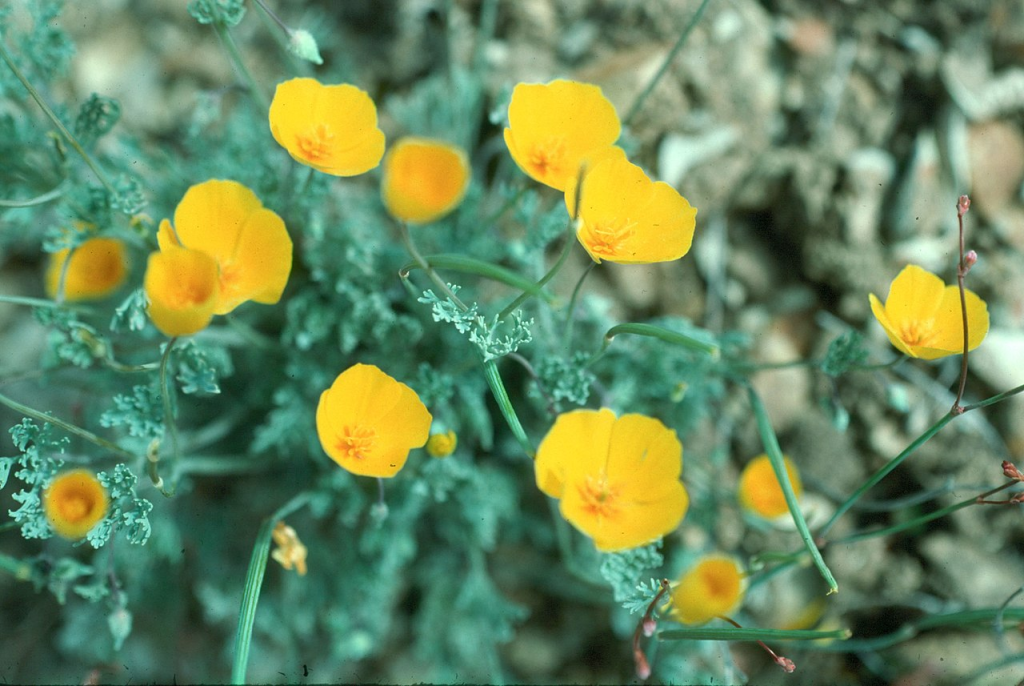
Native to oak woodlands, grassland slopes, and chaparral habitats of Southern California coastal ranges, this annual wildflower grows 1.9-11.8″ tall and has basal leaves with rounded segments and fuzzy stems bearing nodding buds that open to flowers with yellow to orange petals, sometimes with darker spots at the base.
Type: Annual
Height: 1.9-11.8
Bloom Time: Spring into summer
Bloom Color: Yellow to orange sometimes with darker spots at the base
Light: Full sun
Soil: Average, dry to medium moist, well-drained
USDA Hardiness Zones: Not applicable
Photo Credit: Curtis Clark, Wikimedia Commons
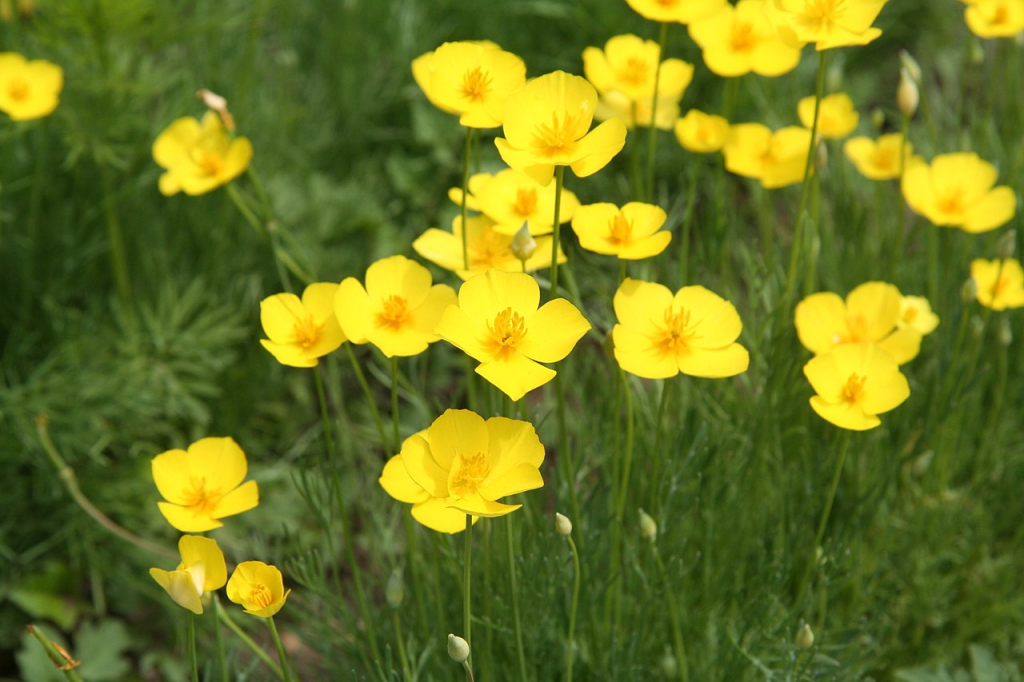
Frying pans (Eschscholzia lobbii)
Endemic to the Central Valley of California and the surrounding foothills of the Sierra Nevada’s, this annual grows in open places and grasslands. One inch wide, yellow to orange flowers are borne singly on 4-10″ stems above soft green leaves that are segmented with pointed leaflets. Attracts birds, butterflies and bees.
Type: Annual
Height: 1.9-6″
Bloom Time: Spring
Bloom Color: Yellow to orange
Light: Full sun
Soil: Adaptable; average to low water needs
USDA Hardiness Zones: Not applicable
Photo Credit: Michael Wolf, Wikimedia Commons
Lemmon’s Poppy (Eschscholzia lemmonii)
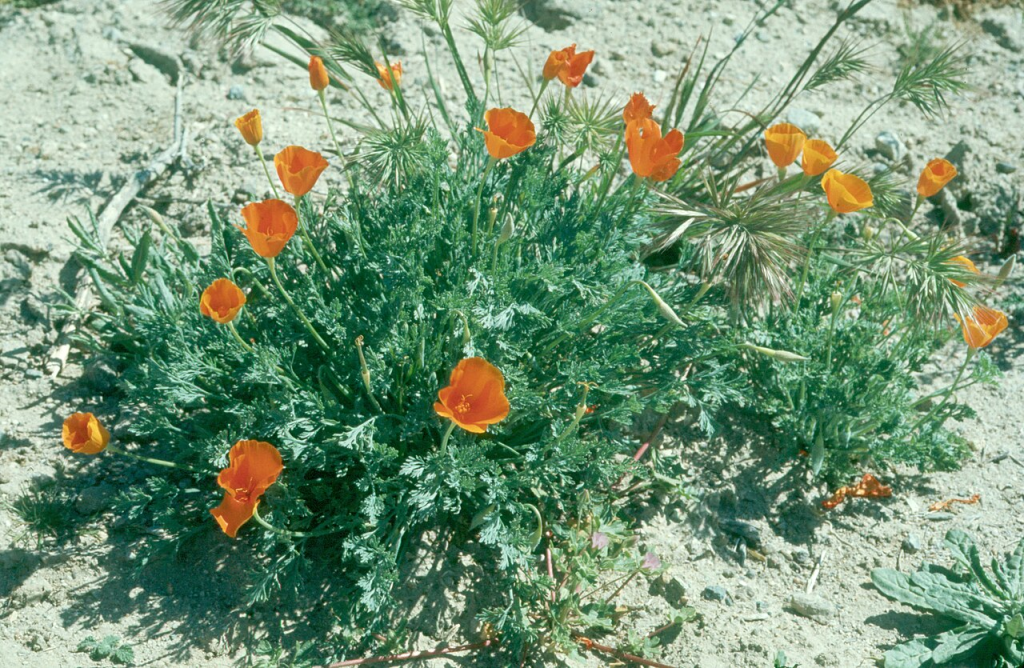
Endemic to California, this annual wildflower can be found on the Coast Ranges, Sierra Nevada foothills, and Transverse Ranges. It forms a clump of of segmented leaves made up of round-edged leaflets and bears dark yellow to orange flowers on slender stems up to 12″ tall.
Type: Annual
Height: Up to 12″
Bloom Time: Spring
Bloom Color: Yellow to orange
Light: Full sun
Soil: Average, dry to medium moist, well-drained
USDA Hardiness Zones: Not applicable
Photo Credit: Curtis Clark, Wikimedia Commons
Pigmy Poppy (Eschscholzia minutiflora subsp. covillei)
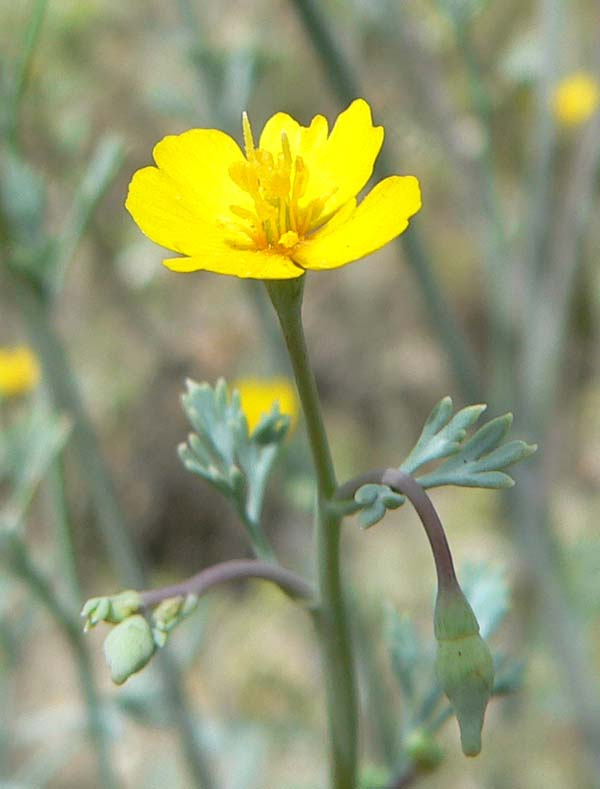
Native to the Mojave desert in California as well as areas in Nevada, Arizona, and Utah, this annual grows up to .16-1.2′ tall and has segmented leaves with rounded leaflets and bears small yellow to orange flowers on nodding stems. The flowers are attractive to birds and bees.
Type: Annual
Height: .16-1.2′
Bloom Time: Winter to spring
Bloom Color: Yellow to orange
Light: Full sun
Soil: Sandy, dry, well-drained
USDA Hardiness Zones: Not applicable
Photo Credit: Stan Shebs, Wikimedia Commons
Parish’s Poppy (Eschscholzia parishii)
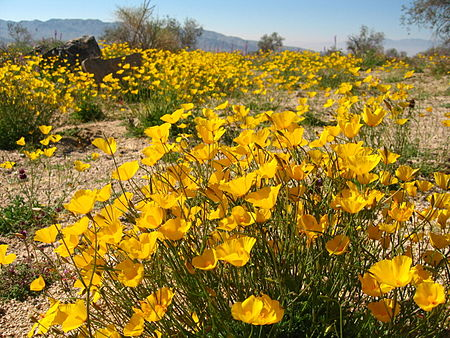
Native to the Mojave Desert and Colorado Desert in California, this annual wildflower is found on desert washes, slopes, hillsides. It grows 1.9 – 11.8″ tall and has segmented leaves and 4-petaled yellow flowers that appear on slender stems in spring.
Height: 1.9 – 11.8″
Type: Annual
Bloom Time: Spring
Bloom Color: Yellow
Light: Full sun
Soil: Sandy, dry, well-drained
USDA Hardiness Zones: Not applicable
Photo Credit: Robb Hannawacker, Wikimedia Commons
Channel Island Poppy (Eschscholzia ramosa)
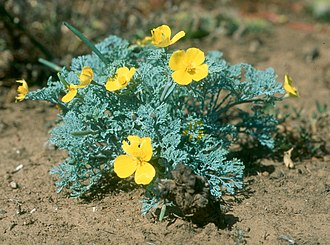
Endemic to chaparral habitats of the Channel Islands off the coast of Southern California, this annual wildflower forms clump of foliage made up of segmented leaves with divided, rounded leaflets. Erect buds on slender stalks up to 11.8″ long open to flowers 0.6 to 1.5 ” across from early spring to early summer. Each flower has 4 yellow petals that are sometimes orange at the base.
Type: Annual
Height: 11.8
Bloom Time: Early spring to early summer
Bloom Color: Yellow, sometimes with orange base
Light: Full sun
Soil: Lean, rocky, well-drained
USDA Hardiness Zones: Not applicable
Photo Credit: Curtis Clark, Wikimedia Commons
Diamond Petaled California Poppy (Eschscholzia rhombipetala)
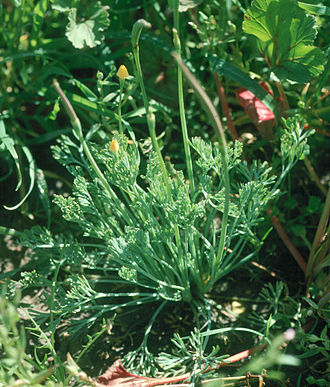
Endemic to fallow fields and open places in San Luis Obispo County in Southern California and in the East San Francisco Bay area this endangered annual wildflower forms clumps of segmented leaves with rounded lobes and fleshy bases. Single erect or nodding buds appear on stems up to 12″ tall and open to small yellow flowers in spring.
Type: Annual
Height: Up to 12″
Bloom Time: Spring
Bloom Color: Yellow
Light: Full sun
Soil: Unavailable
USDA Hardiness Zones: Not relevant
Photo Credit: Curtis Clark
Windpoppy (Papaver heterophyllum)
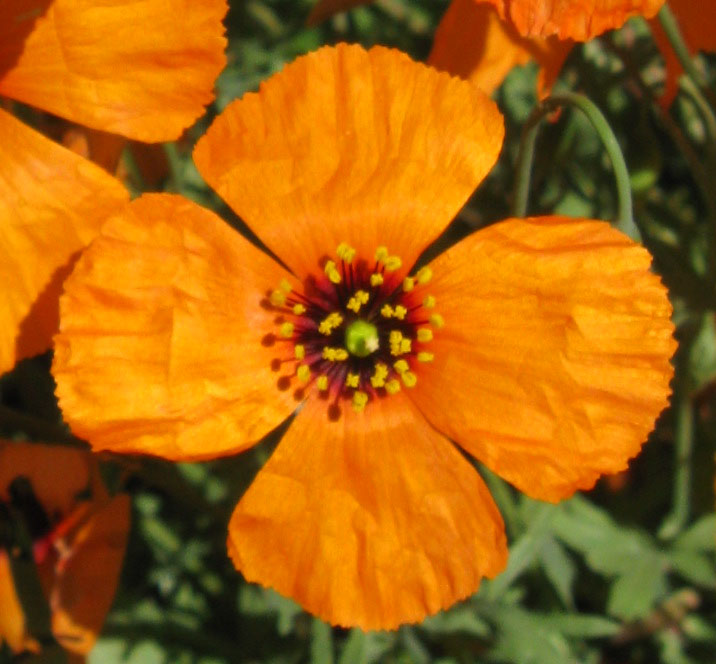
Native to the coastal mountains of central California down to Baha, this annual is found in chaparral, grasslands, and oak woodlands. Plants grow 1-2′ tall and have wiry stems, lobed leaves and flowers with 4 orange red crinkly petals surrounding a dark center.
Type: Annual
Height: 1-2′
Bloom Time: Spring
Bloom Color: Red-orange with dark centers
Light: Part shade
Soil: Loamy, medium to dry, well-drained
USDA Hardiness Zones: Not relevant
Photo Credit: Toedrifter, Wikimedia Commons
Coulter’s Matilija Poppy (Romneya coulteri)
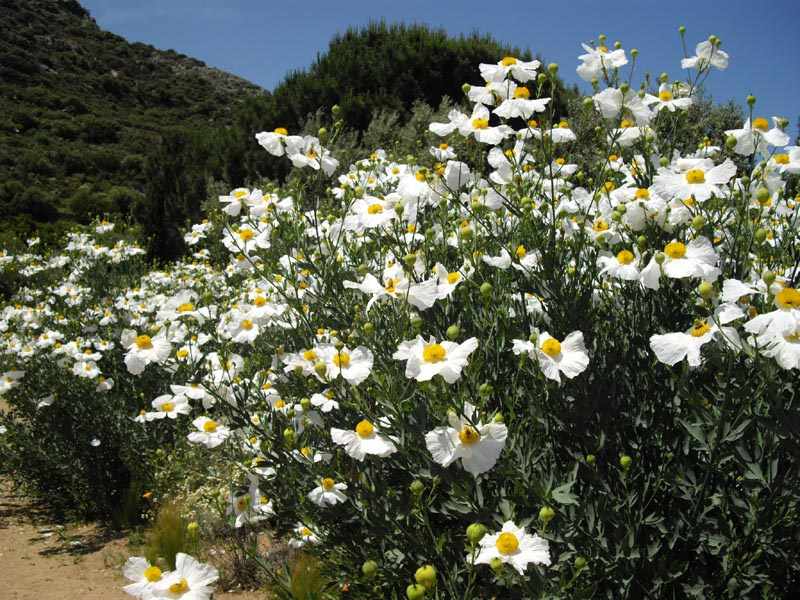
Also called California tree poppy, this herbaceous perennial is native to southern California where it grows in dry washes, canyons and foothills, with chaparral or coastal sage scrub vegetation. It grows up to 10′ tall and has grayish-green , waxy leaves up to 7.8″ long that are divided into a few lance-shaped lobes. From early spring to summer solitary, silky white flowers appear that are 6-8″ across and have six crinkly or pleated petals surrounding a center of yellow stamens.
Type: Herbaceous perennial
Height: 6.6-10′
Bloom Time: Spring to summer
Bloom Color: White, yellow
Light: Full sun
Soil: Sandy, gravelly, dry, very well-drained
USDA Hardiness Zones: 8-10
Photo Credit: Ghislain 118, Wikimedia Commons
Bristly Matilija Poppy (Romneya trichocalyx)
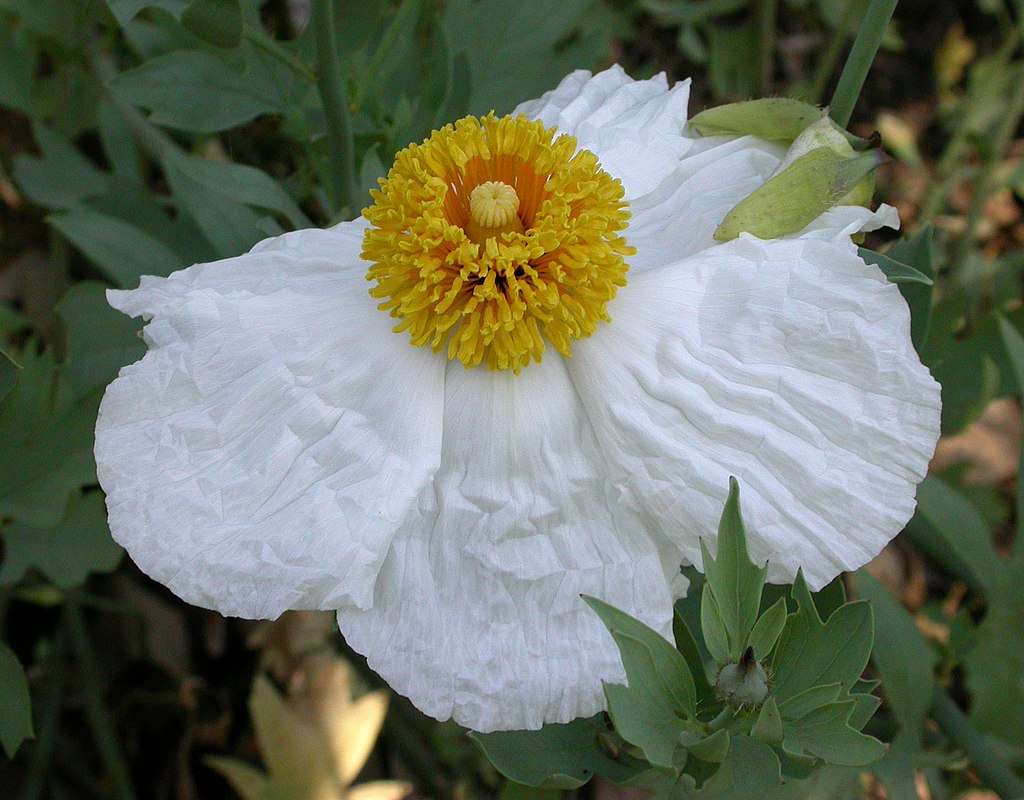
Also known as hairy Matilija poppy, this summer deciduous shrub is native to southern California as well as Baja California where it grows in dry canyons in chaparral and coastal sage scrub communities. It grows up to 8.2′ tall and has gray-green leaves that are divided into a few lance-shaped lobes. The large flowers are borne singly in spring and summer and have 6 white petals surrounding a cluster of yellow stamens.
Type: Summer deciduous shrub
Height: 3.3′-8-2′
Bloom Time: Spring and summer
Bloom Color: White, yellow
Light: Full sun
Soil: Sandy or gravelly, dry, very well drained
USDA Hardiness Zones: 7-10
Photo Credit: Curtis Clark, Wikimedia Commons