
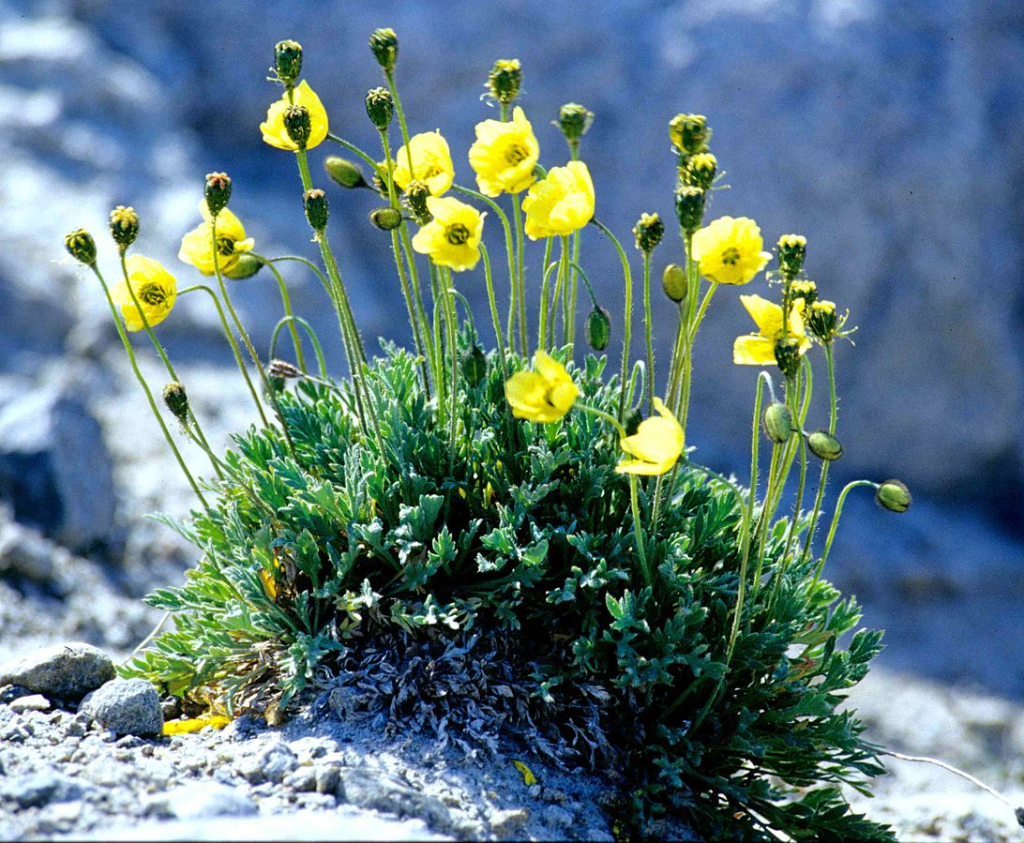
All of the poppies listed below are are native to the Southwest area and in the subfamily Papaveroideae of the family Papaveraceae; not included are plants that are not botanically related to true poppies even if their flowers resemble poppy flowers or their common name is poppy. The list includes plants in the genera Arctomecon, and Argemone. Photo Credit: Ansgar Walk, Wikimedia Commons
The environmental conditions in the Southwest have resulted in at least five native species of poppy there but they may be native to other places too. All the poppies described below are native to at least one the states in the Southwest. Some are common, others are rare and endangered. They are annuals or herbaceous perennials. The flowers are usually showy and have 4 white or yellow petals surrounding yellow stamens. Plants tend to bloom in the spring, grow in full sun, usually in lean, dry, well-drained soil.
Golden Bearpoppy (Arctomecon californica)
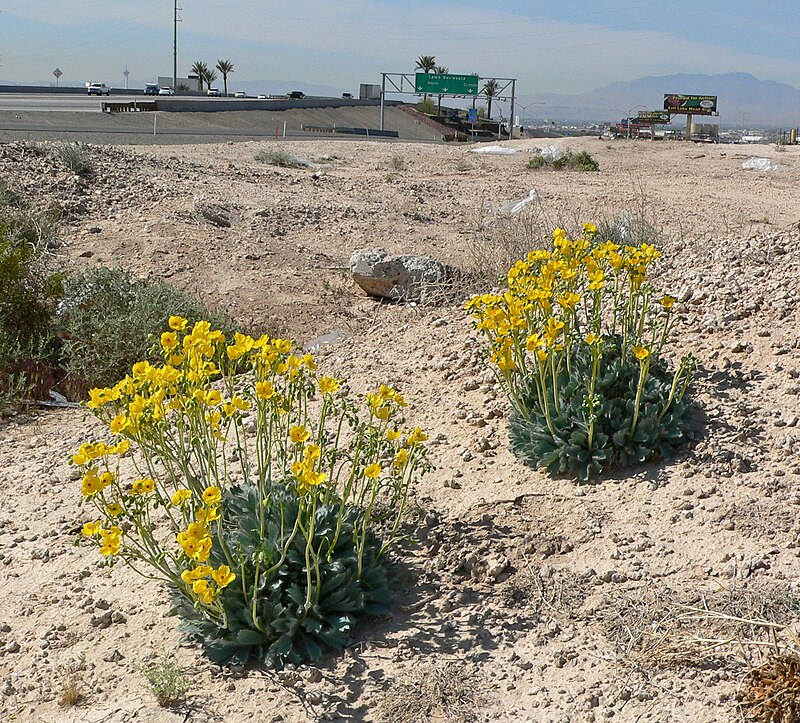
Also called California bearpoppy, Las Vegas bearpoppy, and yellow-flowered desert poppy, this herbaceous perennial is native to the eastern Mojave Desert, Nevada and Arizona where it grows in Creosote bush (Larrea tridentata) habitats, in barren shales with gypsum substrates. It grows up to 2′ tall, and has fuzzy bear-paw shaped leaves and dropping buds that open to yellow flowers in spring.
Type: Herbaceous perennial
Height: Up to 2′
Bloom Time: Spring
Bloom Color: Yellow
Light: Full sun
Soil: Lean, rocky, gritty, dry, well-drained
USDA Hardiness Zones: 6-1Photo Credit: Stan Shebs, Wikimedia Commons
Photo Credit: Stan Shebs, Wikimedia Commons
Mojave Prickly Poppy (Argemone corymbosa)
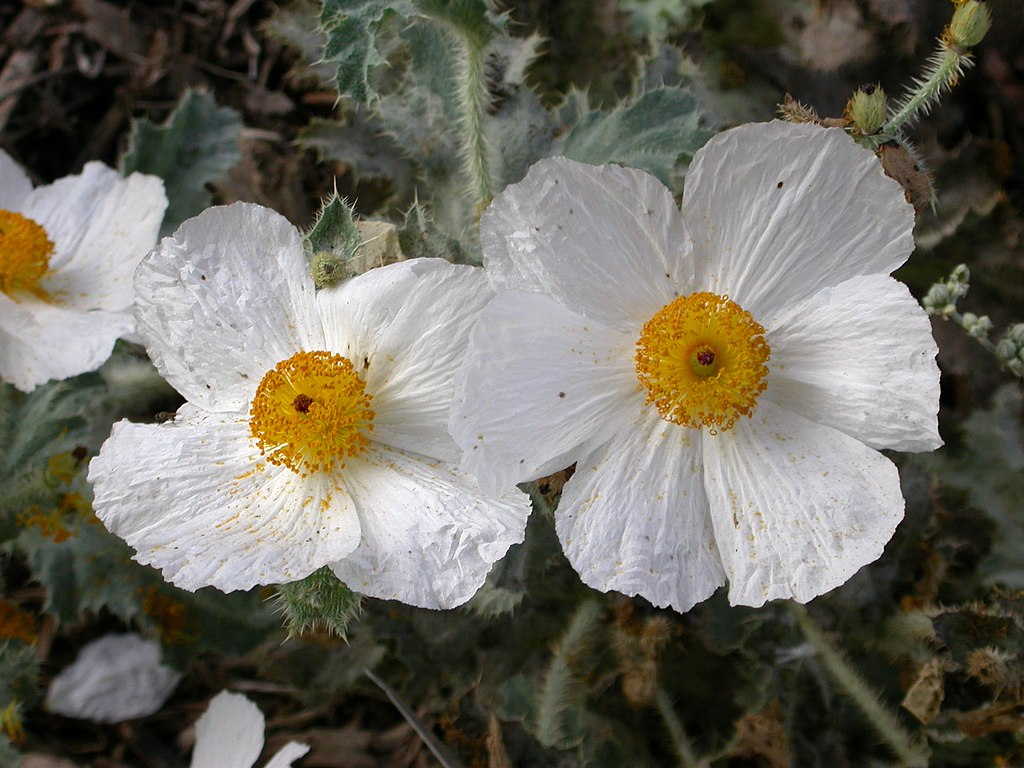
Found growing in dry slopes, and flats of Arizona as well as of the Rocky Mountain area and Pacific Coast, this herbaceous perennial has flowers that are about 1 1/2″ to 3 1/2″ across and have 4 white petals surrounding a yellow center of 100-120 stamens. The thick, leathery leaves are up to 6″ long and have prickles on the margins and undersides.
Type: Herbaceous perennial
Height: 2-3′
Bloom Time: Spring
Bloom Color: White with yellow center
Light: Full sun
Soil: Well drained; drought tolerant
USDA Hardiness Zones: 8-11 (?)
Photo Credit: Curtis Clark, Wikimedia Commons
Flatbud prickly poppy (Argemone munita)
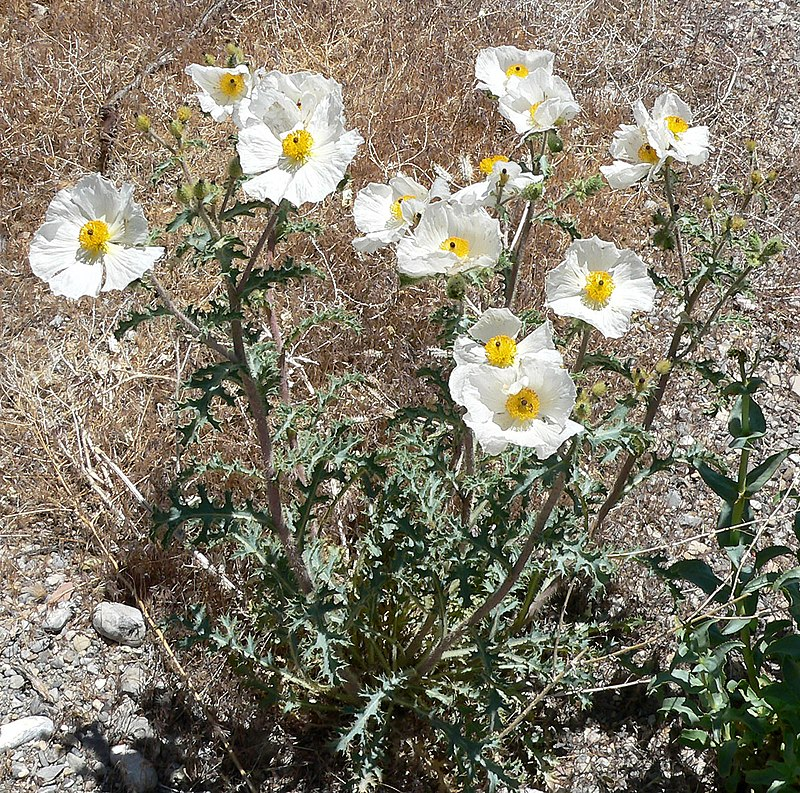
Also known as chicalote, this member of the poppy family is native to open spaces Arizona as well as places in the Rocky Mountain area and on the Pacific Coast. Spiny erect stems bear 3″ wide flowers with 6 white petals surrounding 250 yellow stamens. The mint-green to blue-green leaves are up to 6″ long, lobed and prickly.
Type: Annual or short lived perennial
Height: 3.3-5′
Bloom Time: Spring
Bloom Color: White with yellow centers
Light: Full sun
Soil: Sandy, fast draining
USDA Hardiness Zones: 7-10
Photo Credit: Stan Shebs, Wikimedia Commons
Southwestern Prickly Poppy (Argemone pleiacantha)
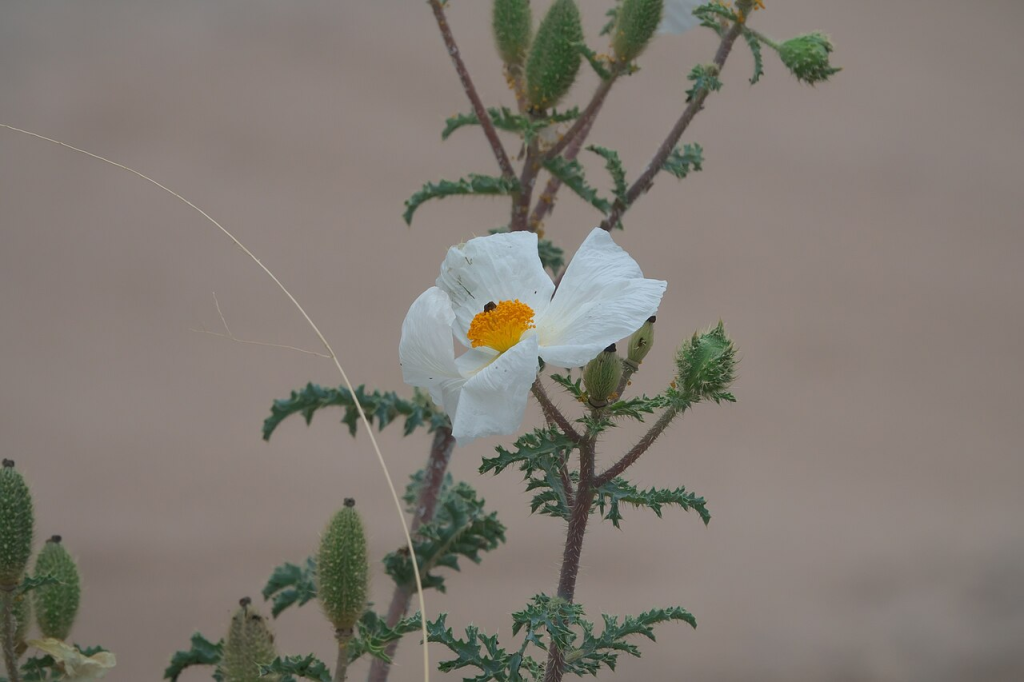
Also called bluestem prickle poppy and cowboy’s fried eggs this short lived perennial is native to Arizona and New Mexico where it grows in dry woodlands, washes and slopes of foothills and mountains. It grows up to 4′ tall and has green to blue-green leaves that are divided into tooth-like lobes. The white petalled flowers appear spring through summer, are up to 6″ across, and are attractive to bees and butterflies. The whole plant including the flower buds and fruits are covered with prickles.
Type: Short lived perennial
Height: 4′
Bloom Time: Spring through summer
Bloom Color: White with yellow center
Light: Full sun
Soil: Gravelly, dry, well-drained; drought tolerant
USDA Hardiness Zones: 7-10 (?)
Photo Credit: Robert Webster, Wikimedia Commons
Crested Prickly Poppy (Argemone polyanthemos)
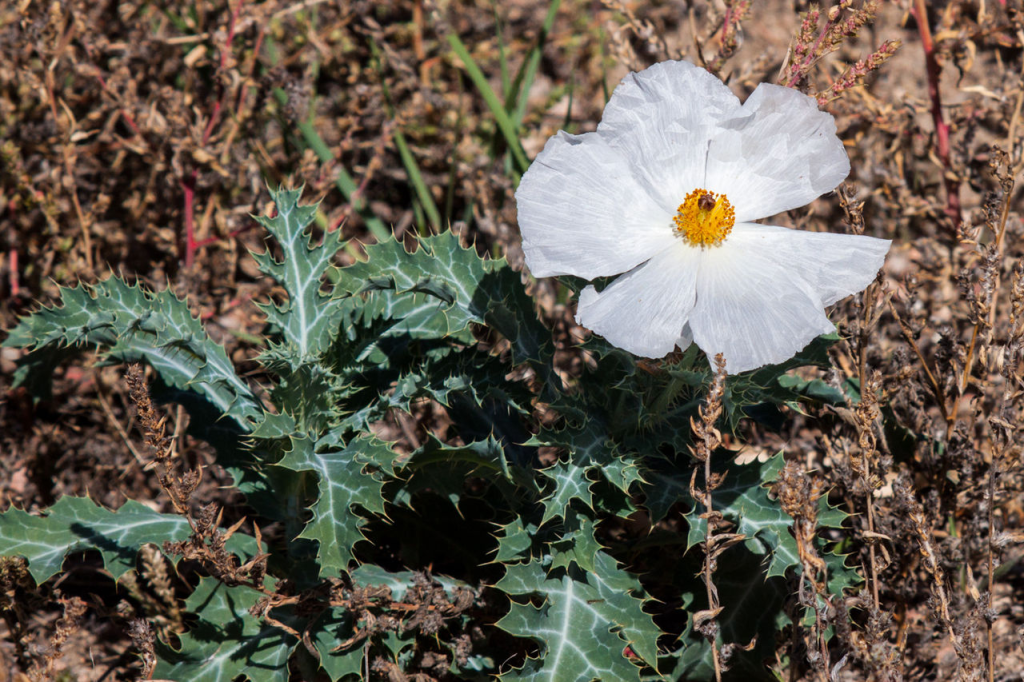
Also known as bluestem prickly poppy, white prickly poppy, annual prickly poppy and thistle poppy, this wildflower is native to grassland, foothills, and desert margins in Arizona, New Mexico, Texas and Oklahoma as well as places in the Rocky Mountain area, and Midwest, this plants grow up to 4′ tall and has grayish green leaves that are up to 8″ long, deeply lobed and are prickly on the margins and lower surfaces. From spring into summer, flowers appear. They are 3-4″ across and have 4-6 crinkled white petals surrounding a center of yellow stamens. All parts of the plants are poisonous.
Type: Annual or perennial
Height: 2-4′
Bloom time: Spring into summer
Bloom Color: White with yellow center
Light: Full sun
Soil: Average, dry to medium, well-drained; tolerates lean gravelly or sandy soil, and drought
USAD Hardiness Zones: 2-11
Photo Credit: WideClyde, Wikimedia Common
For the purpose of this article, the Southwest includes the states of Texas, Oklahoma, New Mexico and Arizona. Other states often associated with the Southwest are included in other geographic areas. The key factor linking these four states is aridity. The area includes high dry plains and true deserts as well as spurs of the Rocky Mountains. Only Texas has a coast on the ocean which brings more precipitation and humidity to east Texas and Oklahoma than elsewhere in the area. In addition to the ocean, the Rio Grande and Colorado Rivers are significant water features in the area. Although temperatures in the mountains can be cool, most of the area experiences hot temperatures for a long period each year.