
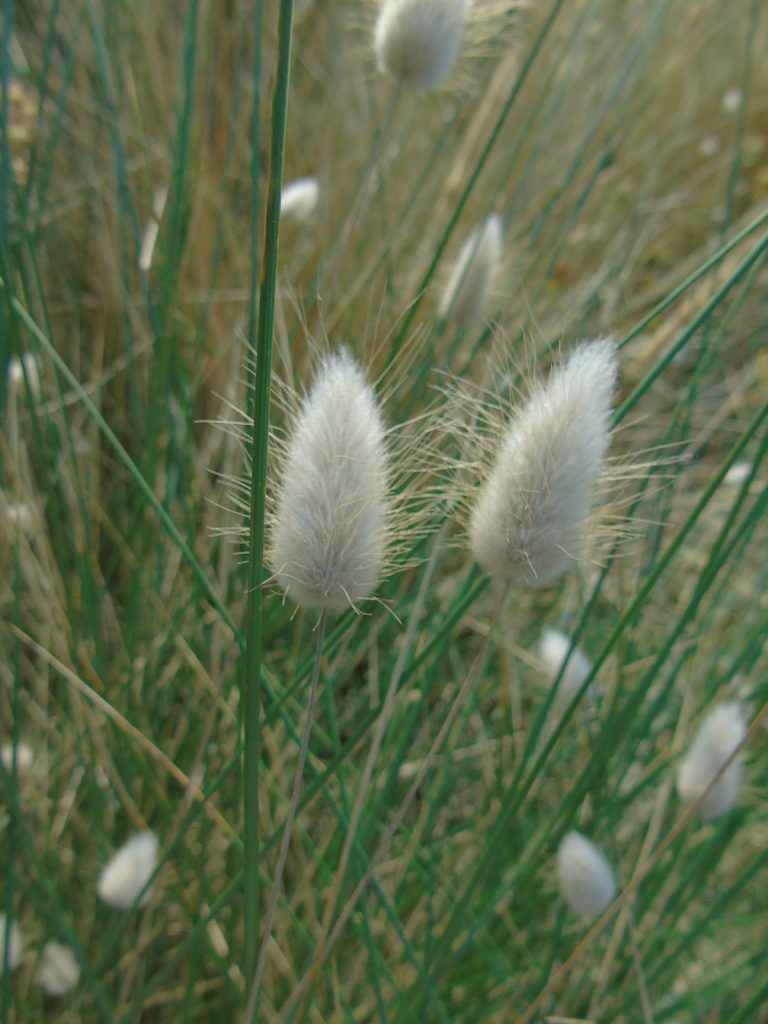
Also known as Turk’s head grass and hare’s tail grass, this fine textured grass is a native of Mediterranean shores and a member of the grass family, Poaceae, that also includes corn, rice, and bamboo. Although perennial in warm climates it is usually grown as an annual in USDA Hardiness Zones 7 and cooler. The plant grows 1-2′ tall and form a clump of soft, linear, gray-green leaves up to 8″ long. In summer, slender stems bear dense, oval, furry looking panicles that resemble rabbit’s tails. The panicles are up to 3″ long and are at first greenish but mature to cream and then tan. The flowerheads do not shatter as those of other grasses do and so are especially valued for fresh and dry arrangements. The plants do well in beds, borders, containers and informal sites such as cottage and prairie gardens. The genus name, Lagurus, is from the Greek lagos meaning a hare, and oura meaning a trail, referring to the shape of its flowerheads. The specific epithet, ovatus, is from the Latin word ovare meaning to lay eggs, and refers to the seed heads.
Type: Perennial grass usually grown as an annual
Bloom: Oval flowerheads with soft hairy awns that are greenish maturing to cream and then tan; summer
Size: 1-2′ H x 10-12″ W
Light: Full sun
Soil: Moderately fertile, moist, well-drained; tolerates some drought once established
Hardiness: Zones 8-11 but usually grown as an annual in zones 4-7
Care: Low maintenance
Pests and Diseases: None of significance
Propagation: Seed (self seeds), division
Companion Plants: Verbena bonariensis, French lavender, begonia,
Photo Credit: Wikipedia
 Karen Meyers