
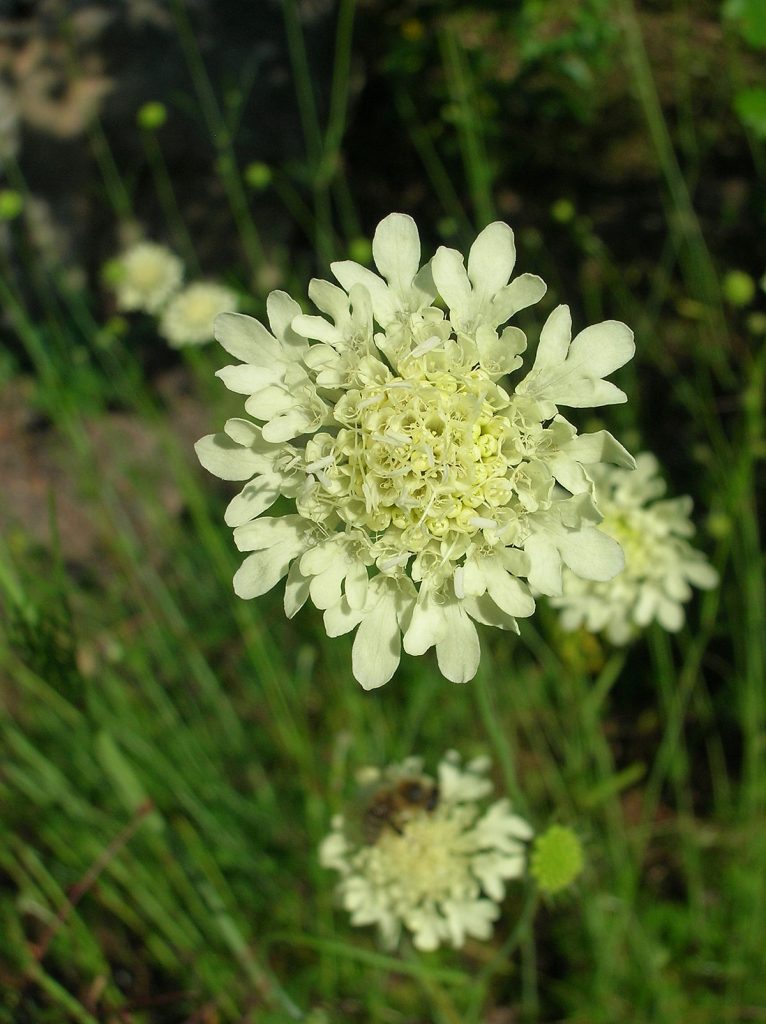
Native to southern Europe and Asia Minor, this short-lived herbaceous perennial is a member of the honeysuckle family, Caprifoliaceae, that also includes weigelia, Centranthus, and valerian. Plants grow 2-3′ tall and have variably hairy leaves and well branched stems. The basal leaves are slightly lobed while the stem leaves are pinnately dissected into linear lobes and have a feathery appearance. In summer, long wiry stems carry 1″ wide, globose flowers that are creamy white to soft yellow in color and attractive to butterflies and bees. The plants can look weedy so are best planted in informal settings such as cottage gardens. The flowers are good in the vase. The genus name, Scabiosa, comes from the Latin word scabies meaning itch and refers to the leaves that were thought to cure scurvy. The specific epithet, ochroleuca, is from the Greek khros meaning pale yellow, and refers to the flower color.
Type: Short-lived herbaceous perennial
Bloom: Pale yellow to cream flowers in summer
Size: 24-36″ H x 24″ W
Light: Full sun
Soil: Average, moderately moist, well-drained
Hardiness: Zones 5-7
Care: Deadhead to prolong bloom
Pests and Diseases: None of significance
Propagation: Seed, division, basal cuttings
Companion Plants: Artemisia, lamb’s ear, cranesbill
Outstanding Selections: var. webbiana (10″ tall, wrinkled leaves, creamier white flowers than species)
Photo Credit: Wikimedia
 Karen Meyers