
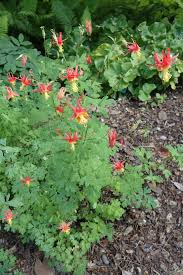
Aquilegia, also known as granny’s bonnet, is a genus of perennials native to the meadows and woodlands of the Northern Hemisphere. It is a member of the buttercup family, Ranunculaceae, that also includes anemone, hellebores, and bugbane. Growing 4″ to 5′ tall, plants form erect clumps of basal foliage and have slender, branching leafy stem. The ferny leaves are carried on long petioles, and are pinnately compound 1-3 times usually with 3-lobed leaflets. Flowers may be white, yellow, red, blue or combinations. They are erect or nodding, and usually have 5 petal-like sepals alternating with 5 true petals surrounding a center of numerous stamens. The petals have a broad tube in front and a projecting spur behind with spur length varying with the species. Columbines tend to thrive in part shade and in fertile, moist, well-drained soil, but tolerate less. They are generally short-lived and prone to disfigurement by leaf miners. Many attract pollinators.
The genus name, Aquilegia, comes from the Latin word aquila meaning eagle in reference to the resemblance of the spurs to the talons of an eagle.
Photo Credit: Krzysztof Ziarnek, Kenraiz , Wikimedia Commons
The environmental conditions in the Southwest have resulted in at least 8 native species of columbine there but they may be native to other places too. All the columbines described here are native to at least one of the states in the Southwest.
Eastern Red Columbine (Aquilegia canadensis)
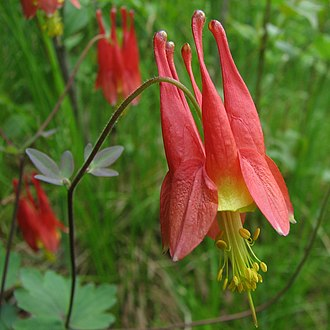
The compound leaves are divided into 3 leaflets. Each leaflet is oval, up to 3″ long, and has rounded lobes. The nodding flowers are 1-2″ across and have red spreading sepals and yellow petals with red spurs. The flowers are attractive to humming birds, butterflies, and other pollinators including bumble bees. The seeds attract birds.
Alternate Name/s: Wild Columbine, Jack in Trousers, Turks Cap
Native Range: Oklahoma and Texas as well as areas of the Southeast, Midwest, Mid Atlantic, and New England
Habitat: Woodlands with calcareous soils
Type: Perennial
Height: 2-3′
Bloom Time: Spring
Bloom Color: Red, yellow, pink
Light: Partial shade to full sun
Soil: Humusy, moderately moist, well-drained
USDA Hardiness Zones: 3-8
Photo Credit: Wikipedia
Golden Columbine (Aquilegia chrysantha)
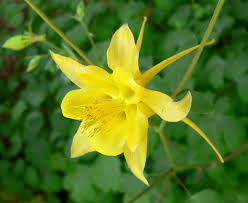
The compound leaves have 3 leaflet, each with three lobes. Nodding buds give way to upward looking yellow flowers that are up to 3″ long, and have wide spread sepals and long spurs. The flowers are attractive to humming birds, butterflies and other pollinators including bumblebees.
Alternate Name/s: Yellow Columbine, Southwestern Yellow Columbine, Canary columbine
Native Range: Texas, New Mexico, and Arizona as well as areas in the Rocky Mountain area
Habitat: Spring seeps and moist places in canyon
Type: Perennial
Height: 6-35″
Bloom Time: Late spring to late summer
Bloom Color: Yellow
Light: Light to moderate shade, tolerates full sun
Soil: Sandy, rocky or loamy, medium moist, well-drained
USDA Hardiness Zones: 3-9
Photo Credit: Stan Shebs, Wikipedia Commons
Colorado Blue Columbine (Aquilegia coerulea)
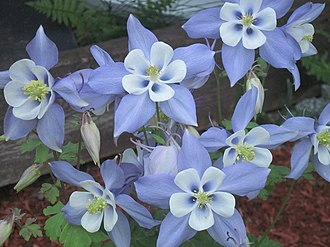
The fern-like foliage is gray-green and deeply cut. The flowers are erect, 2-3″ wide, and usually have creamy white petals, violet blue, wide-spread sepals, and long blue spurs. Colors vary, however, and all-white forms are known. Humming birds, butterflies, and other pollinators including bumble bees are attracted to the flowers. Plants are short-lived but form colonies, and reseed.
Alternate Name/s: Rocky Mountain Columbine
Native Range: New Mexico and Arizona as well as places in the Rocky Mountain area
Habitat: At elevations from 6000 to 10,000 feet; rocky slopes, near streams, open woodland, sagebrush, pinyon-juniper forests, aspen stands, alpine tundra
Type: Perennial
Height: 12-18″
Bloom Time: Late spring to early summer
Bloom Color: White and violet blue
Light: Shade
Soil: Humusy, consistently moist, well-drained
USDA Hardiness Zones: 3-9
Photo Credit: Rob Duval, Wikimedia Commons
Desert Columbine (Aquilegia desertorum)
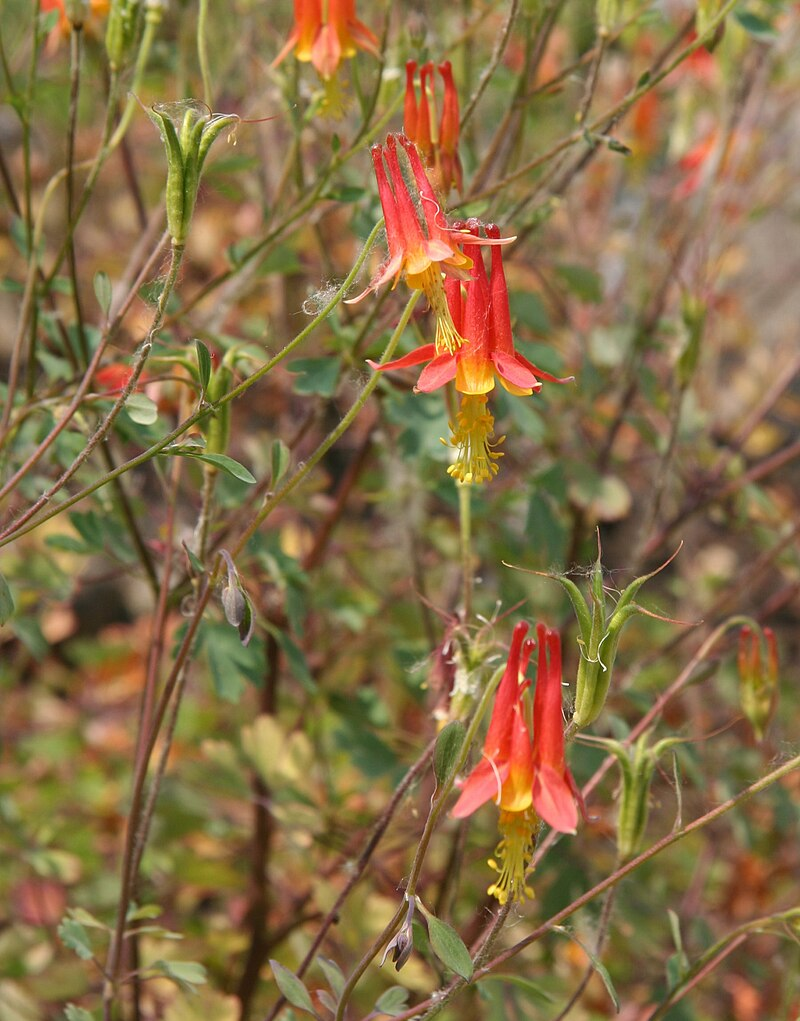
The highly dissected compound leaves form a rosette of foliage and have small thick, hairy leaflets that are rounded and toothed. The nodding flowers are carried on slender hairy stems above the foliage. Each flower has dark red spreading sepals and yellow petals with light red straight spurs.
Alternate Name/s: None generally accepted
Native Range: Arizona and New Mexico as well as places in the Rocky Mountain area
Habitat: Open rocky places in the deserts, moist mixed conifer mountain slopes at upper elevations
Type: Perennial
Height: 6-12″
Bloom Time: Late spring to mid summer
Bloom Color: Orange and yellow
Light: Sun to part shade
Soil: Sandy or rocky, medium moist to dry, well-drained
USDA Hardiness Zones: 5-8
Photo Credit: Michael Wolf, Wikimedia Commons
Western Red Columbine (Aquilegia elegantula)
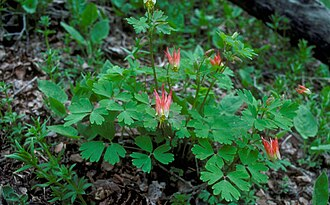
The green leaves are divided into three leaflets each of which have rounded lobes along the front edges. The nodding flowers have light to yellow-green or orange petals with bright red spurs, and reddish to yellow sepals held parallel to the petals.
Alternate Name/s: Shooting star columbine
Native Range: Arizona and New Mexico as well as parts of the Rocky Mountain area
Habitat: Montane and subalpine (6500 to 11800 ft); moist areas in mountain coniferous forests, forest edges and openings, and along streams
Type: Perennial
Height: 4-24″
Bloom Time: Late spring to mid-summer
Bloom Color: Red, yellow-green, orange, yellow
Light: Part shade
Soil: Average, moderately moist, well-drained
USDA Hardiness Zones: 5-8 (?)
Photo Credit: Dave Powell, USDA Forest Service, Wikipedia
Long Spurred Columbine (Aquilegia longissima)
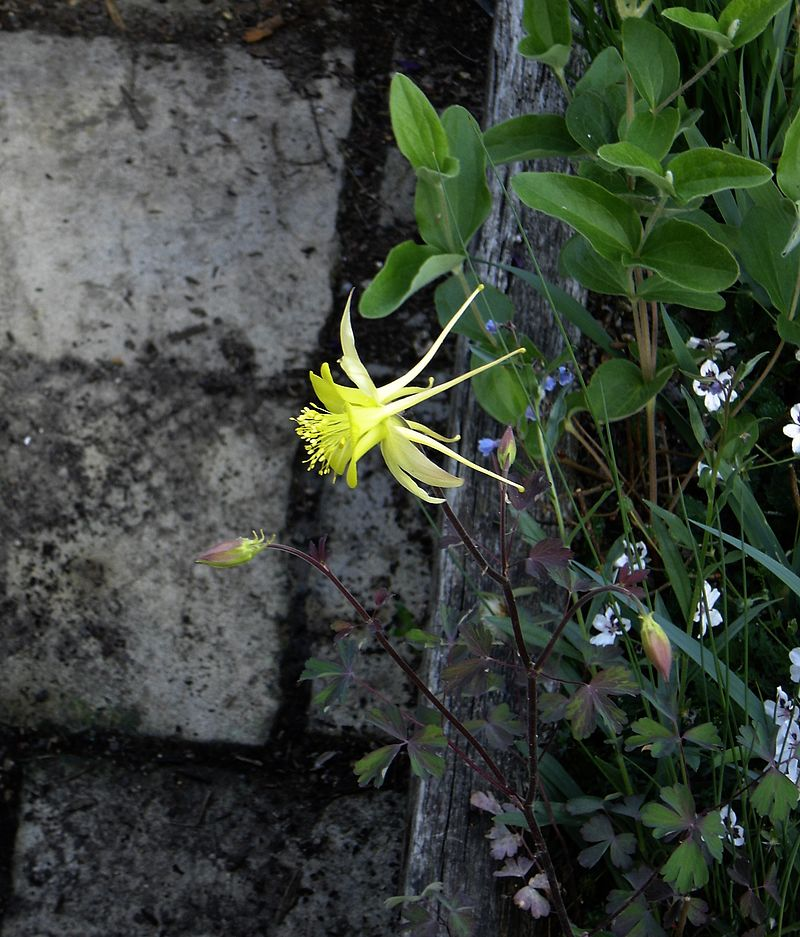
The compound leaves are 8-18″ long with lobed leaflets about 1.5″ long. The erect flowers have yellow spreading sepal, red petals, and spurs that are up to 6″ long. The flowers attract butterflies.
Alternate Name/s: Longspur columbine, longspur yellow columbine
Native Range: Arizona and Texas
Habitat: Near streams, in shady woodlands and damp rocky places in canyons
Type: Perennial
Height: 12-36″
Bloom Time: Late spring to fall
Bloom Color: Yellow
Light: Part shade
Soil: Average, consistently moist, well-drained
USDA Hardiness Zones: 4-9
Photo Credit: peganum, Wikimedia Commons
Mancos Columbine (Aquilegia micrantha)
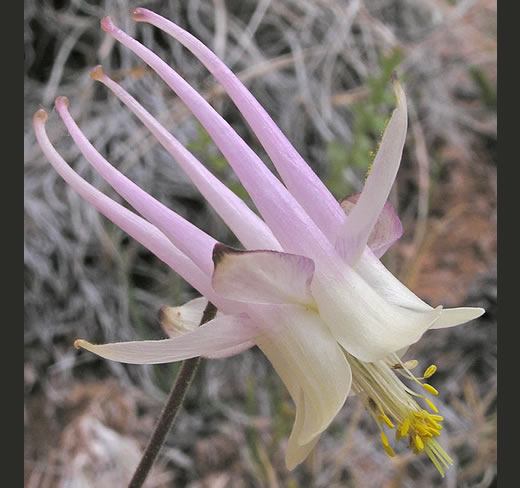
The compound leaves are 4-12″ long and may be hairy. The flowers are erect or nodding and have white, cream, blue, or pink spreading sepals and white to cream or pale blue petals with pink or white spurs that have inward turning hooks at their tips.
Alternate Name/s: Alcove columbine
Native Range: Arizona as well as places in the Rocky Mountain area
Habitat: Seepy rock walls of canyons at altitudes of 3,000-8,000 ft
Type: Perennial
Height: 12-24″
Bloom Time: Spring through summer
Bloom Color: Blends of whites, pinks, and yellows
Light: Partial shade
Soil: Average, medium most, well-drained
USDA Hardiness Zones: 6-9
Photo Credit: Al Schneider, USFS
Barrel Columbine (Aquilegia triternate)
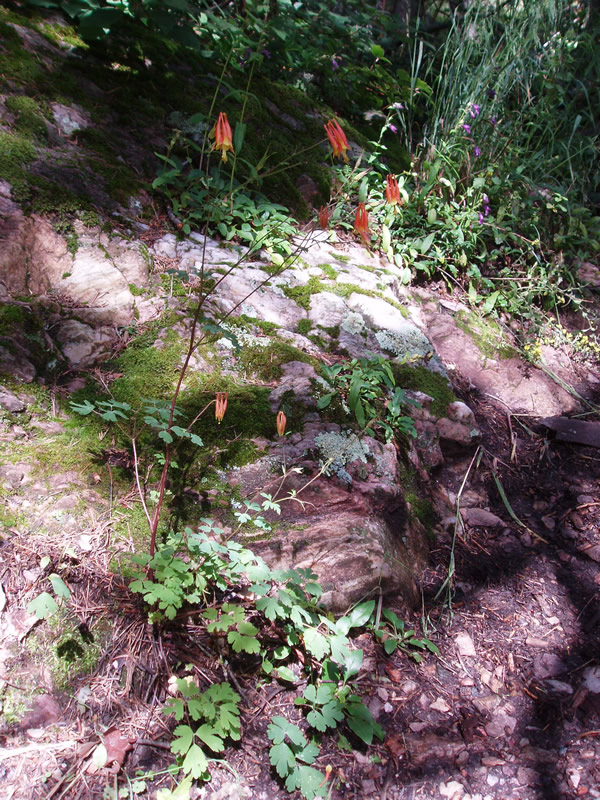
The compound leave have hairy top sides and sometimes undersides. The nodding flowers have red, slightly spreading sepals, yellow or yellow red-tinged petals and light red spurs.
Alternate Name/s: Chiricahua Mountain columbine
Native Range: Arizona and New Mexico
Habitat: Moist, open rocky places at mid elevations.
Type: Perennial
Height: 6-24″
Bloom Time: Late spring through summer
Bloom Color: Red and yellow
Light: Part shade
Soil: Average, medium moist, well-drained
USDA Hardiness Zones: 6-9
Photo Credit: Charlie McDonald, USFS
For the purpose of this article, the Southwest comprises the states of Texas, Oklahoma, New Mexico and Arizona. Other states often associated with the Southwest are included in other geographic areas. The key factor linking these four states is aridity. The area includes high dry plains and true deserts as well as spurs of the Rocky Mountains. Only Texas has a coast on the ocean which brings east Texas and Oklahoma more precipitation and humidity than elsewhere in the area. In addition to the ocean, the Rio Grande and Colorado Rivers are significant water features in the area. Although temperatures in the mountains can be cool, most of the area experiences hot temperatures for a long period each year.