
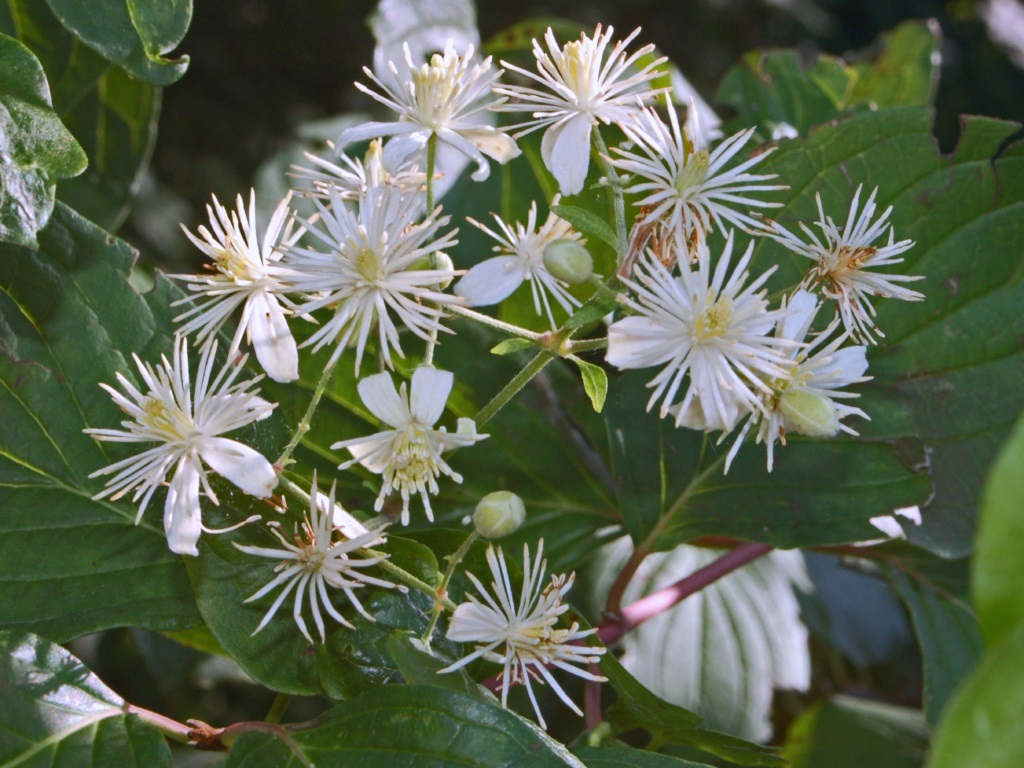
Clematis vitalbo symbolizes many attribute of the Virgin Mary and the link rests on folklore that probably sprung from the appearance and nature of the plant. The white flowers symbolize her purity, humility and divine grace while the trailing, vine-like growth emphasized her modesty. The wispy seed heads resemble Mary’s veil and symbolize her modesty. The plant’s habit of covering other plants and structures suggests a protective veil and is symbolic of Mary’s nurturing role as a mother. The clinging nature of the plant may be seen to suggest the devotion and faith that Mary showed by her steadfast commitment to God’s will all through her life. Some legends say that Mary used clematis vines to weave a shelter for the Christ Child, others that Mary hid beneath a clematis covered bower on the journey to Egypt to escape King Herod’s soldiers. The many associations between Clematis vitalbo and Mary make it a good choice for inclusion in a Mary garden.
Photo Credit: Wikimedia Commons
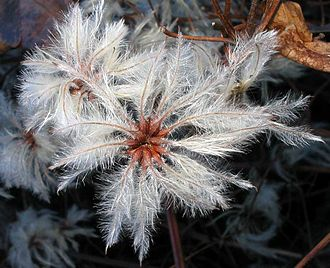
Also known as Traveler’s joy, this deciduous perennial vine is native to forests and woodlands of Eurasia and North Africa. It is a member of the buttercup family, Ranunculaceae, that also includes anemone, monkshood and hellebore. The vines grow up to 90′ long and have branched, grooved stems that rapidly climb over structures and other plants. The pinnately compound leaves are 3-10″ long and have 3 or 5 leaflets with toothed margins. Loose clusters of cream-colored flowers appear in the axils of the upper leaves in the summer. Each flower is 3/4″ across and has 5 tepals and a large number of stamens and pistils. Seeds appear in the fall and have a long silky tail (as seen in the photo above right). Plants can smother the vegetation around it and is considered invasive in some areas of its range.
The genus name Clematis, comes from the Greek word κλήμα (kléma) meaning vine. The specific epithet, vitalaba comes from the Latin words, vita, meaning vine, and alba meaning white, referring to the white flowers on the plant.
C. vitalaba likes partial shade to full sun and average, medium moist, well-drained soil in USDA Hardiness Zones 4-8. Plants are susceptible to damage by tomato spotted wilt virus. Propagation is by seed, stem cuttings and layering.
Photo Credit: Wikipedia
 Karen
Karen