
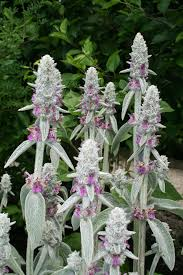
The name ,”Our Lady’s Fingers” for Stachys byzantina probably arose from Christian folklore and plant symbolism. The soft, velvety texture of the plant’s leaves suggests the gentle, comforting touch of the Virgin Mary’s fingers. In addition, the spike-like inflorescence of the plant may have suggested the fingers of Mary. The gray color of the leaves and the pink color of the flowers further enhance the soothing, divine care attributed to Mary.
Photo Credit: Wikipedia
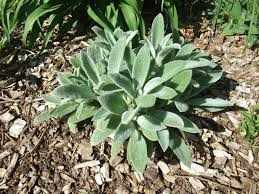
Lamb’s ear is a herbaceous perennial native to Turkey, Armenia, and Iran, and is a member of the deadnettle family, Laminaceae, that also includes mint, basil, and beebalm. It forms a dense rosette 4-6″ tall of silvery-gray leaves that are up to 4″ long, soft, fuzzy, and resemble a lamb’s ear. In summer, terminal spikes 10-15″ tall carry tiny inconspicuous pink flowers. Many gardeners do not find the flowering stems attractive and cut them off as they appear, or buy cultivars that do not produce flowers. Plants are evergreen in mild climates but melt out in hot humid climates.
The genus name, Stachys, is the Greek word σταχυς meaning ear of corn and refers to the inflorescence of a related plant. The specific epithet, byzantina, refers to the ancient city of Byzantium, now known as Istanbul, and refers to the geographic distribution of the plant.
Lamb’s ear likes full sun (with afternoon shade in the South,) and average, dry to medium, well-drained soil in USDA Hardiness Zones 4-8. It is drought tolerant once established but does not tolerate hot humid conditions. Plants are susceptible to damage by slugs and earwigs. Propagation is by division and basal cuttings in spring.
Photo Credit: Wikipedia