
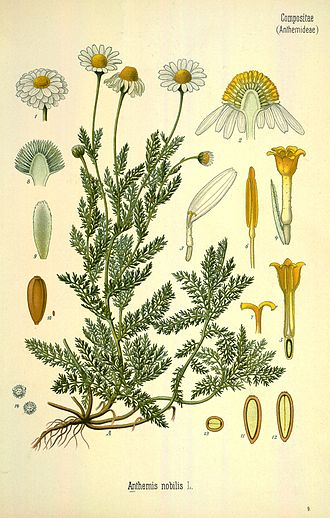
Roman Chamomile has been valued for over 2000 years. The ancient Egyptians associated it with their sun god, Ra, while the ancient Greeks and Romans used it medicinally to promote calmness and treat health issues such as digestive problems. During the Middle Ages the plant was grown in monastic gardens as part of the medicinal herb collection. Because of its mild and comforting nature, Roman chamomile was seen as a plant embodying the nurturing, healing, maternal qualities associated with the Virgin Mary. Some legends also suggest that the plant was blessed by Mary or that chamomile grew along Mary’s path as she fled to Egypt, offering a calming presence in times of distress. Other stories tells us that a common belief among gardeners was that trampling over chamomile actually strengthened it rather than harmed it. This led to the plant becoming a symbol of resilience, endurance, humility and overcoming hardship, attributes associated with Mary.
Photo Credit: Wikipedia
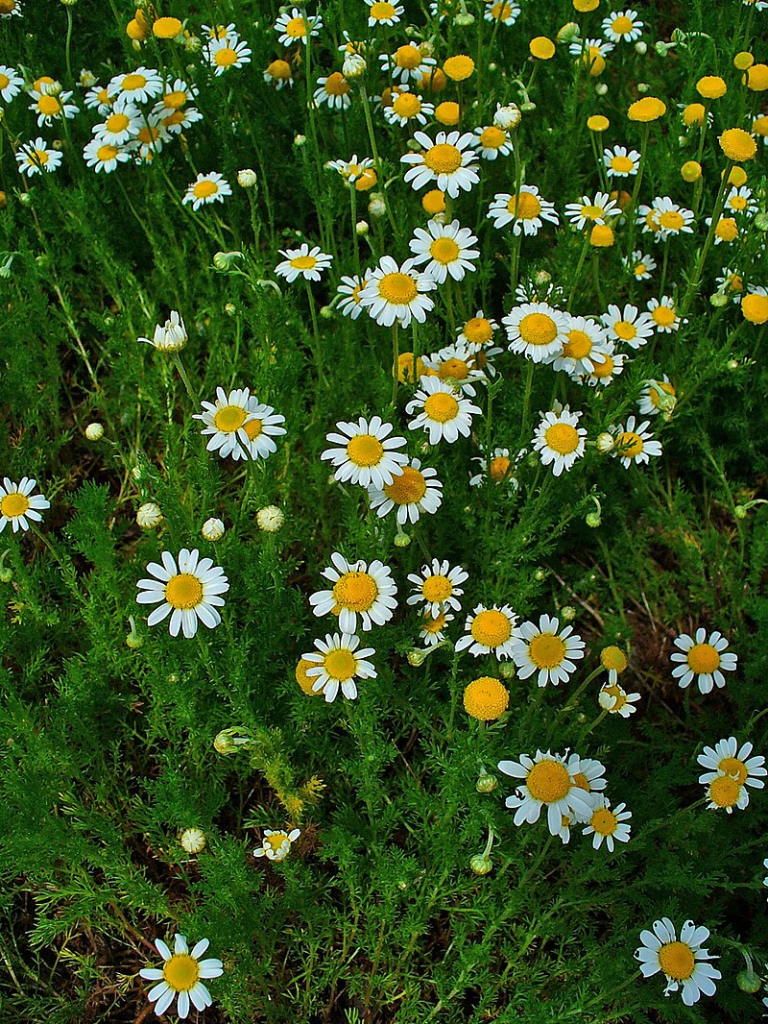
Also known as English chamomile, garden chamomile, ground apple, low chamomile, mother’s daisy or whig plant, this herbaceous perennial is native to dry sunny fields of Western Europe and the northwestern Africa. It is a member of the aster family, Asteraceae, that also includes daisy, sunflower and lettuce. Plants grow 3-6″ tall and form a low evergreen mat to 12″ wide. The fern-like leaves are finely dissected and emit a ripe apple-like fragrance when bruised. Solitary, terminal daisy-like flowerheads appear from summer to early fall. They are up to 3/4″ across and consist of white ray florets surrounding a mass of yellow disc florets in the center.
The genus name, Anthemis, is from the Greek word ἀνθεμίς (anthemís), meaning flower or bloom. The specific epithet, nobilis, is the Latin word meaning notable, and refers to the esteemed medicinal and aromatic qualities of the plant.
Roman chamomile likes average, medium moist, well-drained soil in USDA Hardiness Zones 4-9. It is drought tolerant once established, has no significant pests or diseases, but can spread quickly if happy. Propagation is by seed.
Photo Credit: Wikimedia Commons