

The link between Mary and the wild tulip comes from the appearance of the flowers and legend. The flower is thought to resemble hands folded in prayer, as shown in depictions of Mary in religious art such as Albrecht Durer’s The Virgin Mary in Prayer shown on the right. The link was further strengthened by the upward-facing cup-like appearance of the flower that reflected Mary’s openness to grace. A Christian legend tells us that when Jesus walked the earth, he blessed the flowers, and the tulips bowed before him in reverence, suggesting humility and devotion, attributes of Mary.
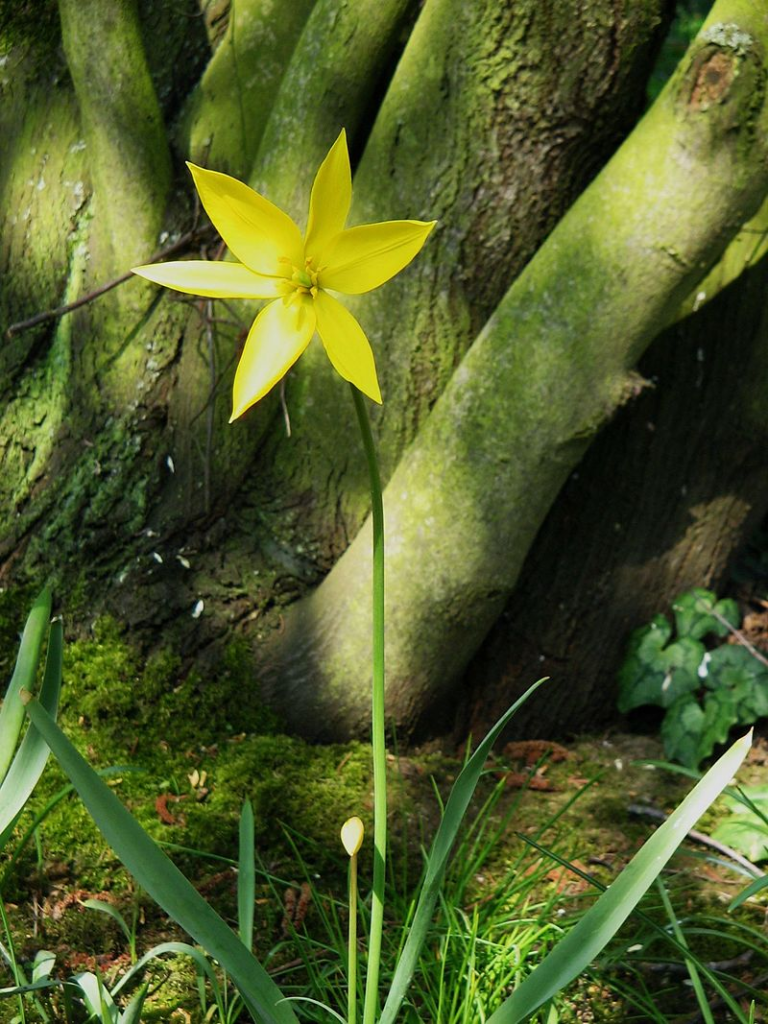
Also known as woodland tulip, this species tulip is native to Eurasia and North Africa where it grows in dry grassy places and woodland borders. It is in the lily family, Liliaceae, that also includes fritillaria. The long, narrow leaves are bluish-green and slightly wavy. The nodding, star-like flowers are carried singly (sometimes in twos) on leafless stem in early to mid spring. They are fragrant, bright yellow, often with a hint of green on the outside, and have pointed petals (actually tepals) with slightly recurved tips. They open widely in sunlight and close at night.
The genus name, Tulipa, probably comes from the Turkish word tülbend, meaning turban, referring to the resemblance of the flower to a wrapped turban. The specific epithet, sylvestris, comes from the Latin word silva, meaning forest or woodland, referring to the natural habitat of the plant.
Wild tulips like full to partial shade and fertile, moderately moist, well-drained, neutral to slightly acidic soil in USDA Hardiness Zones 4.8. Plants are generally healthy but may suffer damage from aphids, slugs, tulip fire, and bulb rot (in poorly drained soils). Propagation is by division of offsets.
Photo Credit: Wikimedia Commons