
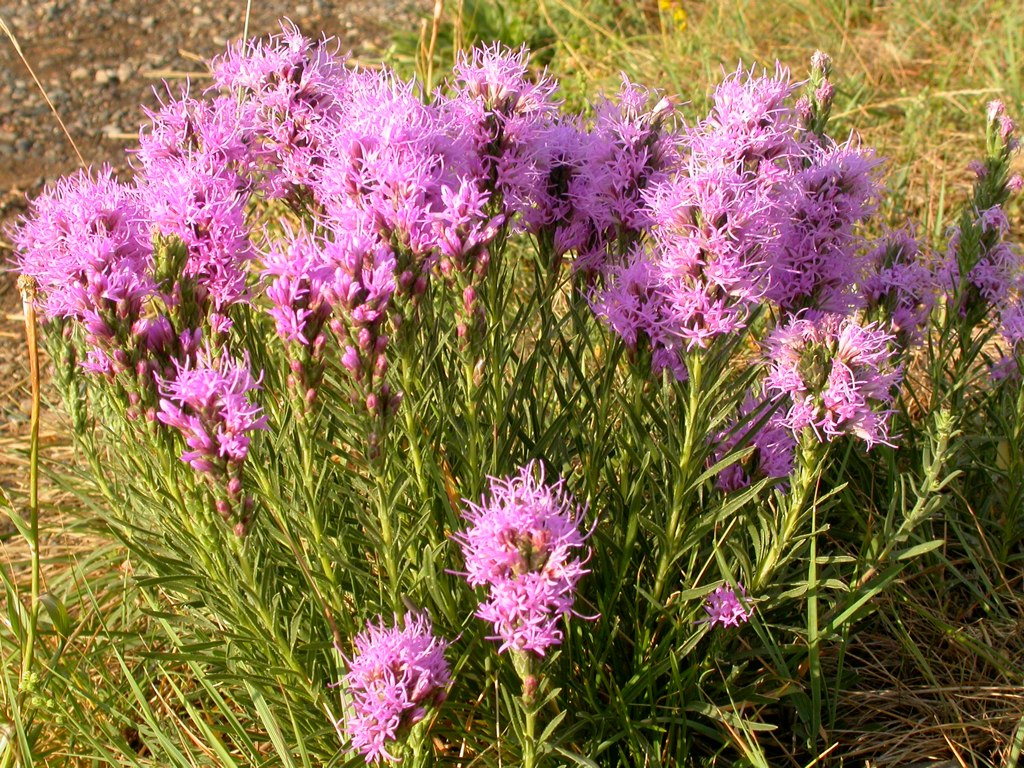
Often known as gayfeathers or blazing stars, these herbaceous perennials are a member of the aster family, Asteraceae, that also includes daisy, zinnia, and lettuce. They are native to North America where they grow in well-drained soil in full sun. The plants have strong straight stems that carry narrow leaves and terminate in a spike-like inflorescence of 15-45 purple flowerheads. The flowerheads are composed entirely of disc florets and open from the top to the bottom of the spike. Many species have flowers that are attractive to pollinators including butterflies, and are good in bouquets.
Photo Credit: Matt Lavin, Wikimedia Commons
The climatic conditions in the Rocky Mountain area have resulted in at least four native species of Liatris there but they may be native to other places too. All of the Liatris described here are native to at least one state in the Rocky Mountain area.
Lanceleaf Blazing Star (Liatris lancifolia)
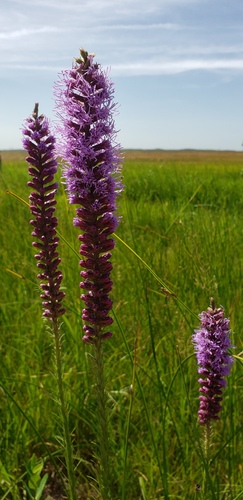
Also known as Great Plains gayfeather, this liatris is native to meadows and slopes of Wyoming and Colorado as well as places in the Southwest and Midwest. The narrow leaves are 2-8″ long with the largest at the base of tall flowering stems. Flowerheads are carried in dense terminal spikes of 15 or less, and are composed of purplish-pink disc flowers.
Height: 8-48″
Bloom Time: Late summer to early fall
Bloom Color: Pink, purple
Light: Sun
Soil: Medium moist, well-drained
USDA Hardiness Zones: 3-9 ?
Photo Credit: jencorman, iNaturalist
Rocky Mountain Blazing Star (Liatris ligulistylis)
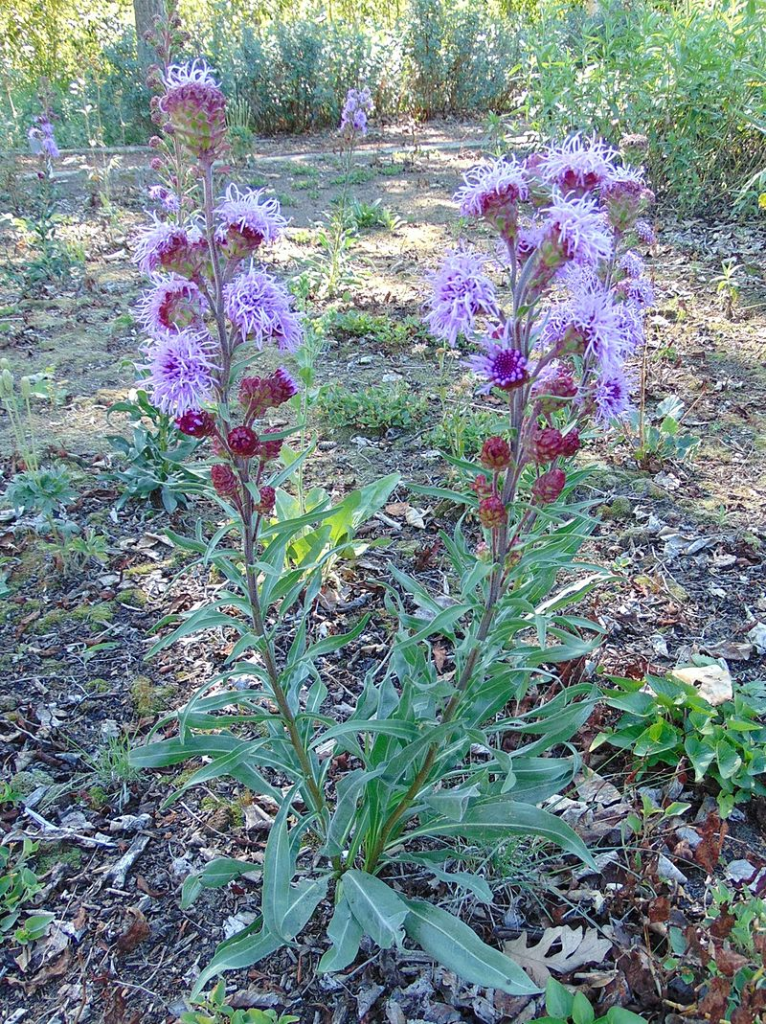
Also known as northern plains blazing star, and meadow blazing star, this showy perennial is native to Montana, Wyoming, and Colorado, as well as parts of the Southwest and Midwest. Both stem and leaves are hairy and the leaves vary from oblanceolate at the base to linear high on the stem. Flowerheads are loosely arranged on spike-like flowering stems 3-5′ long. The flowers may be purple, lavender, or pink and are attractive to butterflies, especially monarchs, and other pollinators.
Height: 3-5′
Bloom Time: Late summer
Bloom Color: Purple, lavender, pink
Light: Full sun
Soil: Average, medium moist, well-drained
USDA Hardiness Zones: 3-6
Photo Credit: Nadiatalent, Wikimedia Commons
Dotted Gayfeather/Blazing Star (Liatris punctata)
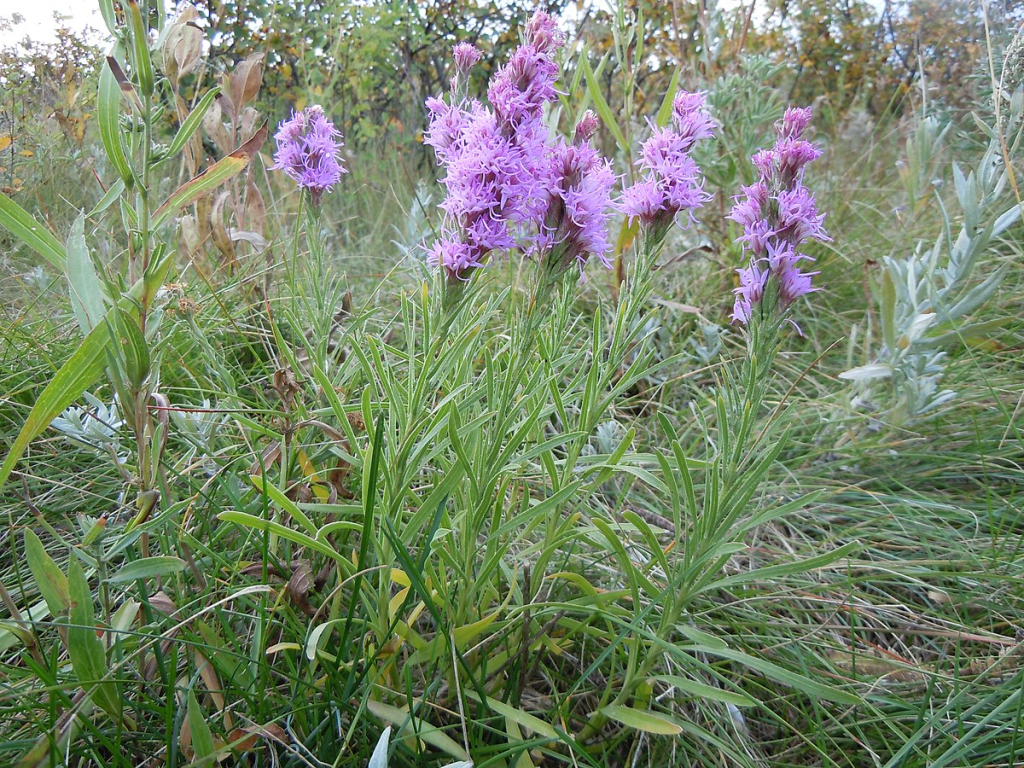
Dotted gayfeather is native to Montana, Wyoming, and Colorado as well as to parts of the Southeast, Midwest and, and Southwest. It can be found in a variety of habitats including grasslands, prairies, chaparral, sagebrush, ponderosa pine forests, and pinyon-juniper woodlands. Growing from a deep root system, the plant forms a clump of grass-like leaves that are up to 4″ long and dotted with resin. From late summer to fall, flowering stems up to 24″ long bear 10-12″ long terminal spikes of densely packed rosy lavender flower heads that are attractive to butterflies and other pollinators. Seeds attract birds..
Height: 1-2′
Bloom Time: Late summer to fall
Bloom Color: Rosy-lavender
Light: Full sun
Soil: Average, dry to medium moist, well-drained, acidic; tolerates alkaline soil and drought
USDA Hardiness Zones: 4-9
Photo Credit: Matt Lavin, Wikimedia Commons
Scaly Blazing Star (Liatris squarrosa)
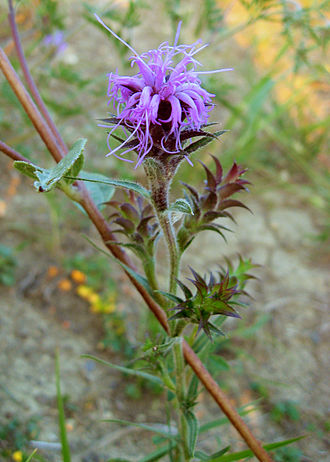
Scaly blazing star is native to Colorado as well as to parts of the Mid-Atlantic, Southwest, Midwest, and Southeast. It grows in a variety of habitats including woodlands, savannah, and prairie. The linear leaves are 3-6″ long and less numerous than other Liatris species. From summer into fall, tuft-like flower heads appear sparsely arranged on the ends of unbranched flowering stems that are 1-3′ tall. The flower heads are purple, up to 1″ across, and attract humming birds, butterflies, and other pollinators.
Height: 1-3′
Bloom Time: Summer to fall (relatively early bloomer)
Bloom Color: Purple
Light: Full sun
Soil: Sandy or rocky, medium-dry to dry, well-drained
USDA Hardiness Zones: 4-8
Photo Credit: Mason Brock
Six states are included in the Rocky Mountains area: Montana, Wyoming, Idaho, Colorado, Utah, and Nevada. The geography is diverse and includes mountains, plains, and deserts, and the climatic conditions are variable. Low annual rainfall and high temperatures are typical of some parts of the area, while snowfall and low temperatures are found in other parts and the mountains of all of these states.