
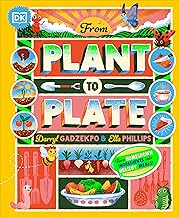
In their book, From Food to Plate, Darryl Gadzekpo and Ella Phillips share their knowledge of cooking, gardening and plant-powered food in a comprehensive guide to growing your own produce and then using the yields to create delicious and healthy dishes. Written for children ages 7-9 year in grades 2-4, the book offers practical advice for cultivating vegetables, herbs and fruits, and provides recipes using the harvest that will appeal to young cooks. The authors’ emphasis on eco-friendly practices and sustainability promotes an awareness of the relationship between food and our planet.
The book is divided into three major sections. The first section, called Power Up, explores what the body’s needs to stay strong and healthy. It covers the process of digestion from the mouth where teeth begin the breakdown of food to the gut where microbes further break down the food to unlock vital vitamins that the body can’t make on its own. A discussion about the importance of a diverse diet emphasizes the importance of vitamins and minerals and suggests foods that meet the body’s nutritional needs.
The second section of the book, called Plant, covers the basics of growing food for the table including tools, soil, sowing seeds, composting, pest control, and growing in containers. The rest of the section is devoted to giving more specific directions for planting herbs such as basil, thyme and lavender, vegetables like cherry tomatoes, garlic, and Tuscan kale, and one fruit, raspberry. The leafy vegetable discussion includes directions for growing spinach and amaranth, while that on podded vegetables includes directions for growing borlotti beans as well as chick peas.
Plate, the final major section of the book, covers cooking and begins with an overview of the equipment, directions for basic cooking techniques, and suggestions for ingredient substitutions. It continues with 25 recipes beginning with basil pesto for pasta, tomato pizza, and pull-apart garlic bread, and ending with spinach and leek tart, amaranth chocolate chip cookies and berry cobbler. Each recipe includes lists of tools and ingredients, number of servings, preparation time, cook time, step by step instructions, difficulty level, and a photograph of the completed dish. A discussion of food waste concludes the section.
The scope of the book is broad but its uniqueness lies in the presentation. The book abounds in vibrant full color photographs, diagrams, charts, and tables. The bug squad, including Winston Worm and Babette Butterfly, navigate us through the text and add their personal tips. Catchy terms, innovative expressions, and clever graphics will attract and hold the attention of young and old alike. Sometimes the detail may be too much for the young child while at other times more information may be needed, but overall the book is a pleasure to read.
To buy From Plant to Plate from Amazon.com, click here.