
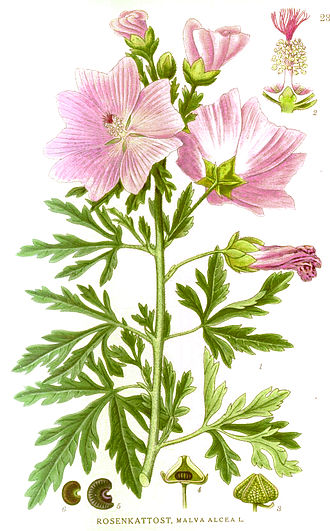
The link between the Virgin Mary and Malva alcea probably reflects a combination of its edible and medicinal qualities which suggested a symbolic association with Mary’s purity and role as caretaker and protector. M. alcea has edible leaves and flowers that were used as food in times of scarcity. In addition, the plant was cultivated as a medicinal plant to treat a variety of ailments including digestive issues, inflammation, and skin conditions. The plant’s soft pink flowers and its gentle appearance further strengthen the association with Mary.
Photo Credit: Wikipedia
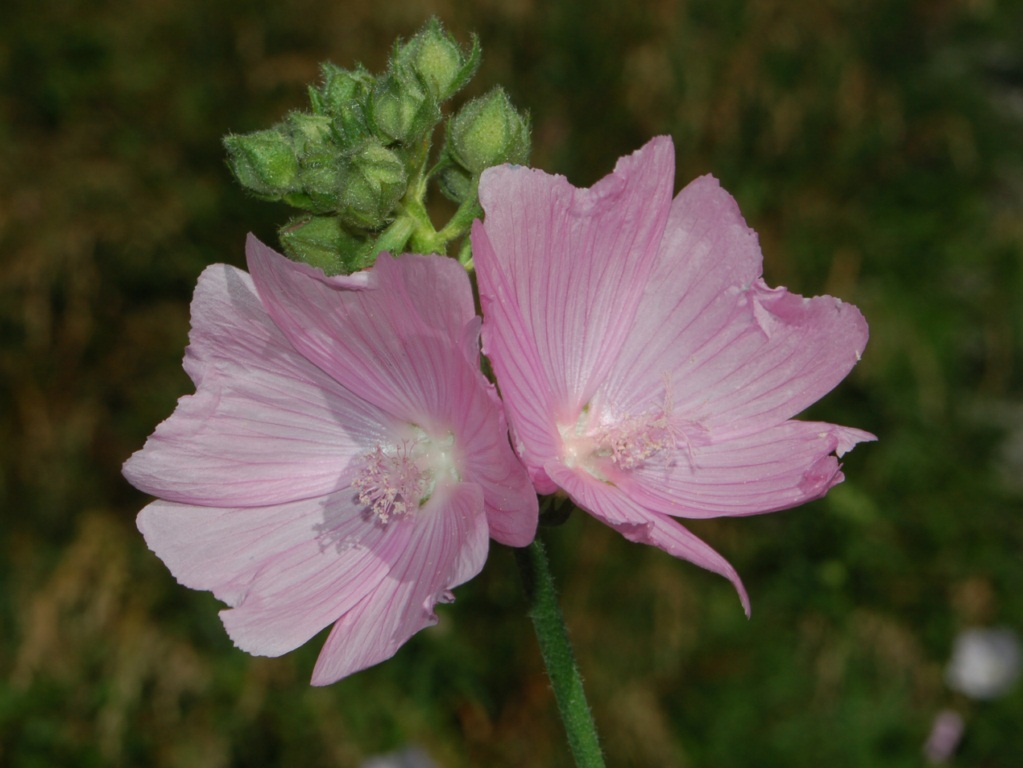
Also known as greater musk-mallow, cut-leaved mallow, and vervain mallow, this herbaceous perennial is native to Europe and southwestern Asia. It is a member of the mallow family (Malvacae) that also includes hibiscus, hibiscus, cotton and okra. Stout branched stems carry downy, light green leaves that are rounded, up to six inches long, and have toothed margins and five shallow lobes. The pink to light rose-purple flowers have five notched, two-lobed petals and bloom over four to six weeks beginning in early summer They are two to three inches wide and are carried both along the stem and in terminal spikes.
The genus name, Malva, comes from the ancient Greek word μαλάχη (malache) meaning soft or soothing referring to the plant’s mucilaginous properties, which have been used in traditional medicine. The specific epithet, alcea, is from the Greek word ἀλκή (alke) meaning strength or healing referring to the plant’s traditional medicinal use. Photo Credit: Wikipedia
Plants like full sun to light shade (especially in hot climates)and average, medium moist, well drained soil in USDA Hardiness zones 4-8. They do best, however, in USDA Zones 6 and cooler, as they are susceptible to a bevy of insects and diseases in warmer climates including spider mites, thrips, Japanese beetles, and foliar diseases. Propagation is by tip cuttings in summer, and seed sown indoors in late winter and outdoors in spring or fall
Photo Credit: Wikimedia Commons