
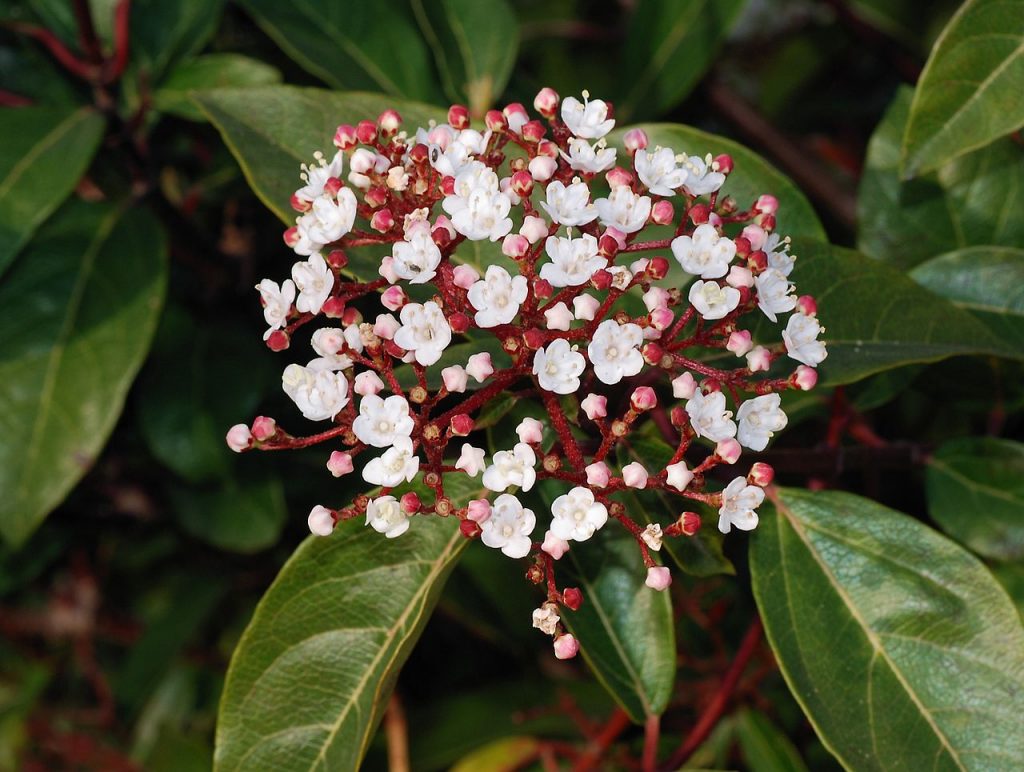
Native to shrubland and wooded rocky slopes of the Mediterranean area of Europe and northern Africa, this evergreen shrub or small tree is a member of the moschatel family, Adoxaceae, that also includes elders. The plant usually grows up to 12′ tall and has dense, horizontally tiered branches The opposite, narrowly ovate to oblong leaves are up to 4″ long, and have lustrous dark green topsides and pale green undersides. In late winter, 4″ wide, flat, terminal clusters of pink buds appear and open to fragrant white flowers that attract butterflies, bees, and other pollinators. The bright metallic blue berries that follow are 1/4″ across and eaten by birds. The plants are valued for use in shrub borders and as a hedge or screen. The origin of the genus name, Viburnum, is uncertain but may come from an Etruscan word. The specific epithet, tinus, is the name used by the ancient writer Pliny the Elder (d 79 AD) to refer to the plant.
Type: Flowering, evergreen shrub or small tree
Outstanding Feature: Flowers and foliage
Form: Rounded
Growth Rate: Rapid
Bloom: Clusters of pink buds open to white flowers in late winter to early spring
Size: 8-23′ H x 6-10′ W
Light: Full sun to part shade
Soil: Moderately fertile, medium moist, well-drained
Hardiness: Zones 8-10
Care: Protect from cold and wind; prune in spring to maintain shape
Pests and Diseases: Generally healthy but susceptible to aphids, thrips, mites, scale, mildew and leaf spot. Root rot a problem in poorly drained soils.
Propagation: Semi hardwood cuttings in summer or fall
Outstanding Selections:
‘Bewley’s Variegated’ (leaves with cream-yellow edging, 5′ tall)
‘Eve Price’
‘French White’
‘Gwenllian’
‘Robustum’ (larger leaves than species and pink flowers)
‘Spring Bouquet’ (3-5 ‘ tall and wide)
Photo Credit: Alvesgaspar Wikimedia Commons