
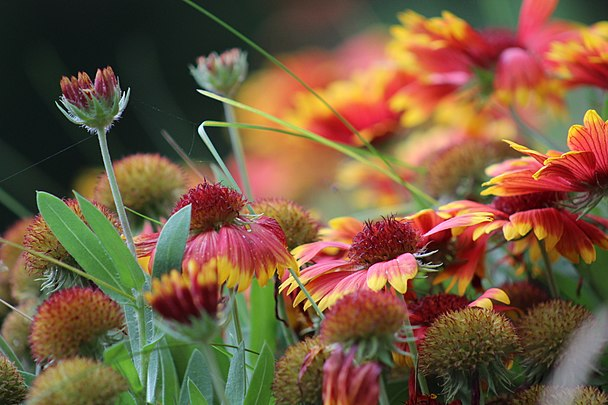
Blanket flowers, also called Indian blanket, are long blooming plants but tend to be short-lived perennials or annuals. They are native to North and South America and are a member of the aster family, Asteraceae, that also includes daisy, yarrow, and lettuce. The plants are usually branched, vary in height from 8 to 36″, and have lance-shaped basal and/or stem leaves that are gray-green, hairy, and may be lobed or toothed. The flowerheads are terminal, solitary, and vary in size from 1 to 3″ across. They usually have a center of dark tubular disk florets surrounded by 6-20 ray florets that are yellow, orange, brown, white red or bicolored and have a 3-clefted tip. Ray florets, however, may be partial or missing.
Blanket flowers need full sun and average, moderately moist, well-drained soil and are somewhat drought tolerant when established. They are generally healthy but leaf spot, powdery mildew, root rot, aphids, leafhoppers and thrips can be a problem. Propagation is by seed, root division, or separation of offsets. The flowers are used for arrangements and attract pollinators, and the seeds may be attractive to goldfinches.
The genus name, Gallardia, honors Maître Gaillard de Charentonneau, an 18th-century French magistrate who was an enthusiastic botanist.
Photo Credit: Xavier Care, Wikimedia Commons
The environmental conditions in the Mid-Atlantic have resulted in at least two species of blanket flowers native to the Mid-Atlantic, but they may be native to other areas in the US too. The blanket flowers described here are native to at least one of the states in the Mid-Atlantic.
Common Blanket Flower (Gaillardia aristata)
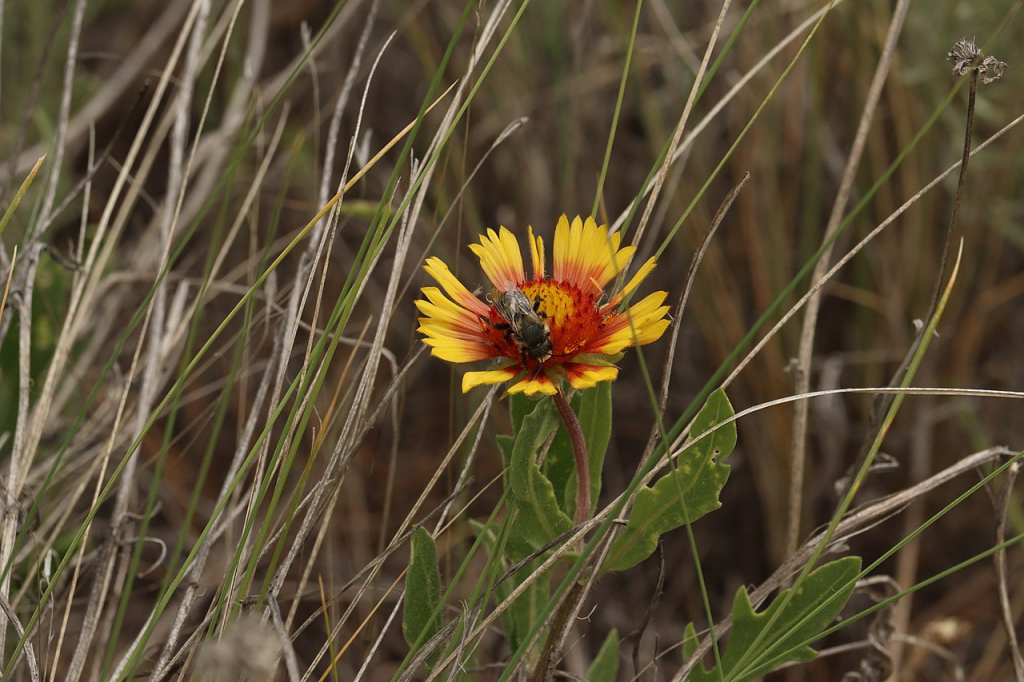
Erect stems are roughly hairy, branched mostly at the base, and have basal gray-green leaves. The leaves are up to 6″ long, roughly hairy, and vary in shape from lance-like to spatula shaped and may be toothed or lobed. Solitary flowerheads are carried at the tips of the stems. They are 1.5-3″ across, and have a center of brownish or reddish purple disk florets surrounded by 6-18 yellow ray florets with red at the base.
Alternate Name/s: Common gaillardia, brown-eyed susan, great blanket flower
Native Range: New York as well as areas on the Pacific Coast, and in the Midwest, and New England
Habitat: Plains, prairies, meadows
Type: Perennial
Height: 2-3′
Bloom Time: Late spring to early fall
Bloom Color: Red, yellow, purple
Light: Full sun
Soil: Average, dry to medium moist, well-drained; tolerates dry soil and drought once established
USDA Hardiness Zones: 3-8
Photo Credit: Wikipedia
Firewheel (Gaillardia pulchella)
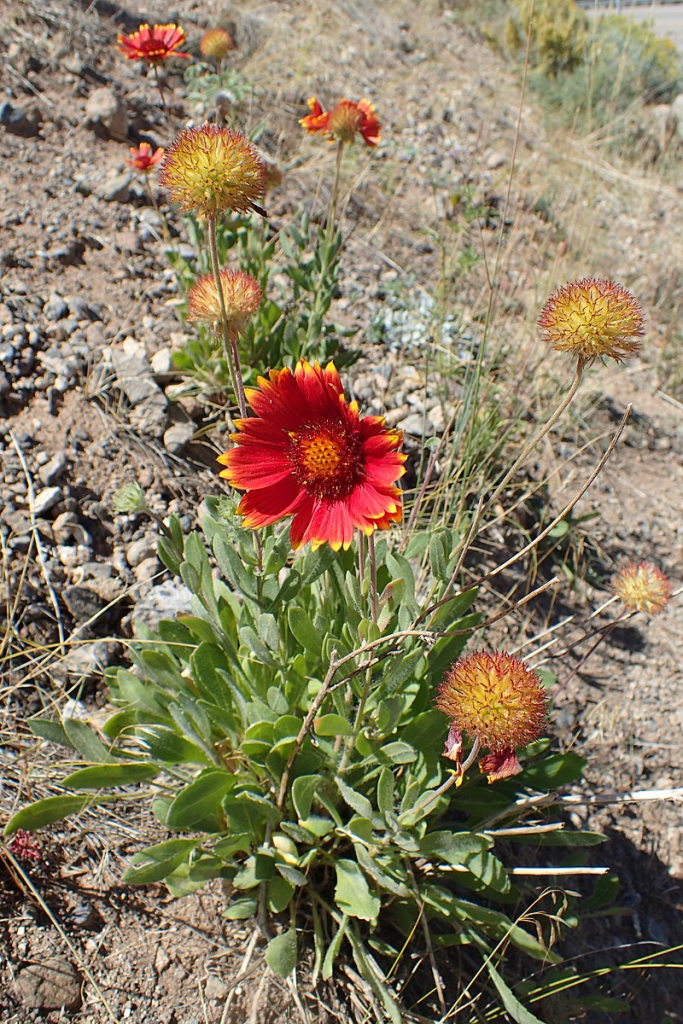
Hairy stems, branched near the base, carry oblong to oblanceolate gray green leaves that are mostly basal, up to 3″ long, and have smooth to coarsely toothed or lobed margins. The terminal flowerheads are carried singly and are 1-2’across. They are composed of 10 to 20 rays florets surrounding a center of red-purple disk florets. The color of the ray florets is usually mostly red, tipped with yellow.
Alternate Name/s: Indian blanket, Indian blanketflower, sundance
Native Range: New York, Pennsylvania, and New Jersey as well as places on the Pacific Coast and in the Southeast, Midwest, and New England
Habitat: Dry plains, prairies and other open spaces
Type: short-lived perennial or annual
Height: 1-2′
Bloom Time: Summer to frost
Bloom Color: Red, yellow
Light: Full sun
Soil: Average, dry to medium, well-drained
USDA Hardiness Zones: 2-11
Photo Credit: Kenraiz, Wikimedia Commons
The Mid-Atlantic region includes Delaware, Maryland, New Jersey, New York, Pennsylvania, and the District of Columbia. The region is characterized by cold winters and hot summers, high humidity in summer along some areas along the coast, and precipitation between 32 and 52″ per year.