
 THIS IS DUPLICATE
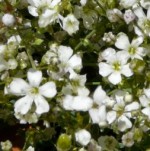
Creeping baby’s breath is a herbaceous perennial native the mountains of central and southern Europe where it grows on dry, chalky slopes. It is a member of the carnation family, Caryophyllaceae, that also includes pinks (Dianthus), soapwort, and Lychnis. The trailing eighteen inch long stems with gray leaves ½-1 inch long form substantial mats in about two years. Small open flat clusters of star-shaped ¼” flowers are white to pale lilac and cover the plant in summer. Plants are more tolerant of acid soils than their more famous cousin, florist’s baby’s breath (Gypsophila paniculata) and tolerate heat but not wet feet. They are especially attractive tumbling down walls and over large rocks, and are an excellent choice for use as an edging, ground cover, or container as well as for alpine and rock gardens. The generic name Gypsophila comes from the Greek words gypsos meaning gypsum and philos meaning loving, referring to the fact some species thrive only in limey. The specific epithet repens comes from the Latin word repto meaning to crawl or creep, describing the habit of the plant.
Type: Herbaceous perennial
Bloom: Small flat clusters of star-shaped ¼” flowers are white to lavender and cover the plant in summer
Size: 4-8” H 12” W
Light: Full sun to partial shade
Soil: Fertile, moderately most, well-drained
Hardiness: Zones 3-8
Care: Cut back after flowering to encourage rebloom.
Pests and Diseases: Stem rot
Propagation: Seed, division in summer
Companion Plants: Alpine pinks, Campanula carpatica, coral bells, dwarf yarrow (Achillea kellereri),hardy purple or yellow iceplant
Outstanding Selections:
‘Alba’ (white flowers)rock garden
‘Bodgeri’ (double pink flowers)
‘Fratensis’ (pink flowers)
‘Rosea’ (pale pink flowers)