
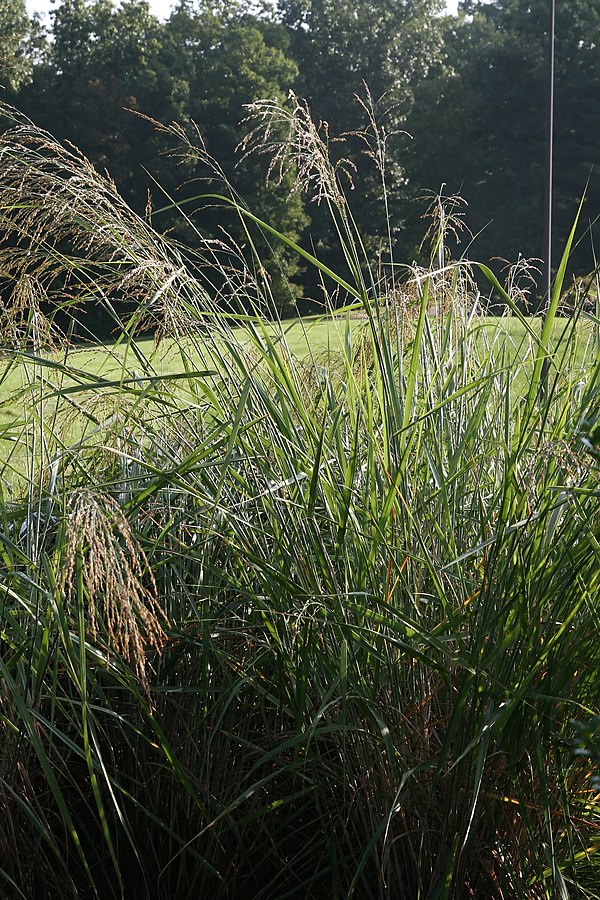
Also known as coastal switchgrass and seabeach grass, this warm season perennial grass is native to sandy shores and dunes of coastal regions along the East Coast and Gulf Coast of the United States, into northeastern Mexico, and in Cuba and The Bahamas. It is a member of the grass family, Poaceae, that also includes rice, corn and bamboo. The plant grows up to 4′ tall from a rhizomatous root system and forms a narrow clump of arching, linear, blue-green leaves. From late summer to fall, airy panicles up to 31″ long appear bearing tiny pink flowers above the foliage. They give way to beige seed heads that persist into winter and provide food for birds. The plant is also a larval host, and food and nectar source for several butterflies. Tolerant of lean soil, drought, salt, and air pollution, bitter panicum is valued for dune stabilization, erosion control, and use in seaside, native plant, wildlife, meadow, prairie, and rain gardens. The plant is also attractive in borders and is suitable for containers. The genus name, Panicum, is the Latin name for the grass. The specific epithet, amarum, is the Latin word meaning bitter.
Type: Deciduous, warm season perennial grass
Bloom: panicles of tiny pink flowers from late summer into fall
Size: 3-4′ H 2-3′ W
Light: Full sun; tolerates light shade but may flop
Soil: Average, dry to medium moist, well-drained; drought and salt tolerant
Hardiness: Zones 2-9
Care: Cut back in late winter or early summer to maintain shape
Pests and Diseases: None of significance
Propagation: Seed, division
Companion Plants: Coreopsis tripteris, Inula racemosa, Calamagrostis epigejos
Outstanding Selections:
‘Dewey Blue’ (ornamental cultivar)
var. amarulum ( erosion control)
‘Atlantic’ (erosion control)
‘Fourchon’ (vigorous, persistent)
‘Northpa’ (North Carolina)
‘Southpa’ (Florida)
Photo Credit: David J. Stang Wikimedia Commons