
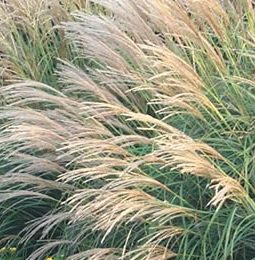
This warm-season perennial grass is a dwarf form of the very popular Chinese/Japanese silver grass. It is bred from a grass native to Japan, Korea and China, and is a member of the grass family, Poaceae, that also includes rice, corn and bamboo. The plant forms rounded, compact clumps of very narrow, arching leaves that are silver-gray until turning yellow in the fall. In late summer, loose panicles of tiny rose- tinged flowers appear above the foliage and gradually become creamy white plumes that persist through the winter. The plants are attractive especially in informal gardens such as cottage, meadow, and prairie gardens where they add interest from summer through winter. The leaves and flowers should be left until spring both to enhance the appearance of the garden and protect the crown. The genus name, Miscanthus, comes from from the Greek words miskos meaning a stem and anthos meaning flower and refers to the stalked spikelets. The specific epithet, sinnesis, is a Latinized word referring to China, one of the countries where the plant is native. The cultivar name, ‘Adagio, comes from the Italian words ad agio, meaning at ease, and refers to the slow movement of the plant in response to breezes.
Type: Warm-season perennial grass
Bloom: Loose panicles of tiny pink-tinged flowers in summer developing into creamy white plumes that persist through the winter
Size: 3-4′ H, up to 5′ H when in bloom
Light: Full sun to partial shade
Soil: Average, medium moist, well-drained
Hardiness: Zones 5-9; tolerates heat and humidity
Care: Cut back in early spring before new growth emerges
Pests and Diseases: Miscanthus blight, mealy bug, aphids, fungus gnat larvae, Anthracnose
Propagation: Division, self seeds
Companion Plants: Coreopsis verticillata ‘Moonbeam’, Echinacea purpurea, Rudbeckia, daylilies
Photo Credit:
 Karen Meyers