
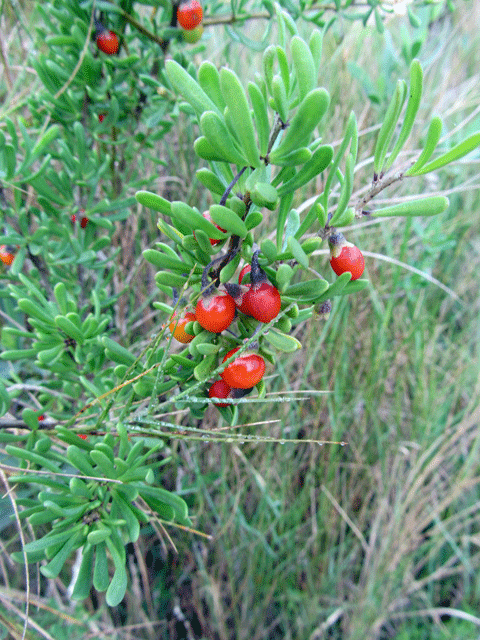
Also known as Christmas berry, this evergreen shrub is native to coastal areas of Cuba, Mexico, and southeastern US from South Carolina to Florida and west to Texas, where it grows in salt marshes and on dunes. It is a member of the nightshade family, Solanaceae, that also includes potato, Chinese lantern, and petunia. The plant grows up to 10′ tall and has rigid branches with thorned tips, and clusters of small, succulent, linear to oblanceolate, bright green leaves. Single flowers appear on slender stalks in the leaf axils in summer and fall. Each tubular flower has 4-5 lobes, is up to 1/2″ across, and varies in color from dark lavender to bluish-white with white centers. The flowers are rich in nectar and attract butterflies, bees, and hummingbirds. The egg-shaped, green fruits that follow are fleshy berries and ripen to red in the fall and winter when are eaten by birds. These berries are tomato-flavored but should only be eaten by humans when ripe. Because Carolina desert-thorn can grow in sand and is tolerant of saline soil and salt spray as well as brief drought, it is an excellent choice for a specimen or hedge in seaside gardens. The genus name, Lycium, honors an ancient city in Asia Minor and was used by the ancient Greeks and Romans for some thorny shrub or tree. The specific epithet, carolinianum, is the latinized form of carolina, and refers to a geographic area where the plant is native.
Type: Evergreen shrub
Outstanding Feature: Fruit, flowers, foliage, hurricane resistance
Form: Vase-shaped
Growth Rate: Moderate
Bloom: Tubular, lave
Size: 3-9′ H x 3-5′ W
Light: Full sun
Soil: Sandy or calcareous, medium moist; tolerant of , drought, inundation with brackish water, and salt spray
Hardiness: Zones 8-11
Care: Low maintenance
Pests and Diseases: None of significance
Propagation: Seed
Photo Credit: Homer Edward Price