
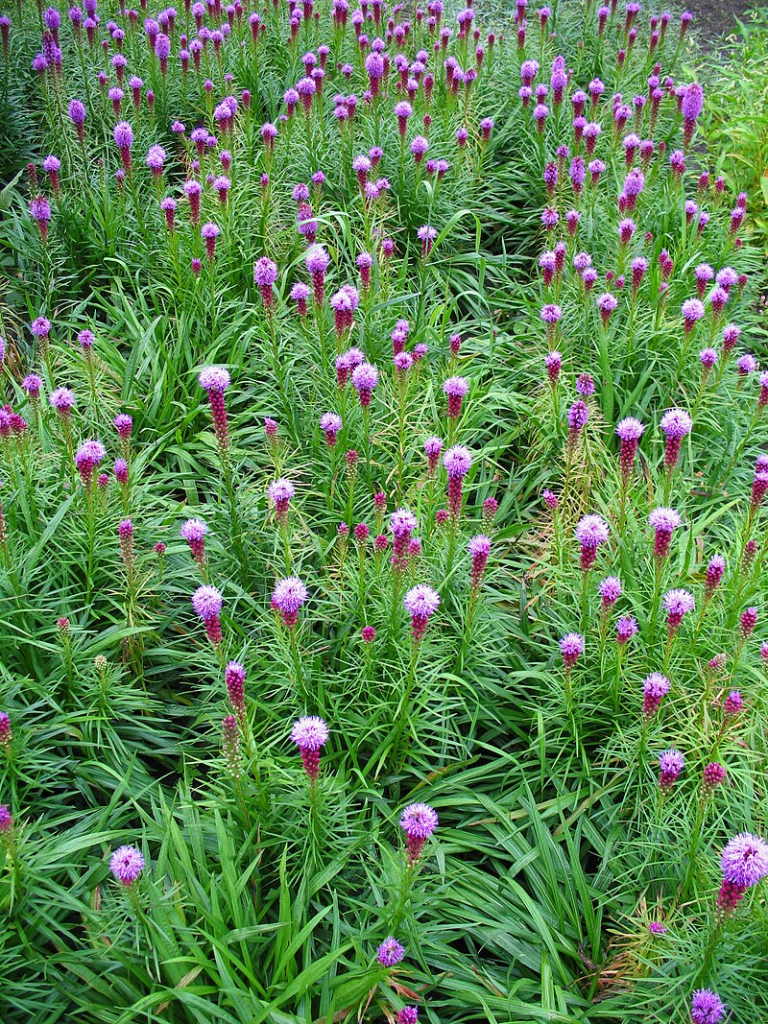
Often known as gayfeathers or blazing stars, these herbaceous perennials are a member of the aster family, Asteraceae, that also includes daisy, zinnia, and lettuce. They are native to North America where they grow in well-drained soil in full sun. The plants have strong straight stems that carry narrow leaves and terminate in a spike-like inflorescence of 15-45 purple flowerheads. The flowerheads are composed entirely of disc florets and usually open from the top to the bottom of the spike. Many species have flowers that are attractive to pollinators including butterflies, and are good in bouquets.
Photo Credit: Marc Ryckaert, Wikimedia
The environmental conditions of the Southeast have resulted in at least twentyseven native species of Liatris there but they may be native to other areas too. The Liatris described here are native to at least one of the states in the Southeast.
Gulf Coast Gayfeather (Liatris acidota)
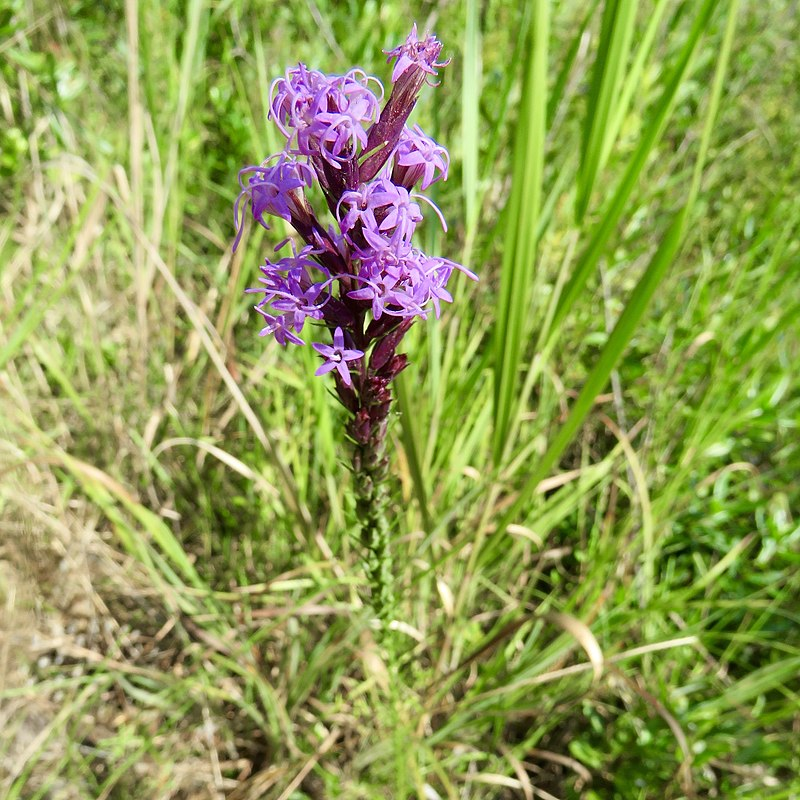
Also known as sharp blazing star, this native of western Louisiana as well as places in the Southwest, can be found in coastal prairies, dry prairie and savanna. It grows up to about 4′ tall and forms a basal clump of fine textured leaves with a gently arching flower spike. The purple flowers appear from early summer into fall and attract butterflies and bees.
Height: 8″-4′
Bloom Time: Summer to fall
Bloom Color: Purple
Light: Full sun
Soil: Sand to clay, medium moist, well-drained, acidic; drought tolerant once established
USDA Hardiness Zones: 7-9
Photo Credit: Laura Clark, Wikimedia Commons
Rough Blazing Star (Liatris aspera)
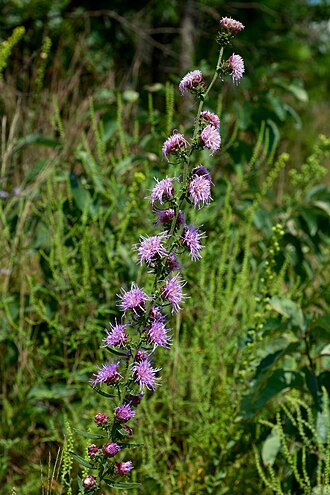
Rough blazing star is also known as button blazing star, lacerate blazing star, tall prairie blazing star, and tall gayfeather. It is native to Virginia, West Virginia, North Carolina, South Carolina, Georgia, Alabama, Mississippi, Louisiana, Arkansas, Kentucky, Tennessee, and Florida as well as places in the Southwest, Midwest, and MId-Atlantic where it grows in prairies, open woods, glades, meadows and open disturbed areas such as along roads and train tracks. A basal clump of very narrow lance-shaped leaves up to 12″ long give rise to leafy racemes that carry widely spaced purple flowerheads about 3/4″ across and are attractive hummingbirds, butterflies, and other pollinators, as well as being good in the vase. The seeds are enjoyed by songbirds.
Height: 2-3′ (occasionally to 6′)
Bloom Time: Summer to fall
Bloom Color: Purple
Light: Full sun
Soil: Average, dry to medium, well-drained
USDA Hardiness Zones: 3-8
Photo Credit: Wikipedia
Chapman’s Blazing Star/gayfeather (Liatris chapmanii)
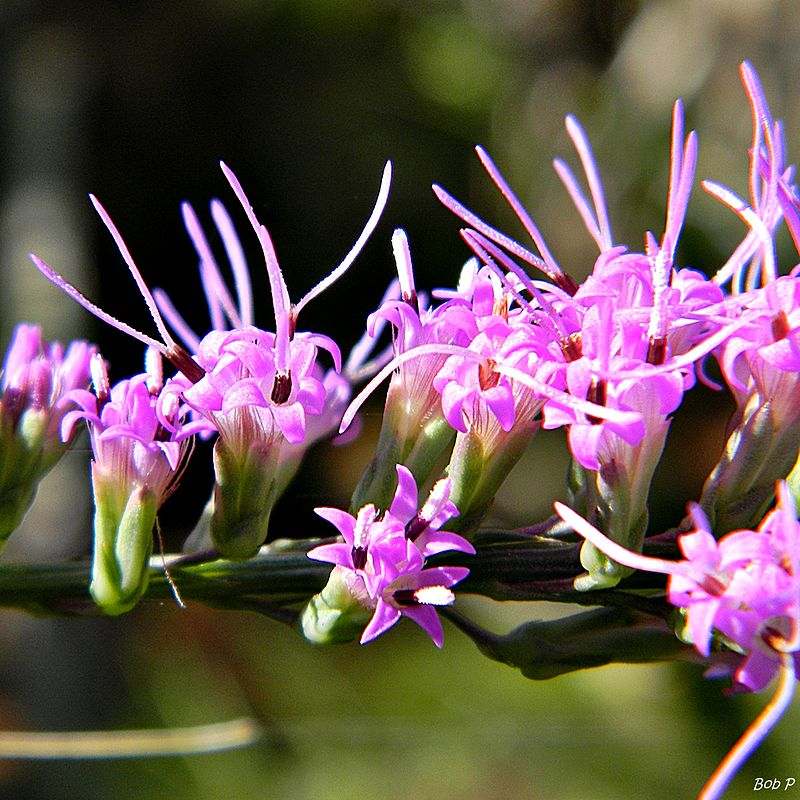
Native to Alabama, Florida, and George, this herbaceous perennial may be found in habitats such as dunes, beach strands, longleaf pine savannas and other sandy scrub habitats. The leaves are up to 3″ long and dotted with glands. Flowering spikes 2-4′ long appear from summer to fall and bear tightly packed rose to purple flower heads that attract butterflies and bees.
Height: 2-4′
Bloom Time: Summer to fall
Bloom Color: Rose, purple
Light: Full sun
Soil: Sandy, dry, well-drained
USDA Hardiness Zones: 7-10
Photo Credit: Bob Peterson, Wikimedia Commons
Sandhills Blazing Star (Liatris cokeri)
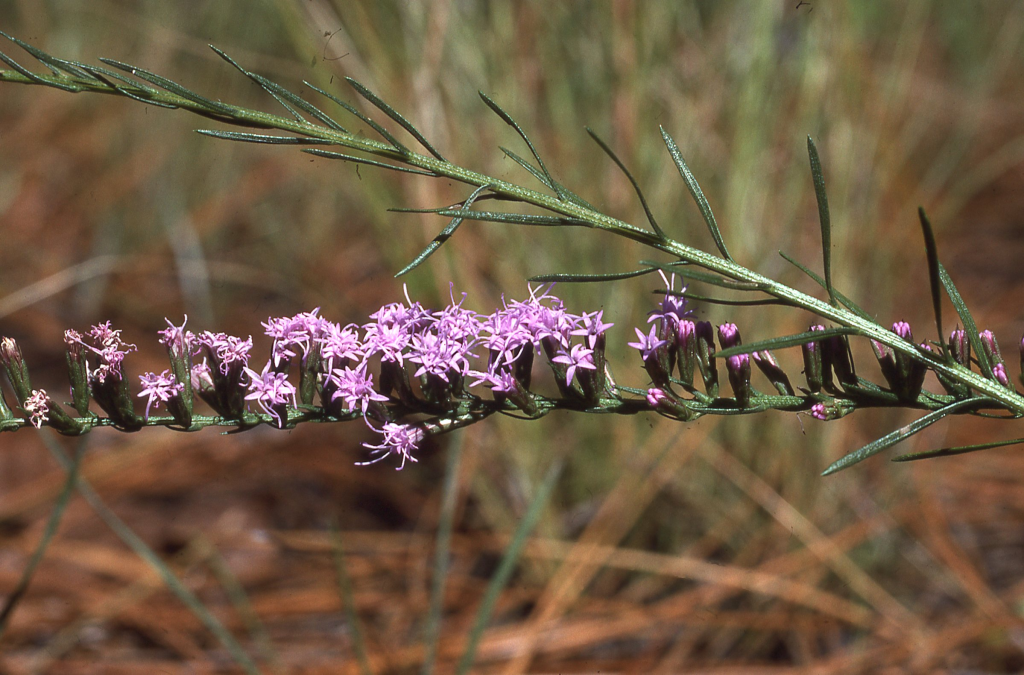
Endemic to North Carolina and South Carolina, this herbaceous perennial may be found in dry habitats such as Longleaf Pine-Wiregrass woodlands, savannas, sandhills, and oak scrub. The linear leaves are 2-7″ long and are dotted with dense tiny pits. Pink sessile flower heads are densely arranged on one side of a 1-2.5′ long spike.
Height: 1-2.5′
Bloom Time: Late summer
Bloom Color: Purple
Light: Full sun
Soil: Sandy to gritty loamy, medium moist, well-drained
USDA Hardiness Zones: 7-8 (?)
Photo Credit: B. A. Sorie, Vascular Plants of North Carolina, NC State Parks
Arkansas Gayfeather (Liatris compacta)
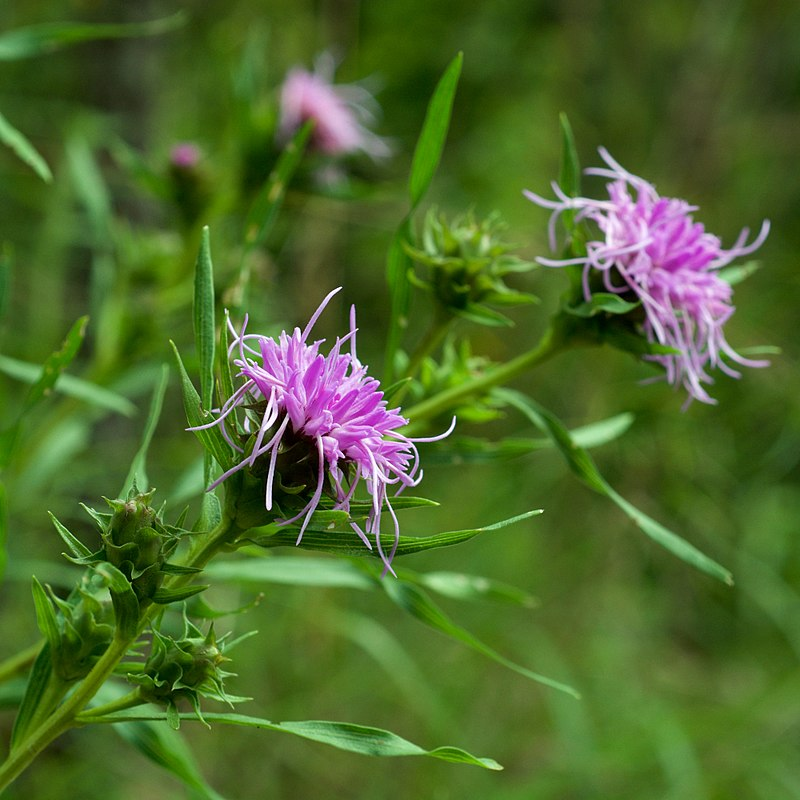
This herbaceous perennial is native to the Ouachitas of west-central Arkansas and as well as areas in the Southwest where it is found growing on rocky ridges, bluffs, hillsides, weathered sandstone, and in open woods. The leaves are narrow and the basal foliage often withers before the flowers appear. The spike-like flowering stems are 8.8-20″ long. They carry, purplish pink flower heads with leaf-like bracts singly or in clusters in summer. The flowers are loosely arranged and are attractive to butterflies and other pollinators.
Height: 8.8-20″
Bloom Time: Summer
Bloom Color: Purplish pink
Light: Full sun
Soil: Average, dry to medium moist, well-drained
USDA Hardiness Zone: 8 (?)
Photo Credit: Eric Hunt, Wikimedia Commons
Barrelhead Blazing Star (Liatris cylindracea)
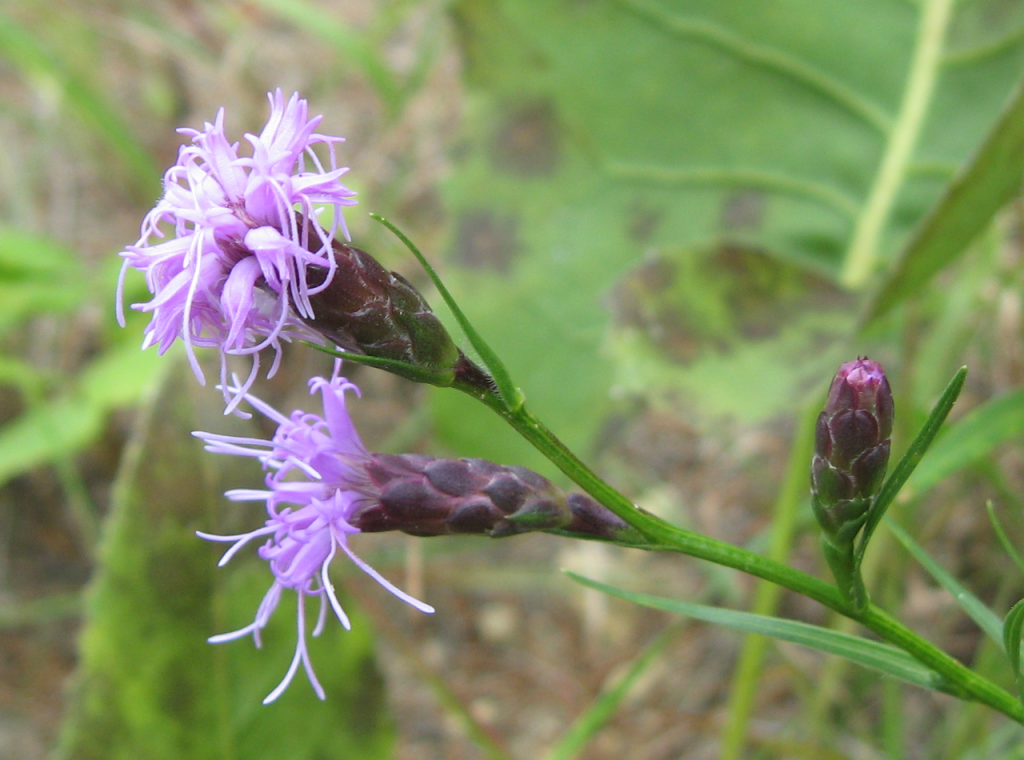
Also known as cylindrical blazing star, Ontario blazing star, and dwarf blazing star, this herbaceous perennial is native to Alabama, Arkansas, Tennessee, and Kentucky as well as much of the Midwest, and parts of the Mid-Atlantic and Southwest. The leaves are narrow and up to 10″ long. The spike-like flower stems are up to 2′ tall, and carry fluffy, rose-purple flowers singly or in small clusters. Each flowerhead is subtended by a tight elongated cylinder of sharp-pointed involucral bracts. The flowers appear in mid- to late summer and are attractive to humming birds, butterflies, and other pollinators. The seeds attract song birds.
Height: 1.5-2′
Bloom Time: Mid- to late summer
Bloom Color: Rose-purple
Light: Full sun
Soil: Average, dry to medium moist, well-drained, alkaline
USDA Hardiness Zones: 4-7
Photo Credit: Mason Brock, Wikipedia
Elegant Blazingstar (Liatris elegans)
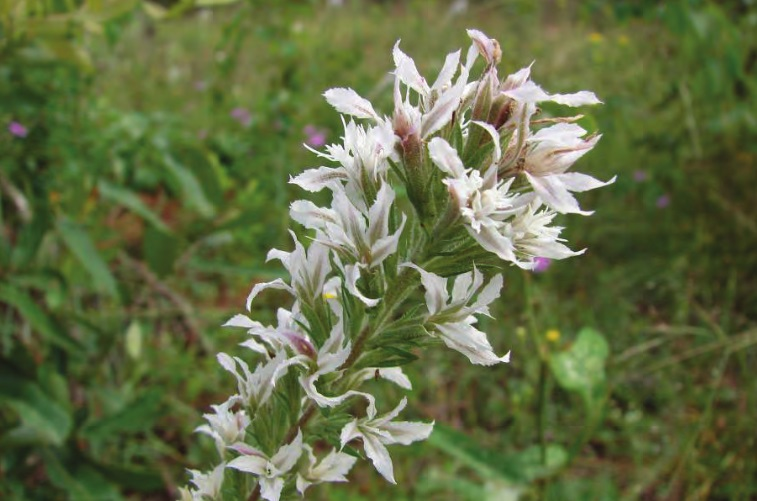
Also known as pinkscale blazingstar, this herbaceous perennial is native to dry, sandy soils in the prairies and pineland habitats of South Carolina, Georgia, Alabama, Louisiana, Arkansas, Mississippi and Florida as well as places in the Southwest. The leaves are narrow, up to 3′ long, dotted with glands, and the lower ones often wither before the flowers appear. The spike like flower stems are 6-48″ long and carry densely packed flowerheads on all sides of the stem. The flowers appear from late summer to late fall and attracts Monarch butterflies, native bees, and other pollinators.
Height: 6-48″
Bloom Time: Late summer to late fall
Bloom Color: Pink, purplish, white, or yellow
Light: Full sun
Soil: Sandy, dry, well-drained
USDA Hardiness Zones: 6-10
Photo Credit: Mike Owsley USDA-NRCS, Wikimedia Commons
Garber’s gayfeather/Garber’ blazing star (Liatris garberi)
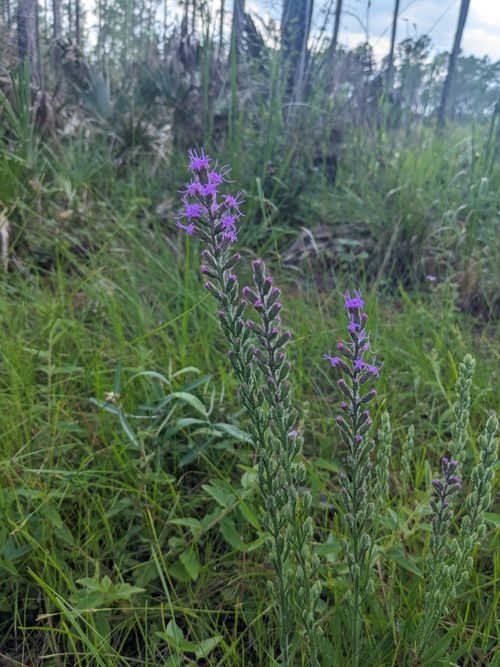
This liatris is endemic to Florida where it grows in cut pine woodlands. It has a basal rosette of grass-like leaves 2-3″ long and gives rise to racemes up to 36″ tall bearing flowerheads of up to 10 disc florets.
Height: 2- 3′
Bloom Time: Mid to late summer
Bloom Color: Pink to purple
Light: Full sun
Soil: Sandy, moist, well-drained; drought tolerant
USDA Hardiness Zones: 9-10 ?
Photo Credit: Adrian Marshall, iNaturalist
Slender Gayfeather/Slender Blazing Star (Liatris gracilis)
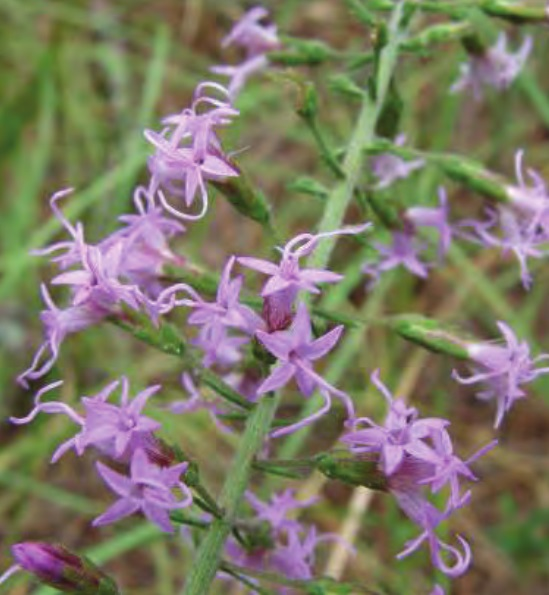
This short-lived perennial is native to South Carolina, Georgia, Florida, Alabama and Mississippi where it grows in flatwoods, sandhills, pine rocklands, oak scrub, mixed oak-pine woodlands, grasslands, limestone outcroppings and dry hammocks. A rosette of narrow, whorled hairy leaves produces a tall raceme of pink to purple flowerheads in late summer to fall. Each flower head is made up of 3-9 disc florets. Since the flowering stalks are tall and heavy staking may be necessary.
Height: 24-40″
Bloom Time: Late summer into fall
Bloom Color: Rose, purple, sometimes white
Light: Full sun
Soil: Sandy, moist, well-drained; drought tolerant
USDA Hardiness Zones 5-8
Photo Credit: Wikipedia
Heller’s Blazing Star/Gayfeather (Liatris helleri)
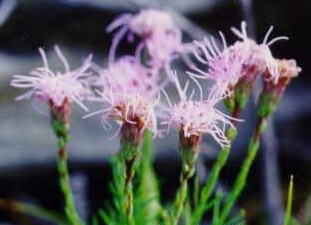
This rare herbaceous perennial is native to the Appalachian Mountains of North Carolina, Virginia and West Virginia as well as places in the Mid-Atlantic. It can be found on high cliffs, rock outcrops, and ledges. Pale green leaves are linear to lanceolate and 2-8.8″ long. The spike-like flowering stalks are up to about 20″ long and carry lavender flowers subtended by purplish bell-shaped involucres.
Height: 20″
Bloom Time: Mid to late summer
Bloom Color: Lavender
Light: Full sun
Soil: Average, medium moist, well-drained, acidic
USDA Hardiness Zones: 6-7 (?)
Photo Credit: Kim Tripp, USFWS, Wikimedia Commons
Hairy Gayfeather (Liatris hirsuta)
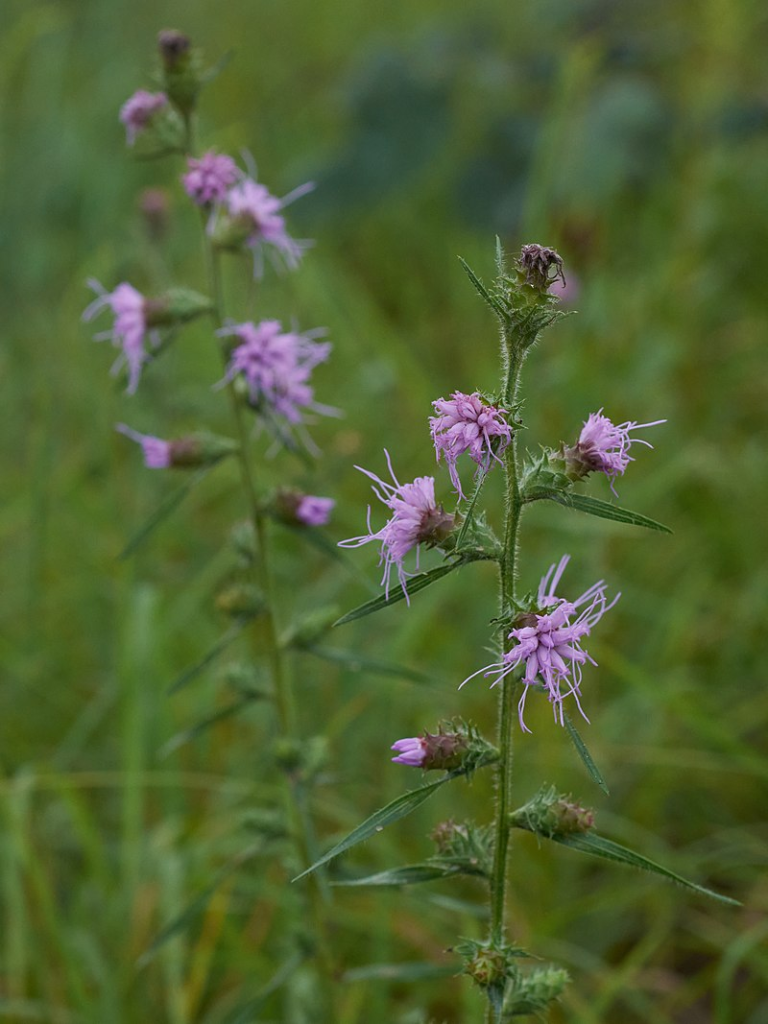
Native to Georgia, Alabama, Arkansas, Louisiana, and Mississippi, as well as parts of the Midwest and Southwest, hairy gayfeather can be found on rocky bluffs, in glades, and upland prairies. Both stems and leaves are hairy. The leaves are linear to linear-lanceolate and up to 8″ long. The spike-like flowering stem grows up to 30″ tall and carries a terminal flower head and additional flowerheads loosely arranged on the stem in the axils of the upper leaves. The flowers are pink to reddish purple or magenta and attractive to butterflies.
Height: Up to 30″
Bloom Time: Summer
Bloom Color: Pink to reddish purple or magenta
Light: Full sun
Soil: Average, dry, well-drained
USDA Hardiness Zones: 5-9
Photo Credit: Eric Hunt, Wikimedia Commons
Smallhead Blazing Star/gayfeather (Liatris microcephala}
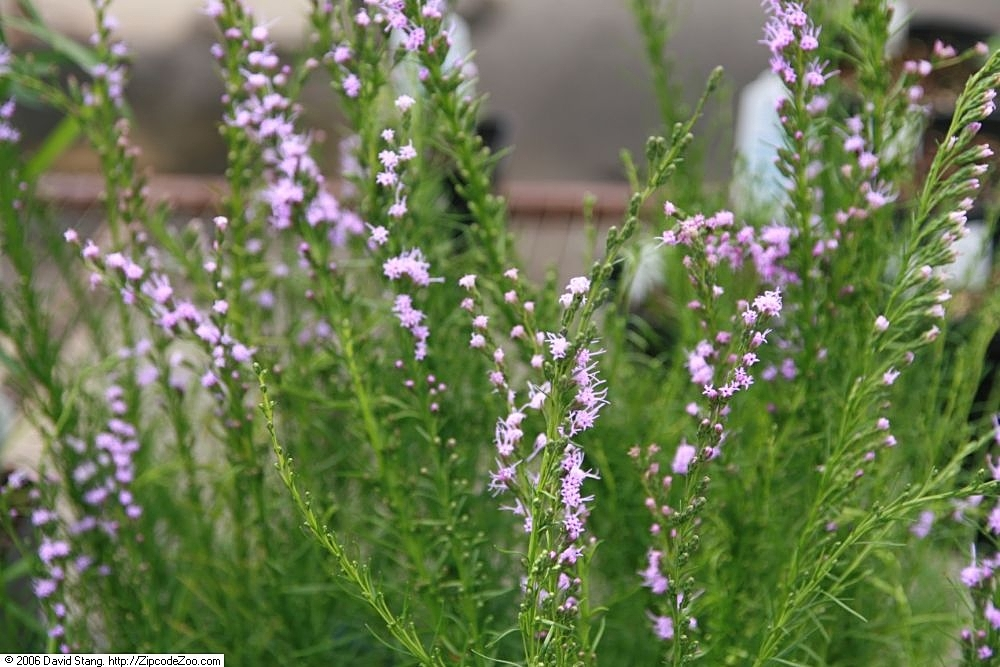
Native to the southern Appalachian Mountains of North Carolina, South Carolina, Georgia, Alabama, Kentucky, and Tennessee, smallhead blazing star is found on sandy soils and exposed acidic rock such as sandstone or granite. It forms a clump of grass-like leaves up to 6″ long that produced multiple spikes-like flowering stems up to 2″ tall. The rose-purple flower heads appear in summer and are attractive to hummingbirds, butterflies, and other pollinators. The seed are attractive to songbirds.
Height: 1.5-2′
Bloom Time: Summer
Bloom Color: Rose-purple
Light: Full sun
Soil: Average, dry to medium moist, well-drained
USDA Hardiness Zones: 6-9
Photo Credit: David J. Stang, Wikipedia Commons
Florida Blazing Star/Gayfeather (Liatris ohlingerae)
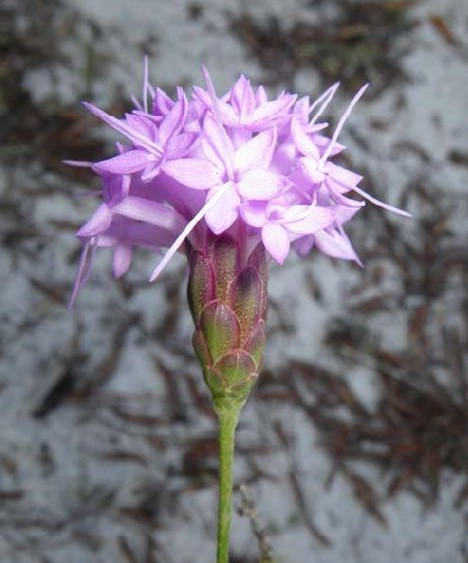
Endemic to central Florida, this short-lived perennial is also known as scrub blazing star and sandtorch. It is endemic to central Florida where it is found on rosemary balds especially in areas transitioning to oak scrub. It forms a basal tuft of linear leaves up to 6″ long which quickly withers and sends up hairy flowering stems 2-3′ tall from mid summer to mid fall. Each spike-like stem bears widely spaced flower heads that are 1″across and subtended by an involucre of purplish rounded bracts. The flower heads are purple and attractive to butterflies and other pollinators.
Height: 2-3′
Bloom Time: Mid summer to mid fall
Bloom Color: Purple
Light: Full sun to part shade
Soil: Sandy, dry- to medium moist, well-drained
USDA Hardiness Zones: 8-9
Photo Credit: David Bender, USFWS, Wikimedia Commons
Cahaba Torch (Liatris oligocephala)
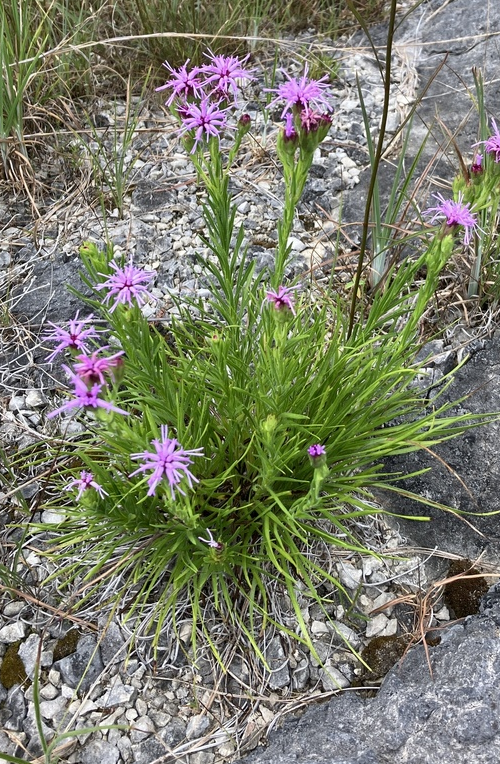
Cahaba torch is endemic to open, grassy areas of dolomitic glades in Bibb County, Alabama. Basal leaves are scale-like and usually wither by flowering time. Stem leaves are narrow and decrease in size as they go up the stem. The purple flowerheads are usually borne singly in dense clusters and consist of 11-25 disc florets.
Height: 10-20″
Bloom Time: Summer
Bloom Color: Purple
Light: Sun
Soil: Well drained
USDA Hardiness Zones: 8-? (guestimate based on location)
Photo Credit: samwilhelm, iNaturalist
Georgia Blazing Star (Liatris patens)
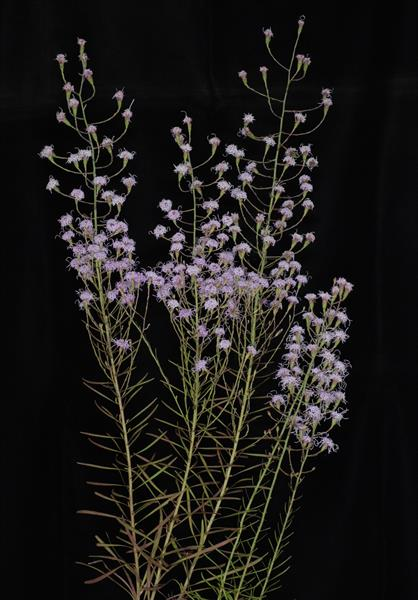
Native to longleaf pine sandhills and dry flatwoods of South Carolina to the eastern Panhandle of Florida, Georgia blazing star is also known as Georgia gayfeather, spreading gayfeather, spreading gayfeather. Plants have dark green linear leaves that that turn bronze in the fall. Basal leaves form clumps that are up to 7″ high and produce flower stems with similar leaves that diminish is size as they go upward. Pink-purple flowerheads, occasionally white, are carried in cluster and consist of 7-12 florets.
Height: 36″
Bloom Time: Fall
Bloom Color: Purple-pink; white
Light: Full sun
Soil: Average, dry, well-drained
USDA Hardiness Zones 6-9
Photo Credit: Douglas Goldman, Flora of the Southeastern United States
Fewflower Blazing-star/ Fewflower Gayfeather (Liatris pauciflora)
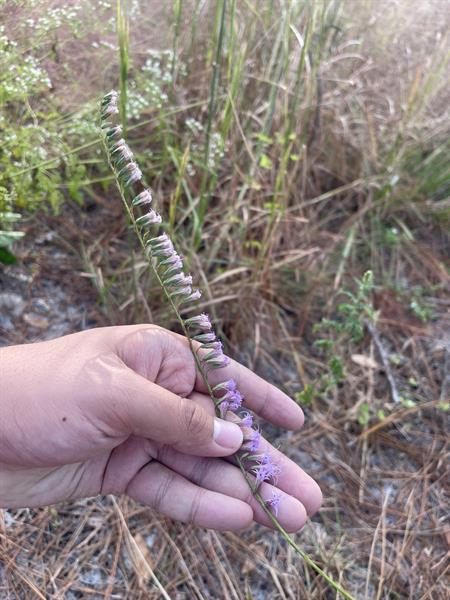
This rarely described liatris is native to North Carolina, South Carolina, Georgia, Alabama and Florida where it grows in pine flatwoods, scrub oak and longleaf pine-turkey oak stands, fields, moist swales, on ridges, and in sandy peat and sand soils. Its narrow leaves form a clump 16-48″ high with similar leaves diminishing in size on the flowering stems. The flowerheads are carried in cluster of 3-6 florets and are lavender, pink or purple.
Height: 8-35″
Bloom Time: Late summer into fall
Bloom Color: Lavender, pink or purple.
Light: Full sun but tolerates less
Soil: Average to lean, dry, well-drained
USDA Hardiness Zones: 5-8?
Photo Credit: Brandon Corder, iNaturalist
Grassleaf blazingstar (Liatris pilosa)
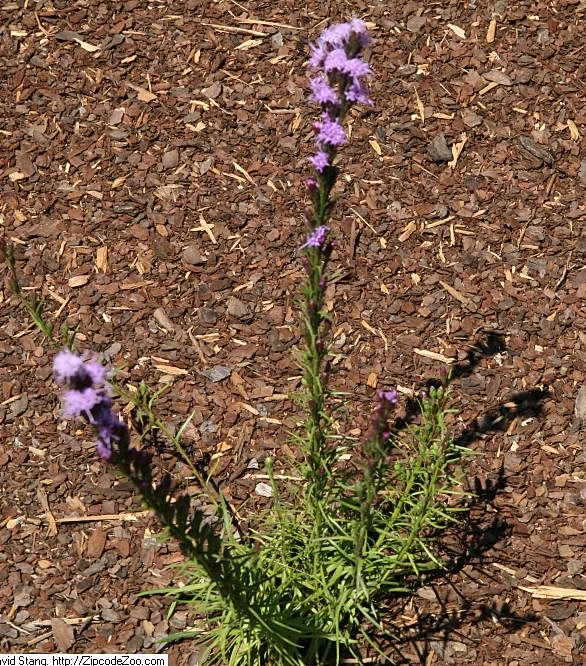
Native to Virginia, North Carolina and South Carolina as well as places in the Mid-Atlantic, this slender liatris is also known as sandhills blazing star, shaggy blazing star, and shaggy gayfeather. It grows in open woodlands, forest edges, pine barrens, fields, dune depressions, and edges of salt marshes. Plants have a basal tuft of narrow lanceolate leaves up to 12″ long, with hair fringed margins. Upper stem leaves are needle-like and 2-3″ long. Flowerheads appear in spikes and consist of 7-10 pink to purple disc florets. Flower stems are good in the vase.
Height: 1-4′
Bloom Time: Late summer into mid-fall
Bloom Color: Pink, purple
Light: Full sun, tolerates some shade
Soil: Average to lean, sandy, dry to moderately moist, well-drained
USDA Hardiness Zones: 6-9
Photo Credit: Wikipedia
Godfrey’s Blazing Star/gayflower (Liatris provincialis)
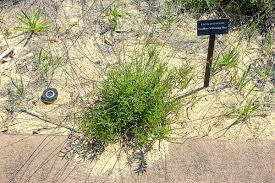
Godfrey’s blazing star is endemic to coastal uplands in the panhandle of Florida where it grows in scrub and sandhills. It forms a clump of grass-like leaves up to 6″ long and has small stem-leaves dotted on both sides with glands. In late summer to early fall, narrow spike-like flowering stems up to 3′ tall bear purple flowerheads consisting of 3-4 disc florets.
Height: Up to 3′
Bloom Time: Late summer to early fall
Bloom Color: Purple
Light: Full sun
Soil: Sandy, dry to medium moist, well-drained
USDA Hardiness Zones: 8-9 (?)
Photo Credit: Wikipedia
Dotted Gayfeather/Blazing Star (Liatris punctata)
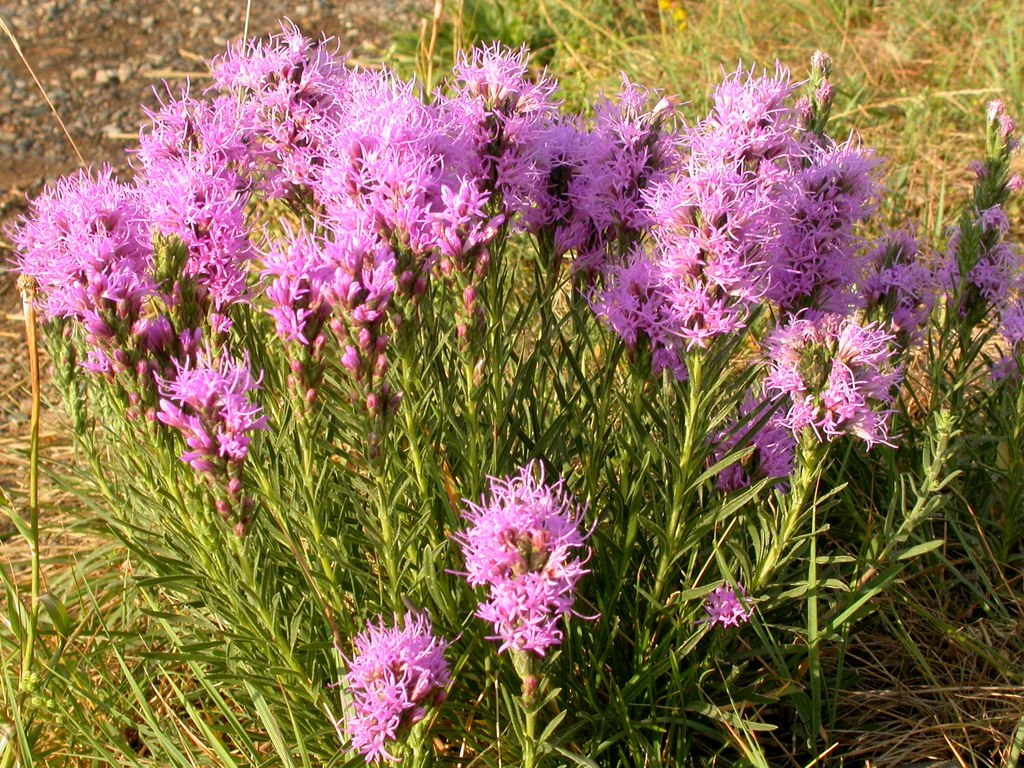
Dotted gayfeather is native to Arkansas and Louisiana, as well as many parts of the Mid-West, Rocky Mountain area, and Southwest. It can be found in a variety of habitats including grasslands, prairies, chaparral, sagebrush, ponderosa pine forests, and pinyon-juniper woodlands. Growing from a deep root system, the plant forms a clump of grass-like leaves up to 4″ long and dotted with resin. From late summer to fall, flowering stems up to 24″ long bear 10-12″ long terminal spikes of densely packed rosy lavender flower heads.
Height: 1-2′
Bloom Time: Late summer to fall
Bloom Color: Rosy-lavender
Light: Full sun
Soil: Average, dry to medium moist, well-drained, acidic; tolerates alkaline soil and drought
USDA Hardiness Zones: 4-9
Photo Credit: Matt Lavin, Wikimedia Commons
Prairie Blazing Star (Liatris pycnostachya)
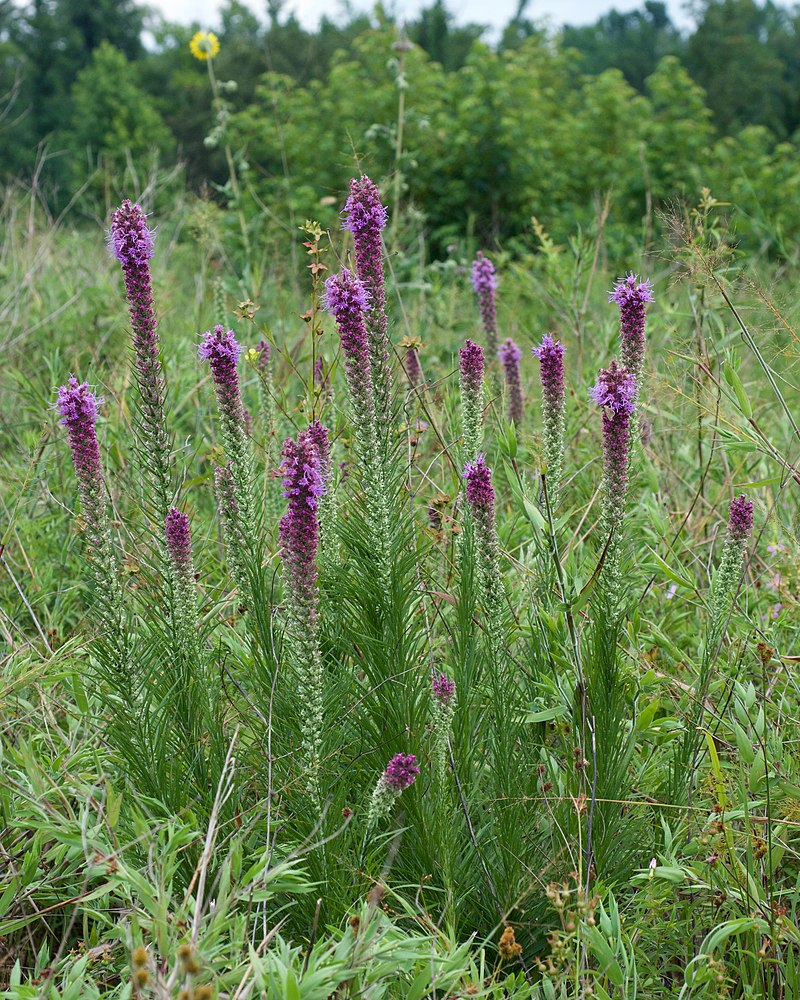
Also known as cattail blazing star and cattail gayfeather, this popular wildflower is native to prairies, bluffs, and open areas of Louisiana and Mississippi as well as areas in the Midwest and Southwest. It forms basal tufts of narrow, lanceolate leaves up to 12″ long and flowering stalks 2-5′ tall carrying flower heads in dense 20″ terminal spikes. The flowerheads appear in summer and are dark rose-purple, 3/4″ across, and attractive to hummingbirds, butterflies and other pollinators. The seeds are attractive to songbirds.
Height: 2-5
Bloom Time: Summer
Bloom Color: Dark rose-purple
Light: Full sun
Soil: Average, dry to medium moist, well-drained; tolerates poor soils, drought, summer heat and humidity.
USDA Hardiness Zones: 3-9
Photo Credit: Eric Hunt, Wikimedia Commons
Savanna Blazing Star (Liatris scariosa)
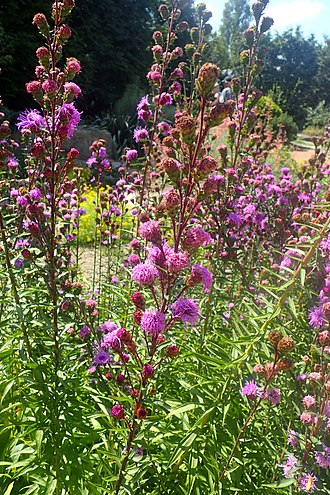
Also called devil’s bite, savanna blazing star is native to dry woods and clearings Virginia, West Virginia, North Carolina, South Carolina, Georgia, Alabama, and Arkansas as well as parts of the Midwest, New England and the Mid-Atlantic. It forms basal tufts of narrow leaves up to 10″ long and has stem leaves up to 3″ long. In late summer to early fall, 2-4′ tall flowering stems produce interrupted clusters of fluffy flower heads in terminal racemes up to 18″ long. The flower heads are reddish-purple, 1″ across and attractive to hummingbirds, butterflies, and other pollinators. The seeds are attractive to songbirds.
Height: 2-4′
Bloom Time: Mid-summer to mid-fall
Bloom Color: Reddish purple
Light: Full sun
Soil: Sandy to average, dry to medium moist, well-drained; tolerates poor soil, summer heat and humidity
USDA Hardiness Zones: 3-8
Photo Credit: Krzysztof Ziarnek, Wikimedia Commons
Blazing Star (Liatris spicata)
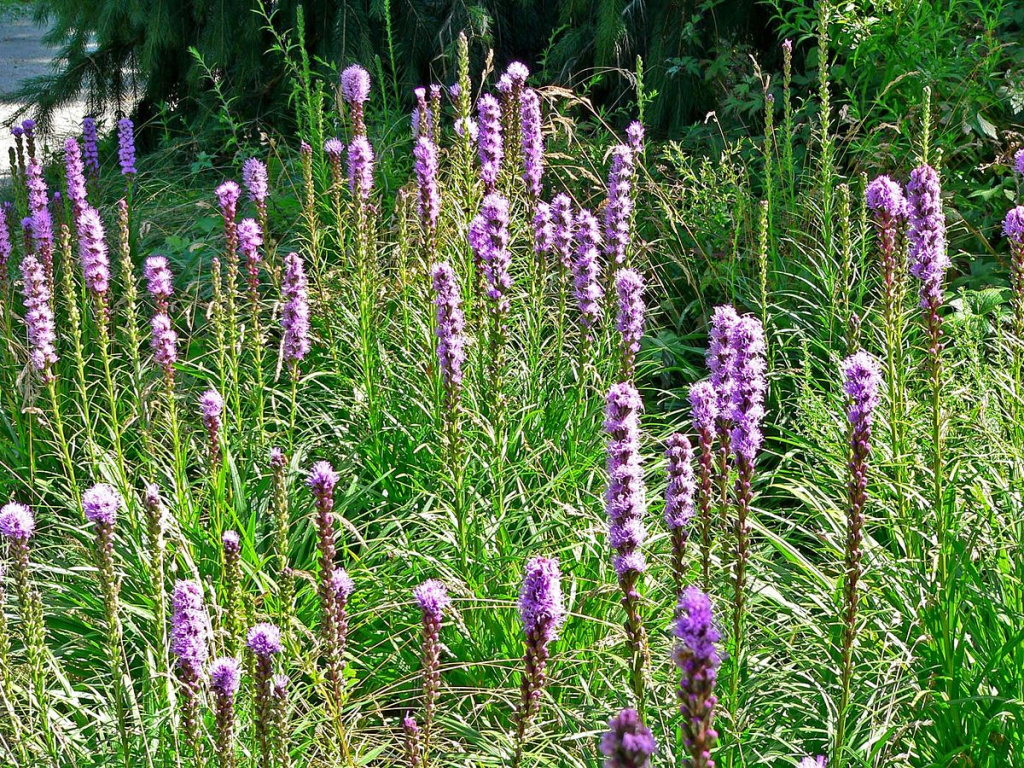
Known by many names including dense blazing star, dense button snakeroot, gayfeather, marsh blazing star ,sessile-headed blazing star, snakeroot, and spike gayfeather, this popular wildflower is native to all of the Southeast except Arkansas as well as parts of New England, the Midwest, and Mid-Atlantic. It grows in a variety of habitats including moist, wood openings, mesic prairies, meadows, and marsh edges. Plants form clumps of grass-like leaves up to 12″ long and leafy flower stalks up to 6′ tall. The red-purple flowerheads are densely arranged in terminal spikes 6-12″ long. They appear from mid summer to mid fall, are 3/4″ across, and are attractive to hummingbirds, butterflies, and other pollinators. The seeds are attractive to song birds.
Height: 2-6′
Bloom Time: Summer
Bloom Color: Red-purple
Light: Full sun
Soil: Average, medium moist, well-drained; tolerates summer heat and humidity
USDA Hardiness Zones: 3-8
Photo Credit: Stan Shebs, Wikimedia Commons
Scaly Blazing Star (Liatris squarrosa)
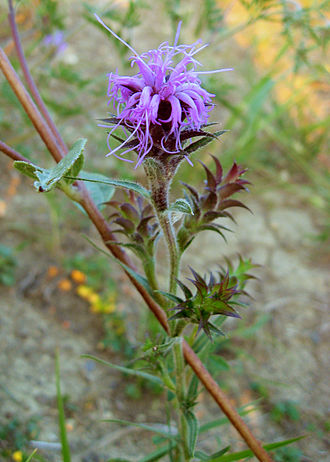
Scaly blazing star is native to Virginia, West Virginia, North Carolina, South Carolina, Georgia, Alabama, Mississippi, Louisiana, Arkansas, Kentucky, Tennessee, and Florida as well as to parts of the Rocky Mountain area, Mid-Atlantic, Southwest, and most of the Midwest. It grows in a variety of habitats including woodlands, savannah, and prairie. The linear leaves are 3-6″ long and less numerous than other Liatris species. From summer into fall, tuft-like flower heads appear sparsely arranged on the ends of unbranched flowering stems 1-3′ tall. The flower heads are purple, up to 1″ across, and attracts humming birds, butterflies, and other pollinators.
Height: 1-3′
Bloom Time: Summer to fall (relatively early bloomer)
Bloom Color: Purple
Light: Full sun
Soil: Sandy or rocky, medium-dry to dry, well-drained
USDA Hardiness Zones: 4-8
Photo Credit: Mason Brock
Appalachian Blazing Star (Liatris squarrulosa)
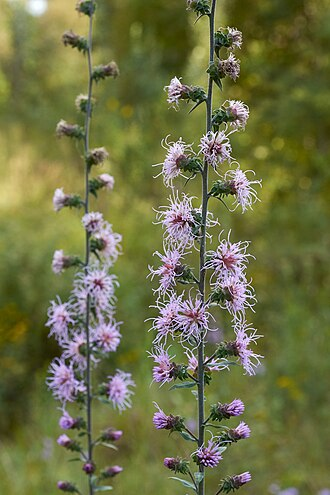
Also known as southern blazing star, this wildflower is native to prairies, meadows and savannahs of Virginia, West Virginia, North Carolina, South Carolina, Georgia, Alabama, Mississippi, Louisiana, Arkansas, Kentucky, and Tennessee, as well as areas in the Southwest and Midwest. The lower leaves are narrow oblanceolate and up to 11″ but become more linear and shorter as they go up the stem. From mid-summer to fall, pinkish purple flower heads appear on unbranched stems. They are up to 1″ across and attract pollinators.
Height: 2-6′
Bloom Time: Mid-summer through fall
Bloom Color: Pinkish-purple
Light: Full sun; tolerates some shade
Soil: Sandy, to rocky loam, medium moist to dry, well-drained
USDA Hardiness Zones: 6-9
Photo Credit: Eric Hunt, Wikimedia Commons
Shortleaf Gayfeather/Shortleaf Blazing Star (Liatris tenuifolia)
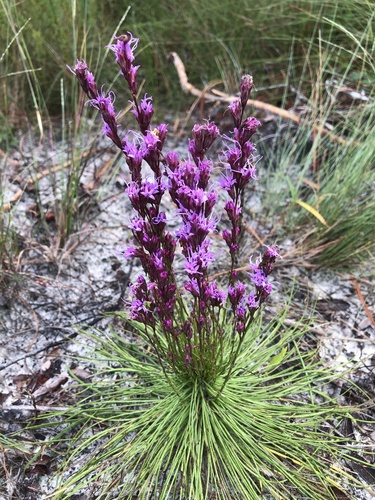
This long-lived perennial is native to the coastal plain of South Carolina, Georgia, Florida, Alabama, and Mississippi where it grows in dry pine flatwoods, scrub, and dunes. The tough foliage consist of narrow linear basal leaves 4-10″ long that appear in the spring, and short needle-like leaves that appear later in summer on the smooth flower stalks. Rose to purple colored flowerheads form a spike on the upper part of the 2-5′ flower stalks that may be up to 20″ long. Other common names include slender blazing star, shortleaf liatris, fineleaf blazing star, fineleaf gayfeather, fineleaf liatris.
Height: 2.5-5′
Bloom Time: Late summer into fall
Bloom Color: Rose to purple
Light: Full sun to part shade
Soil: Sandy, wet to dry, well-drained
USDA Hardiness Zones: 8-11
Photo Credit: iNaturalist
Gulf Blazing Star/Gulf Gayfeather (Liatris tenuis)
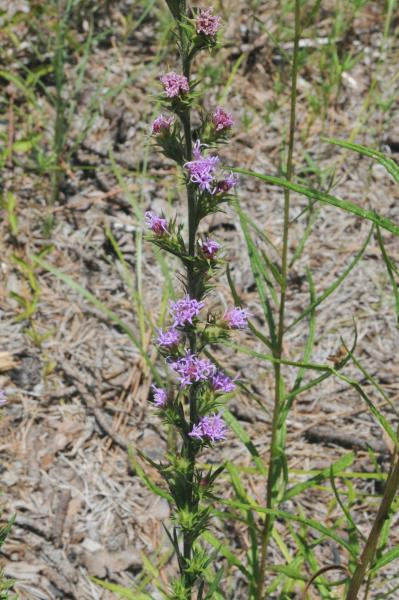
Also known as Shiners blazing star, this rare liatris is native to the sandy pine uplands in western Louisiana and eastern Texas. The plants produce one to several stems with maturity, and carry crowded, linear leaves that up to 6″ long at the bottom but decrease in size upward and are reduced to .4-1″ long bracts at the top. Spike like racemes 3-5″ long carry solitary flowerheads in the axils of the upper leaves and consist of 10-11 lavender to purple disc florets.
Height: 12-24′
Bloom Time: Summer
Bloom Color: Lavender to purple
Light: Full sun
Soil: Gritty, well-drained
USDA Hardiness Zones 8-10
Photo Credit: Sonia HIll, Flora of the Southeast
Wand Blazing Star/Wand Gayfeather (Liatris virgata)
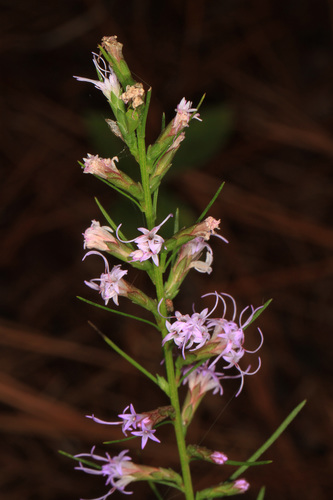
Wand blazing star is endemic to Virginia, West Virginia, North Carolina, South Carolina, and Georgia where it grows in pine-oak woods, mixed deciduous woods, edges of upland woods, rocky woods, edges of swampy woods, and stream margins. It has narrow basal leaves with hairy margins and some smaller stem leaves. Frilly flowerheads are arranged in a zig-zag pattern up the stem and consist of 7-10 pink, purple, lavender or white disc flowers. Other names for wand blazing star are grassleaf blazing star and grassleaf gayfeather, although those common names are shared with Liatris pilosa.
Height: Up to 30″
Bloom Time: Late summer into fall
Bloom Color: Pink, purple, lavender, white
Light: Full sun to partial shade
Soil: Sandy to rocky, moist occasionally dry, well-drained
USDA Hardiness Zones: 3-8
Photo Credit: Judy Gallagher, iNaturalist
The southeast includes Virginia, West Virginia, North Carolina, South Carolina, Georgia, Alabama, Mississippi, Louisiana, Arkansas, Kentucky, Tennessee, and Florida. Most of these states are characterized by hot, humid summers and cool to mild winters, with Florida’s tip being tropical. Summers are generally hot and humid throughout the entire region. Precipitation is abundant in the area and comes mostly in the form of rain.