
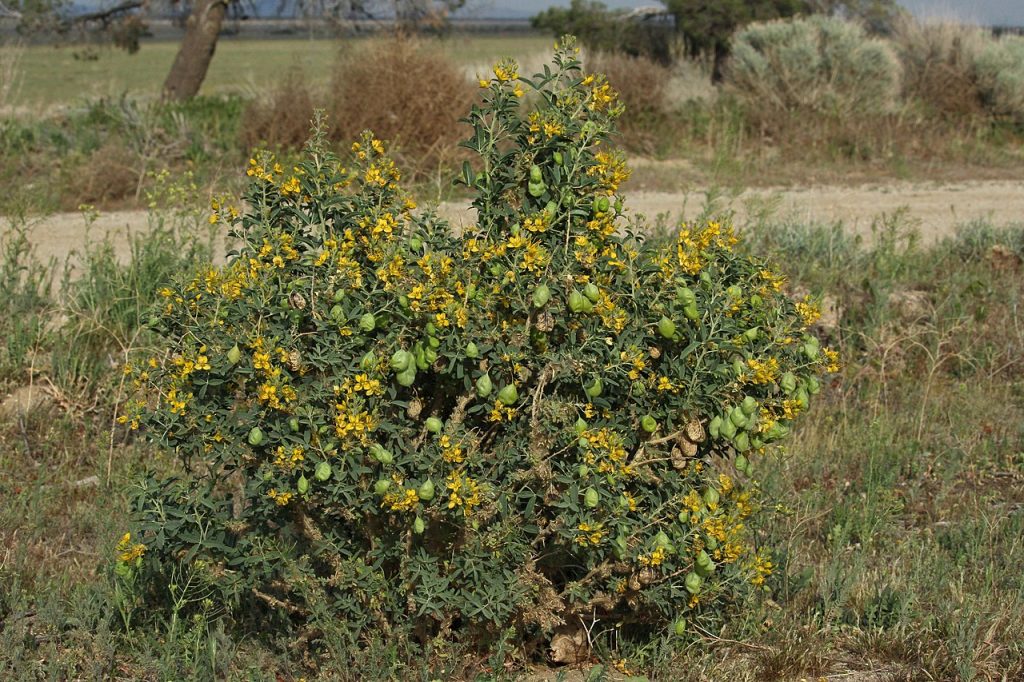
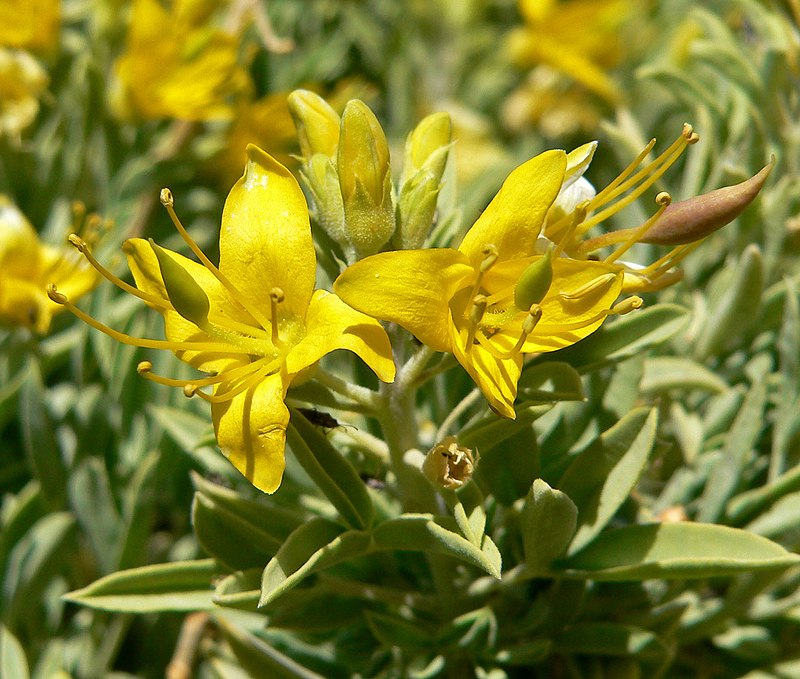
Also known as burro fat, stink weed, and California cleome, this evergreen shrub is native to California and Baja California where it grows in a variety of habitats from coastal bluffs to grasslands, coastal scrub, and deserts. It is a member of the spiderflower family, Cleomaceae, a small family related to the mustard family, Cruciferae. The plant usually grows 4-5′ tall and is densely branched. The gray-green leaves are palmately divided and have 3 narrowly oval leaf-like leaflets less than 1 3/4″ long. All through the year, with a peak in winter and spring, terminal clusters of yellow flowers appear. Each flower has 4 yellow petals and 6 long exerted yellow stamens surrounding a protruding style. The fruit is a green, leathery, edible capsule that inflates, becomes tan, and elongates to 2-3″ with maturity. It contains about 12 round seeds. A typical flower cluster includes buds, flowers, and fruits at the same time. The stems, leaves and fruits have a waxy coating and a scent that is generally considered neutral to unpleasant. Bladderpod tolerates drought, sandy soil, sea spray, saline and alkaline soils, and its nectar attracts hummingbirds, bees and butterflies. It is a good choice for seaside, native plant, hummingbird, and butterfly gardens as well as for soil stabilization. The genus name, Peritoma, comes from the Greek words peri meaning around and tome meaning division, section or to slice and refers to the way the fruit opens to shed its seeds. The specific epithet, arborea, comes from the Latin word, arbor, meaning tree and refers to the tree-like growth potential (that is rarely seen). Photo Credit Walter Siegmund Wikimedia Commons
Type: Evergreen shrub
Outstanding Feature: Flowers
Form: Rounded
Growth Rate: Rapid
Bloom: Terminal clusters of yellow flowers with 6 long exerted yellow stamens surrounding a protruding style, year round.
Size: 1′ 8″ – 6 ‘ 7 ” H x 6’ W
Light: Full sun
Soil: Sandy, dry, well drained; tolerates sea spray, saline and alkaline soils
Hardiness: Zones 7-10
Care: Prune to rejuvenate when necessary
Pests and Diseases: Harlequin beetles
Propagation: Seed, cuttings
Photo Credit: Stan Shebs Wikimedia