
.
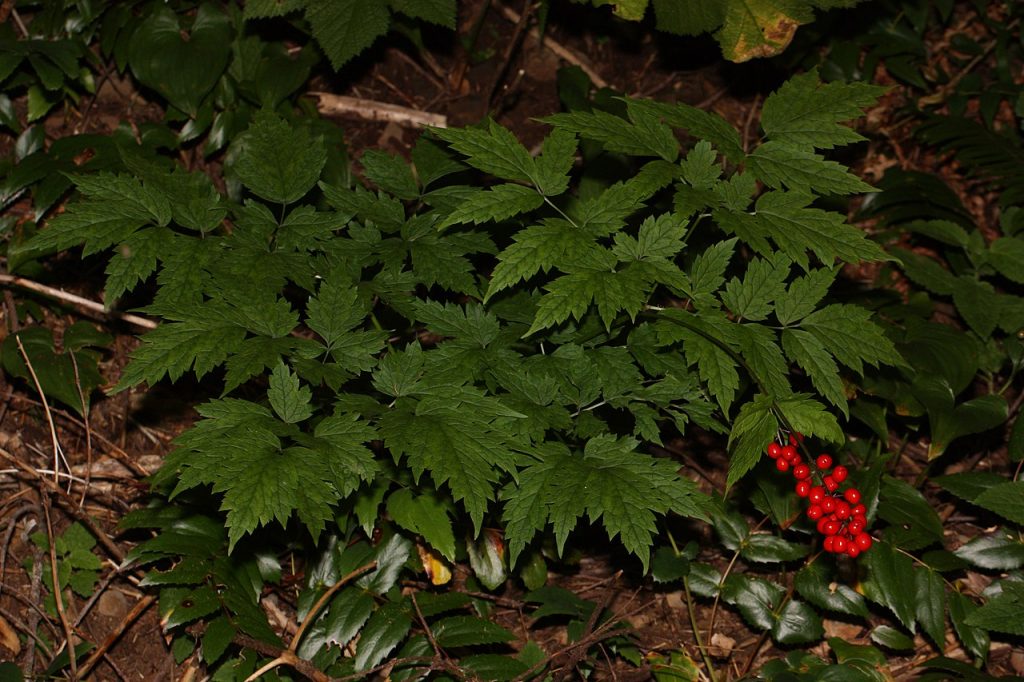
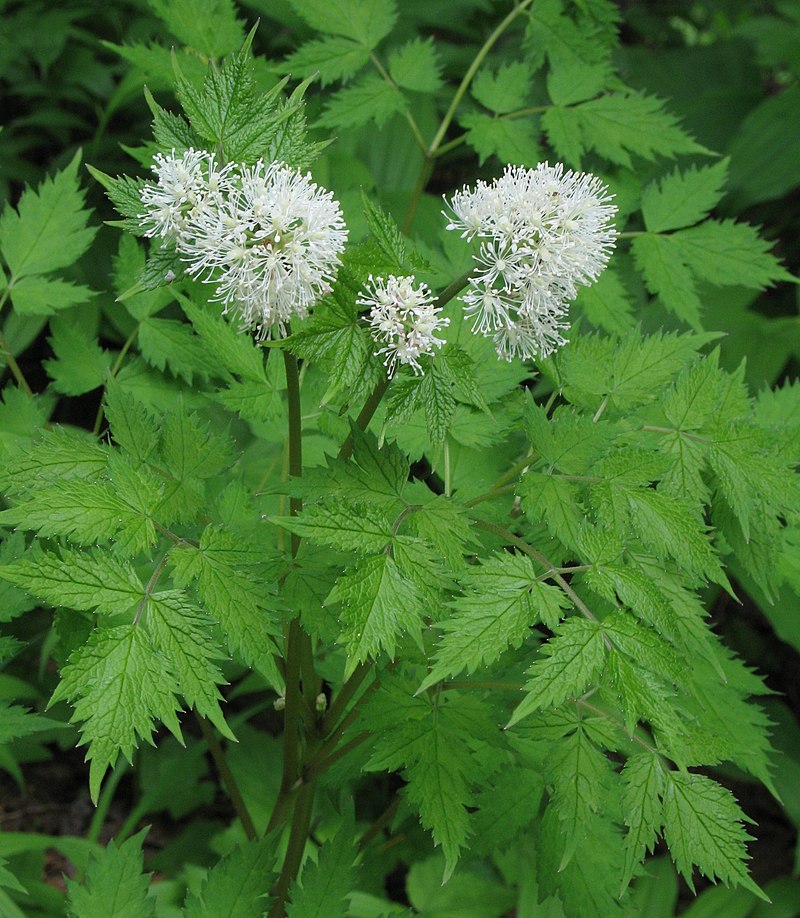
This herbaceous perennial is native to shady areas with moist to wet soils in most of North America except the southeast (from Virginia to Texas). It is a member of the buttercup family, Ranunculaceae, that also includes delphinium, anemone, and hellebore. The plant is unbranched or sparingly branched, grows 1-3′ tall and has alternate, widely spreading leaves. Each leaf is 1.5′ long, 2 or 3 times compound, and has 3-5 ovate leaflets that are up to 2″ long, and have coarsely toothed margins and hairy undersides. From late spring to early summer, terminal clusters of flowers appear. The clusters are about 2″ long and carry flowers that are 1/4″ across and consist of 4-10 white petals surrounding a pistil and numerous white-tipped long stamens. The petals quickly drop off and fertilized flowers give way to pea-sized, glossy red (occassionally white) berries containing several seeds. The berries are attractive to birds but are poisonous to humans. The plants are valued for their handsome clumps of foliage and red berries, and are a good choice for woodland, shade, native plant, and bird gardens. The genus name, Actaea, is derived from the Greek name for the elder that has leaves like baneberry. The specific epithet, rubra, is the Latin word meaning red, and refers to the berries. Photo Credit Walter Siegmund Wikimedia Commons
Type: Herbaceous perennial
Bloom: Round clusters of small white flowers in late spring to early summer
Size: 1-3′ H x 10-12″ W
Light: Light to moderate shade
Soil: Fertile, moderately moist, acidic
Hardiness: Zones 4-8; likes cool moist conditions
Care: Cut back after flowering or fruiting
Pests and Diseases: None of significance
Propagation: Seed in the fall, division in early spring
Companion Plants: Maidenhair fern (Adiantum pedatum), jack-in-the-pulpit (Arisaema triphyllum), Canada mayflower (Maianthemum canadense)
Photo Credit: Robert Flogaus-Faust Wikimedia Commons