
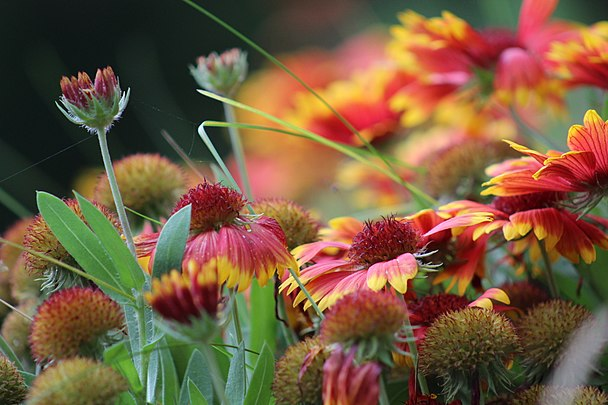
Blanket flowers, also called Indian blanket, are long blooming plants but tend to be short-lived perennials or annuals. They are native to North and South America and are a member of the aster family, Asteraceae, that also includes daisy, yarrow, and lettuce. The plants are usually branched, vary in height from 8 to 36″, and have lance-shaped basal and/or stem leaves that are gray-green, hairy, and may be lobed or toothed. The flowerheads are terminal, solitary, and vary in size from 1 to 3″ across. They usually have a center of dark tubular disk florets surrounded by 6-20 ray florets that are yellow, orange, brown, white red or bicolored and have a 3-clefted tip. Ray florets, however, may be partial or missing.
Blanket flowers need full sun and average, moderately moist, well-drained soil and are somewhat drought tolerant when established. They are generally healthy but leaf spot, powdery mildew, root rot, aphids, leafhoppers and thrips can be a problem. Propagation is by seed, root division, or separation of offsets. The flowers are used for arrangements and attract pollinators, and the seeds may be attractive to goldfinches.
The genus name, Gallardia, honors Maître Gaillard de Charentonneau, an 18th-century French magistrate who was an enthusiastic botanist.
Photo Credit: Xavier Care, Wikimedia Commons
These environmental conditions have resulted in at least five species of blanker flower native to the Midwest, although they may be native to other areas too. The blanket flowers described here are native to at least seven states in the Midwest.
Lanceleaf Blanket Flower (Gaillardia aestivalis)
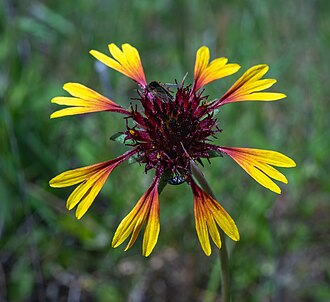
A small basal rosette of leaves gives rise to erect stems that branch at the top and produce solitary flowerheads. The leaves are lance-shaped, gray-green and up to 2-4″ long. The flowerheads are up to 3″ in diameter and have a brownish-purple center of disk florets surrounded by 6-12, sometimes up to 15, yellow ray florets, sometimes with red bases. The ray florets may be partial or lacking. Plants readily self seed.
Alternate/s Names: Prairie Gaillardia
Native Range: Nebraska, Kansas, Missouri, and Illinois as well as areas in the Southeast
Habitat: Sandy open woods and prairies
Type: Short lived perennial
Height: 1-2′
Bloom Time: Late spring to fall
Bloom Color: Yellow, red, purple-brown
Light: Full sun
Soil: Light, dry to medium, well-drained; tolerates dry soil and some drought once established
USDA Hardiness Zones: 5-9
Photo Credit: Wikipedia
Common Blanket Flower (Gaillardia aristata)
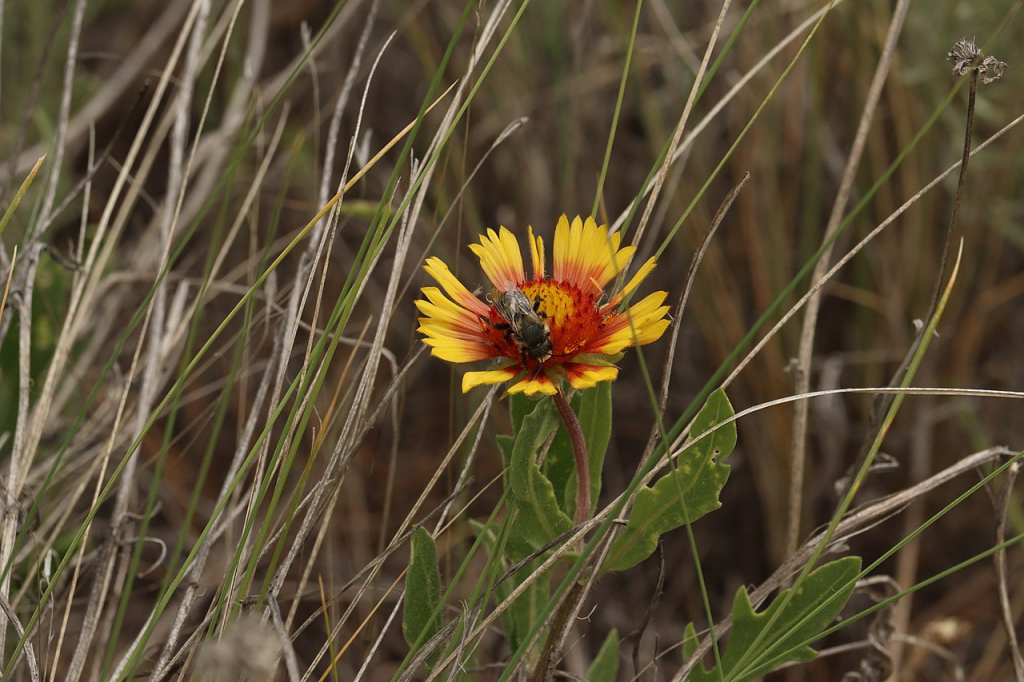
Erect stems are roughly hairy, branched mostly at the base, and have basal gray-green leaves. The leaves are up to 6″ long, roughly hairy, and vary in shape from lance-like to spatula shaped and may be toothed or lobed. Solitary flowerheads are carried at the tips of the stems. They are 1.5-3″ across, and have a center of brownish or reddish purple disk florets surrounded by 6-18 yellow ray florets with red at the base.
Alternate Name/s: Common gaillardia, brown-eyed susan, great blanket flower
Native Range: North Dakota, South Dakota, Minnesota, Wisconsin, Michigan, Illinois as well as areas on the Pacific Coast, and in the Mid-Atlantic, and New England
Habitat: Plains, prairies, meadows
Type: Perennial
Height: 2-3′
Bloom Time: Late spring to early fall
Bloom Color: Red, yellow, purple
Light: Full sun
Soil: Average, dry to medium moist, well-drained; tolerates dry soil and drought once established
USDA Hardiness Zones: 3-8
Photo Credit: Wikipedia
Red Dome Blanket Flower (Gaillardia pinnatifida)
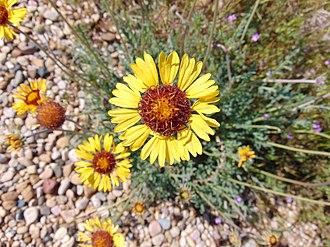
Slender, usually unbranched, stems carry pinnately lobed lower leaves, and narrow, unlobed upper leaves. The leaves are light green to greenish gray, up to 3″ long, and covered with long, straight, soft hairs, that are sometimes dense and white. Single flowerheads top the stems and are up to 2″ across. They are composed of 7-12 yellow ray florets with purple veins, sometimes fading to pale red, on their underside. The center of the flowerhead is a dome composed of 60-100 orange-brown to purple disk florets. Plants readily reseed.
Alternate Name/s: Hopi blanketflower, yellow gaillardia
Native Range: Kansas as well as areas in the Southwest and Rocky Mountain area
Habitat: Mesas, grasslands, plains, clearings in pine forests, pinyon-juniper, upper desert scrub
Type: Short-lived perennial
Height: 1-2′
Bloom Time: Early spring to mid Fall
Bloom Color: Yellow, red
Soil: Sand, well-drained
Light: Full sun
USDA Hardiness Zones: 7-10
Photo Credit: Wikipedia
Firewheel (Gaillardia pulchella)
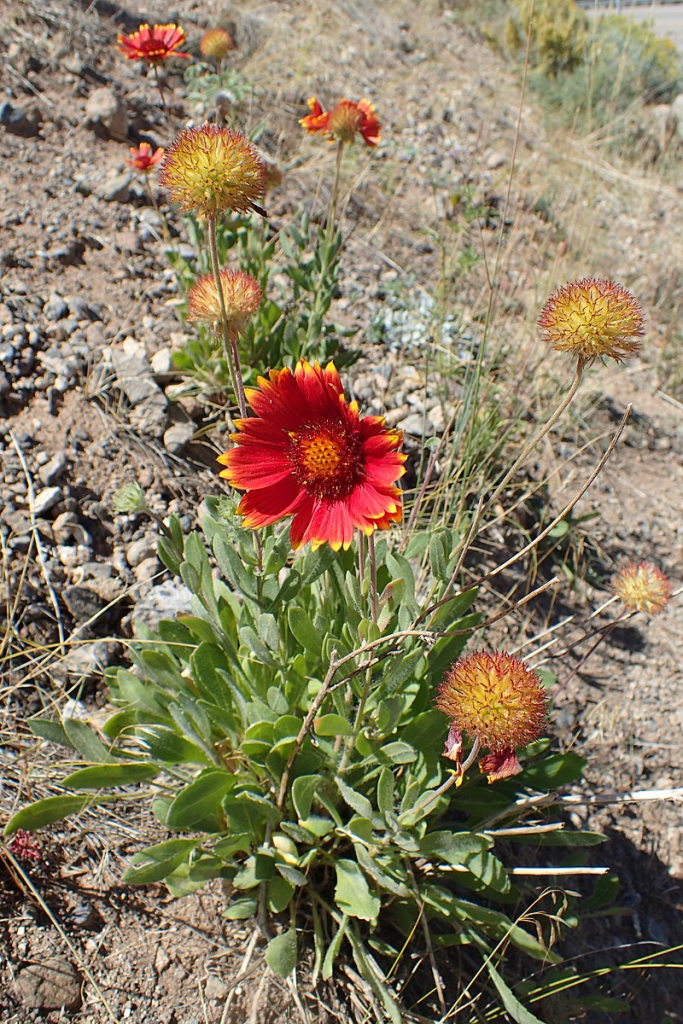
Hairy stems, branched near the base, carry oblong to oblanceolate gray green leaves that are mostly basal, up to 3″ long, and have smooth to coarsely toothed or lobed margins. The terminal flowerheads are carried singly and are 1-2′ across. They are composed of 10 to 20 rays florets surrounding a center of red-purple disk florets. The color of the ray florets is usually mostly red, tipped with yellow.
Alternate Name/s: Indian blanket, Indian blanketflower, sundance
Native Range: Ohio, Indiana, Illinois, Iowa, Kansas, Missouri, Michigan, Wisconsin, Minnesota, Nebraska, and South Dakota as well as places on the Pacific Coast and in the Southeast, Mid-Atlantic, and New England
Habitat: Dry plains, prairies and other open spaces
Type: Short-lived perennial or annual
Height: 1-2′
Bloom Time: Summer to frost
Bloom Color: Red, yellow
Light: Full sun
Soil: Average, dry to medium, well-drained
USDA Hardiness Zones: 2-11
Photo Credit: Kenraiz, Wikimedia Commons
Pincushion Daisy (Gaillardia suavis)
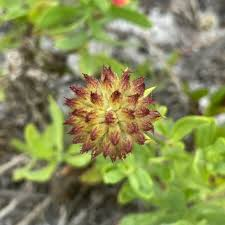
Known for it sweet fragrance, pincushion daisy has a rosette of basal leaves that are spatulate to oblanceolate, 2-6″ long and may have smooth, slightly toothed, or pinnatifid margins. The terminal flowerheads are carried singly on slender leafless stem-like structures. They are up to 1.2″ across, usually lack ray florets, but have 40 to 100+ pinkish to reddish-purple disk florets.
Alternate Name/s: Perfumeball, sweet gaillardia
Native Range: Kansas as well as area on the Pacific Coast, and in the Midwest, Southeast, Mid-Atlantic, and New England
Habitat: Sandy soils in plains, prairies, meadows, pastures, savannas, desert scrub, or open woodlands
Type: Perennial
Height: 8-32″
Bloom Time: Early spring to summer
Bloom Color: Pinkish to reddish purple
Light: Part shade to full sun
Soil: Dry to medium moist, well-drained
USDA Hardiness Zones: 6-9
Photo Credit: Wikipedia
The Midwest is comprised of Ohio, Indiana, Illinois, Iowa, Kansas, Missouri, Michigan, Wisconsin, Minnesota, Nebraska, South Dakota, and North Dakota The area includes lakes, mountains, and vast fertile plains that are the “bread basket” of the nation. The climate of the Midwest has great variations in temperatures with hot humid temperature averaging 85-95 F in summer and winter temperatures often falling below 0 F. Precipitation comes in the form of both rain and snow and varies from 43.6″/year to 18.8″/year.