
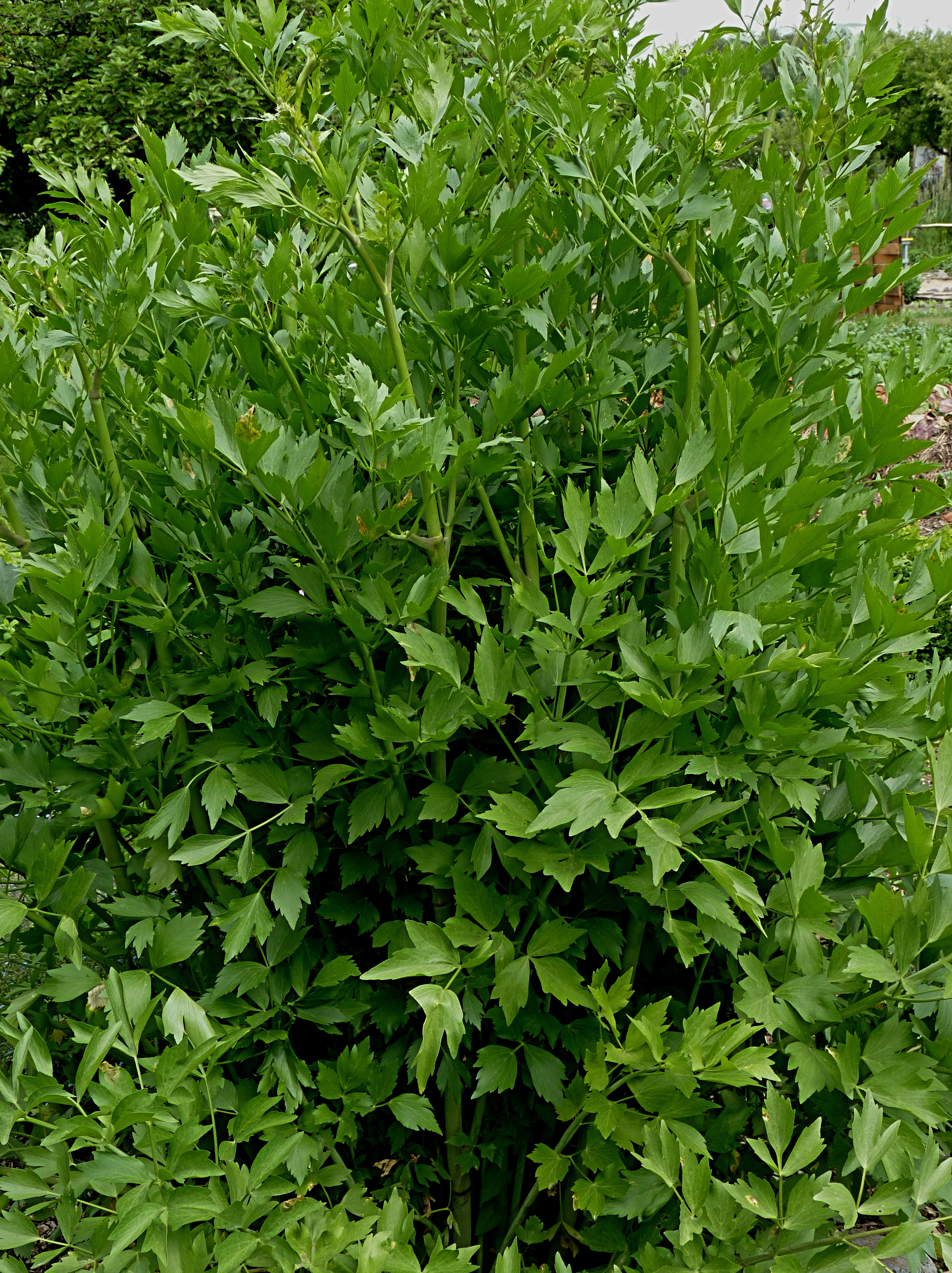
 This herbaceous perennial is native to the Mediterranean where it grows wild in the mountainous area of southern France, northern Greece, and the Balkans. The use of lovage goes back to the ancient Greeks who are said to have chewed the leaves to aid digestion and alleviate gas. By the 9th century AD it was one of the 16 herbs recommented in the plan for the physics garden of the St. Gall Benedictine abbey in Switzerland, one of the many plants recommended for the gardens of Charlemagne, and one of the 23 herbs mentioned in Walahfrid Strabo’s list of plants for his garden that may have been a physic garden.
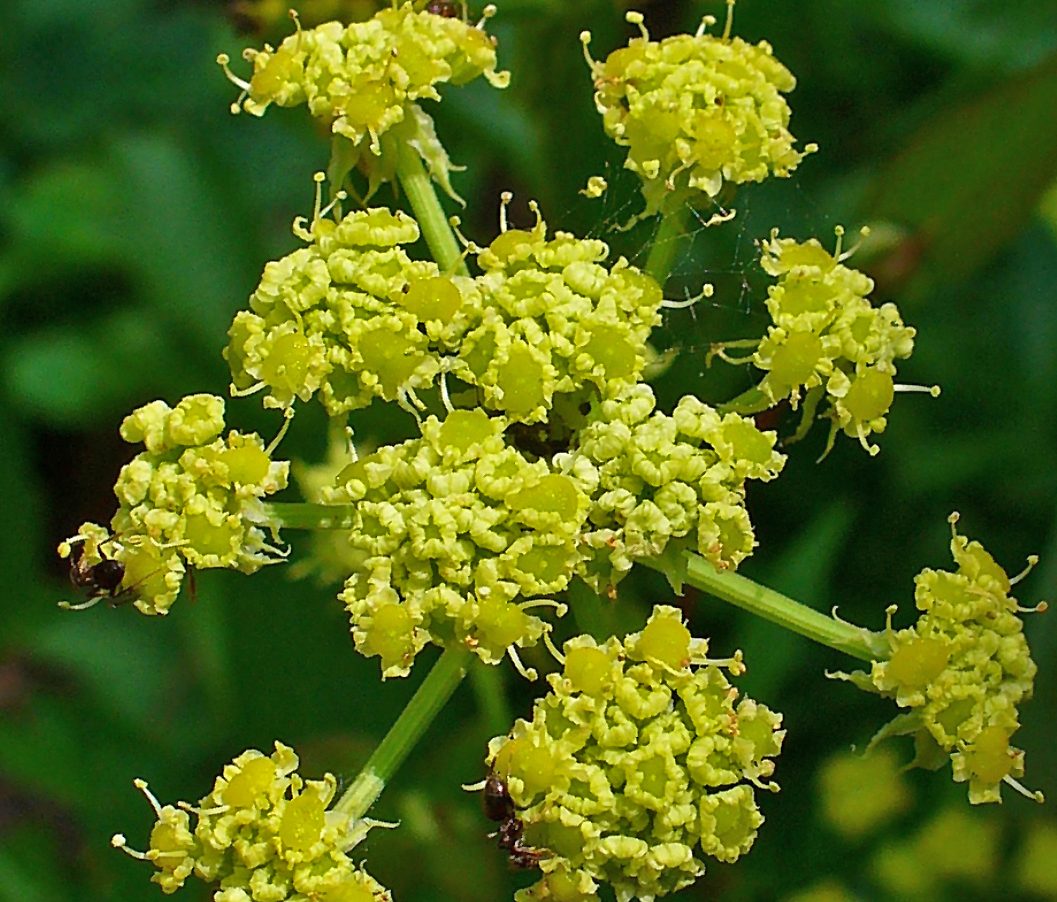 Although Strabo notes that the seeds and leaves of lovate are thought to cause eye injury, he says that seeds blended with other herbs are apparently safe. Other uses associate with loveage in past times include its use as a diuretic and a cure for rheumatism, jaundice, malaria, colic, sore throat, and kidney stones. In addition, it was used to reduce obesity, elevate alertness, treat boils , erase freckles, and promote and regulate menstruation. The root was especially valued for medicinal uses but the leaves and seeds were also used. Modern science has found no evidence of the herb’s efficacy for health but the herb is somewhat valued for its culinary characteristics in food such as salads, soups stews, and sauces. Lovage’s aromatic qualities make it useful in the production of cosmetics and soaps.
Plants grow 5′-8′ tall from a thick fleshy root 5-6″ long. Hollow ribbed stems branch at the top and have a basal rosette of dark green leaves and smaller stem leaves. The basal leaves are up to 28″ long and are tripinnately compound into wedge-shaped to triangular pointed leaflets with toothed margins and a celery-like aroma when bruised. From late spring to early summer, tiny yellow to greenish flowers appear in terminal globose compound umbels 1.5-5.9 ” across and give way to a dry, very aromatic, 1/4″ long fruits that mature in the fall.
Lovage is easy to grow and makes a good background plant in the border although it is not striking in appearance. Plants thrive in fertile, medium moist, well-drained soil, in full sun but tolerate some shade. Propagation is by seed or division and problems are few, aphids and leaf miners. Since lovage tends to mature before other herbs, cool weather plants like radishes can be planted in the same bed for a late crop. USDA Hardiness Zones 4-8
The genus name, Levisticum, is a corruptionof the word Latin word ligusticum meaning of Liguira, northwest Italy, where the herb was grown extensively. The specific epithet, officinale, is the Latin word meaning sold in shops, applied to plants that were believed to have medicinal properties.