
 This annual warm season legume, also known as black-eye pea, southen pea, niebe, field pea, yardlong bean, and cowder pea, is probably native to west Africa where it grows in semi arid and dry savannahs. It has been known for centuries dating back to the 2nd millinium BCE and was used as an important food source since ancient Romans times. It is one of 16 herbs recommended in the 9th century plan for the physics garden of the St. Gall Benedictine abbey in Switzerland, but not mentioned in the lists for the gardens of Charlemagne, or that of Walahfrid Strabo’s.
Cowpeas have long been a source of protein for people and animals but have also been used to treat a vaiety of ills such as headaches, urinary schistosomiasis, fever, snake bites, stomach worms, jaundice, menstrual disorders, epilepsy, anorexia, and constipation. Use in a medieval monestary is uncertain.
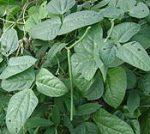
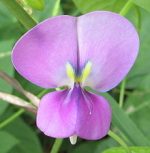 Plants may be prostrate, short and bushy, or tall and vine-like. They are 2-3′ tall and have a tap root and hollow, hairless stems. The 4″ long leaves are hairless and divided into three ovate leaflets with only the terminal one being symmetrical. Terminal clusters of three purple or white, 1″ long flowers appear in summer and give way to curved seed pods up to 10″ long that are usually green, pourple or yellow before turning tan or brown when the seeds reach maturity. Each pod contains 6-13 kidney shaped seeds that are white with a black mark in the place where it was attached to the pod.
Cowpeas like average to lean,dry to medium moist, well dained soil and full sun to light shade. Propagation is by seed and they tend to selfseed. Unfortunatley, the plants are susceptible to a myriad of diseases and pests including fusarium wilt (Fusarium oxysporum), bacterial canker, southern stem bligh(Sclerotium spp.), cowpea mosaic virus, cercospora leafspot, rust, and powdery mildew (Podosphaera spp.) Mexican bean beetles (Epilachna varivestis), bean leaf beetles (Cerotoma trifucata), cowpea curculios (Chalcodermus aeneus), grasshoppers, aphids, green stink bugs, lesser cornstalk borers
The genus name, Vigna, honors the Italian botanist Domenica Vigna. The specific epithet, unguiculata, comes from the Latin word unguis meaning claw, and refers to the small stalks on the flower petals.
Photo Credits: Wikipedia