
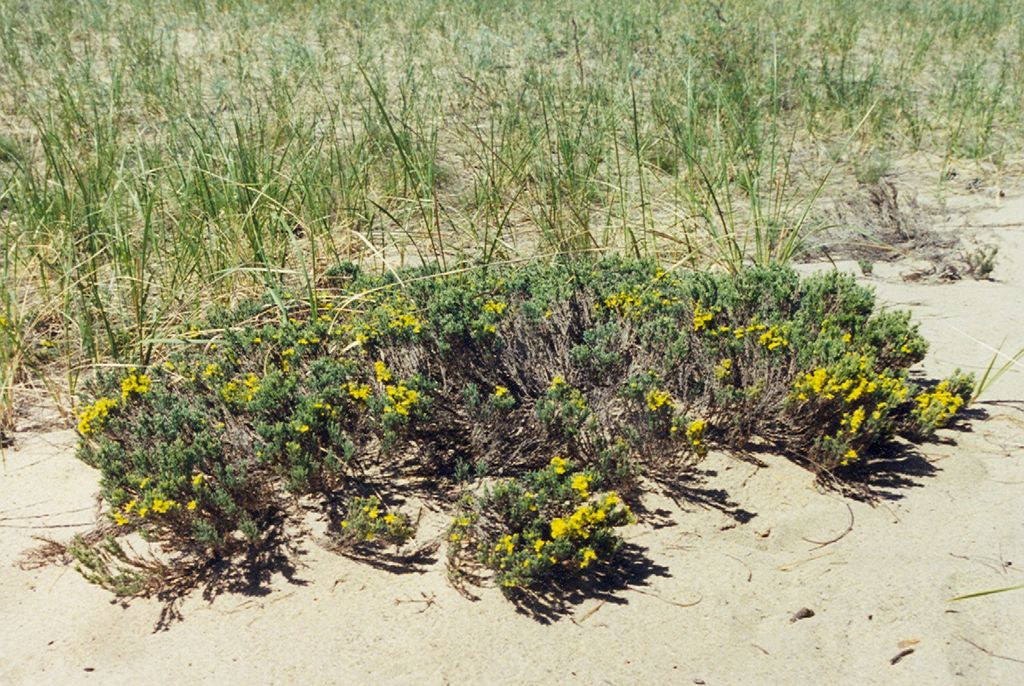
This small evergreen shrub, also known as sand heather and poverty grass, is native to northeastern North America including parts of Canada, where it grows in pine barrens and on backdunes. It is a member of the rock-rose family, Cistaceae, that includes shrubs known for their abundant flowers. The plant grows 4-12″ tall and form mats of branched stems bearing tiny scale-like leaves that are coated with woolly hairs and appear grayish green. From early to mid summer, yellow flowers appear singly among the stems and are 1/4″ wide with 5 oval, tissue paper-like petals. The fruit is a capsule with 3-5 seeds. Woolly beach heather is salt tolerant but less so than many other beach plants and therefore not found on front dunes or along the waters edge but is a good choice for more protected sites along the coast. It is a rare plant and may be difficult to locate at nurseries. The genus name, Cistus, is from kistos, the Greek word for this type of plant. The specific epithet, tomentosa, is the Latin word meaning covered with hairs.
Type: Evergreen shrub
Outstanding Feature: Flowers
Form: Mat-forming
Growth Rate: Slow
Bloom: Tiny yellow flowers from early to mid summer
Size: 4-12″ H x .2- 24″ W
Light: Full sun
Soil: Sandy, dry, well-drained
Hardiness: Zones 6-7
Care: Pinch back young plants in spring by 2/3 to encourage bushiness but lightly trim established plants after flowering to maintain size and shape.
Pests and Diseases: None of significance but does not tolerate human activities like trampling or recreational vehicles
Propagation: Seed, cuttings
Photo Credit: Fungus Guy Wikimedia Commons
 Karen Meyers