
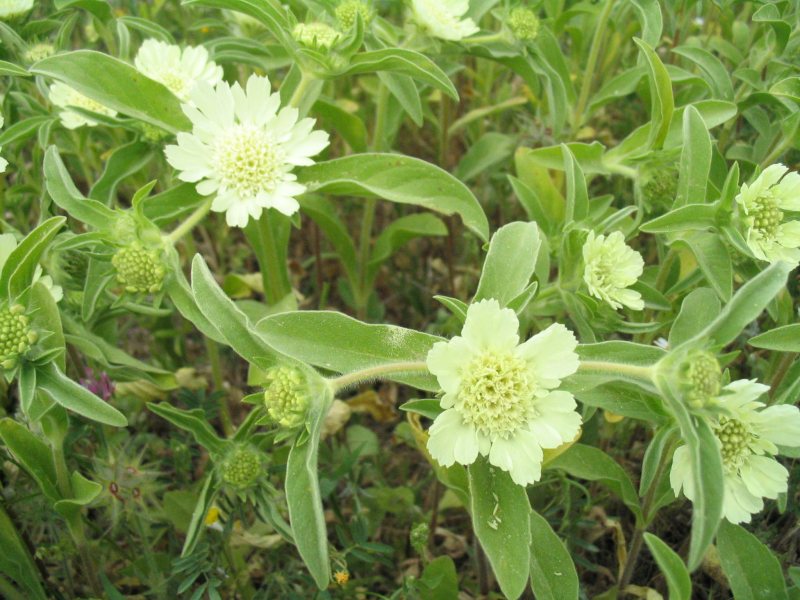
Native to the woodlands and shrublands of the eastern Mediterranean area, this annual is a member of the honeysuckle family, Caprifoliaceae, that also includes weigelia, Centranthus, and valerian. Plants grow up to 2′ tall and have oblong to oblong-lanceolate leaves and 2″ creamy yellow flowers arranged in a rounded head. When the petals fall, a greenish dried flowers remains that is good for arrangements. Carmel daisy is similar to drumstick scabiosa (S. stellata) but differs most significantly in flower color and leaf shape. It is rare and difficult to find but is a lovely addition to cottage and cutting gardens. The genus name, Scabiosa, comes from the Latin word scabies meaning itch and refers to the leaves that were thought to cure scurvy. The specific epithet, prolifera, comes from the Latin words proles meaning offspring and ferre, meaning to bear, referring to the ability of the plant to reproduce by producing side shoots.
Type: Annual
Bloom: Globose heads of creamy yellow flowers
Size: 2′ H
Light: Full sun; tolerates some shade
Soil: Average, moderately moist, well-drained; tolerates some drought
Hardiness: Not relevant
Care: Deadhead to prolong bloom
Pests and Diseases: Slugs, root rot in overly damp soil
Propagation: Seed; division of side shoots
Companion Plants: Statice, strawflower, love in a mist
Photo Credit: lorsh Wikipedia