
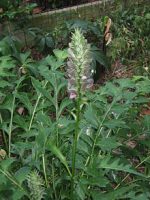
 Endemic to the Balkan peninsula, this herbaceous perennial is a member of the Acanthaceae family that also includes mostly tropical plants such as polka-dot plant and Thunbergia. Plants grow 4-5′ tall and have a creeping root system and glossy dark green leaves that are 2-3′ long, lack spines, and are pinnately divided with the individual lobes narrowed at the base. The leaves are basal and form a handsome 3′ wide clump that remains attractive throughout the growing season. In mid summer, 4′ tall central spikes carry vertical rows of white to purplish pink 1″ long flowers subtended by purple spiny bracts. Plants provide a strong vertical accent and are a good choice as a focal point in borders or formal gardens. The genus name Acanthus, comes from the Greek word akanthos meaning thorn or prickle and refers to the spines on the leaves of some species. The specific epithets, balcanicus and hungaricus, refer to the geographic origin of the species.
Type: Herbaceous perennial
Bloom: Spikes of vertical rows of white to pinkish flowers subtended by spiny purple bracts in mid summer
Size: 4-5′ H x 2-3′ W
Light: Full sun to partial shade in hot climates
Soil: Fertile, moderately moist, well-drained
Hardiness: Zones 6-9
Care: Remove leaves as they deteriorate; contain wandering roots
Pests and Diseases: Snails, slugs
Propagation: Division in spring, root cuttings in spring or fall, seed
Companion Plants: Purple heart, red valerian, yellow loosestrife
Photo Credit: Wikipedia